Lobola
/loh-BOH-lah/
Meaning
Lobola is a profound cultural practice within Zulu and other Nguni societies, representing far more than a mere transaction. It is the customary payment of bride wealth, typically in cattle or its monetary equivalent, from the groom's family to the bride's family. This exchange is a deeply symbolic gesture, signifying the groom's earnest commitment, profound respect for his future in-laws, and the formal forging of an unbreakable bond between two families, not just two individuals. It acknowledges the immense value and dignity the bride brings, ensuring goodwill and solidifying the foundation of a new, extended kinship.
Literal Translation
bride wealth
The Story Behind the Word
The practice of Lobola is steeped in centuries of Nguni tradition, predating colonial influences. Its existence reveals a worldview where marriage is not merely a romantic union but a crucial alliance between families, essential for community cohesion and the continuity of lineages. Cattle, historically the primary form of payment, symbolize wealth, ancestral connection, and life itself, underscoring the sacredness of the exchange. Lobola reinforces respect for elders, the importance of negotiation, and the communal responsibility for nurturing new families. It is a testament to an interconnected society where individual happiness is intrinsically linked to familial harmony and social stability.
Experience It
Negotiating Lobola
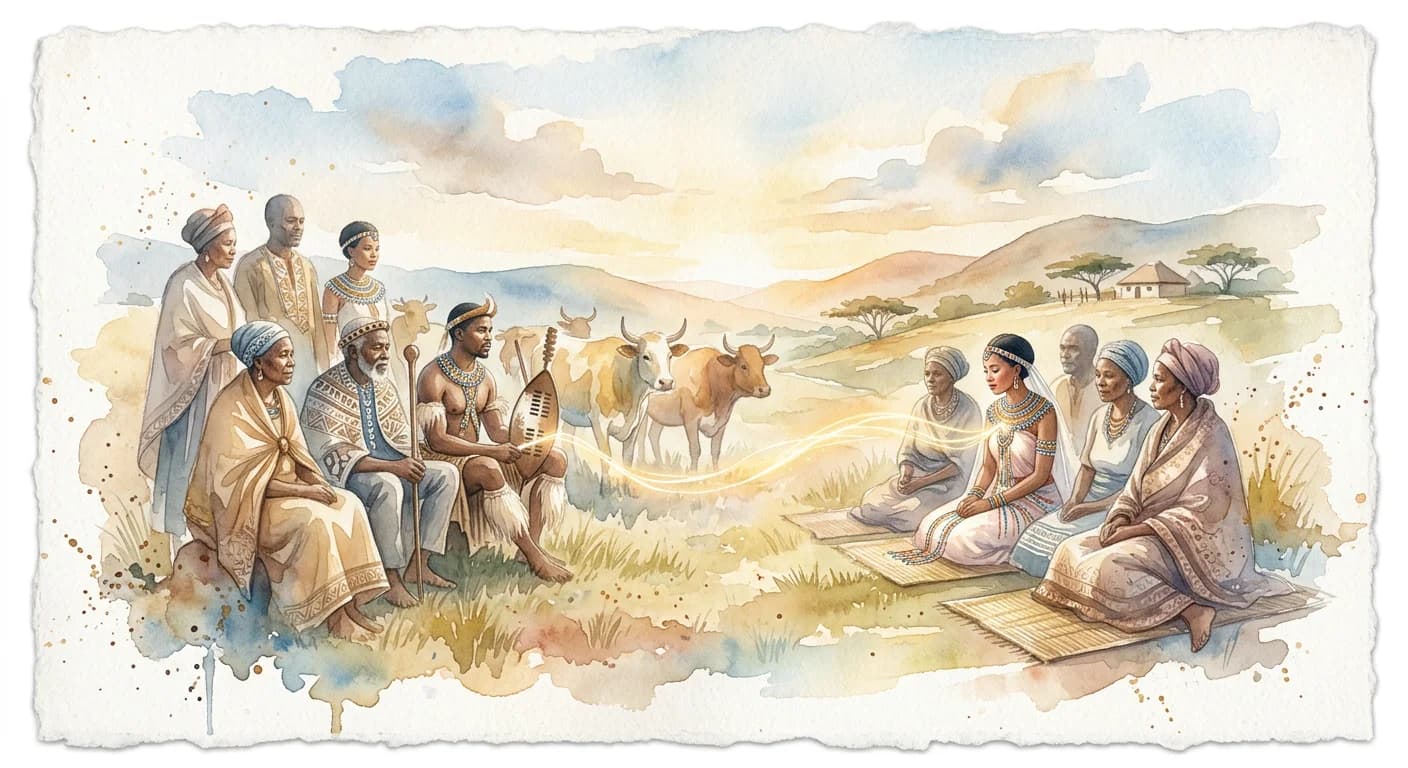
At the bride's homestead, the 'onozinyo' (negotiators) from both families sat under the shade of a large tree. The groom's uncle, with measured words, presented their offer of cattle. The bride's elders, after thoughtful deliberation and good-humored banter, discussed the 'ikhazi' (lobola amount) ensuring the value reflected their daughter's worth and the respect due to their lineage, eventually reaching a consensus that honored both families.
Lobola Ceremony
On the wedding day, after the Lobola had been successfully paid, the bride's mother presented the groom with a traditional 'umbhaco' (outfit) and 'isicholo' (hat), symbolizing his new status and the acceptance into their family. The air was thick with ululations and joyful singing, as the community celebrated not just a marriage, but the powerful new bond forged between two respected families, all made possible by the Lobola.
The Deeper Meaning
Lobola embodies a philosophy of Ubuntu – 'I am because we are.' It underscores that individual identity and well-being are inextricably linked to community and family. The practice highlights life as a series of reciprocal relationships and obligations, where respect, honor, and the forging of new kinship ties are paramount for societal harmony and continuity, far beyond the immediate couple.
Did You Know?
Historically, the number of cattle for Lobola could vary significantly, with royal families sometimes receiving dozens, reflecting their status and the bride's lineage.
How It's Used
Lobola is a customary practice that takes place during marriage negotiations and ceremonies.