Matariki
/MA-ta-ree-kee/
Meaning
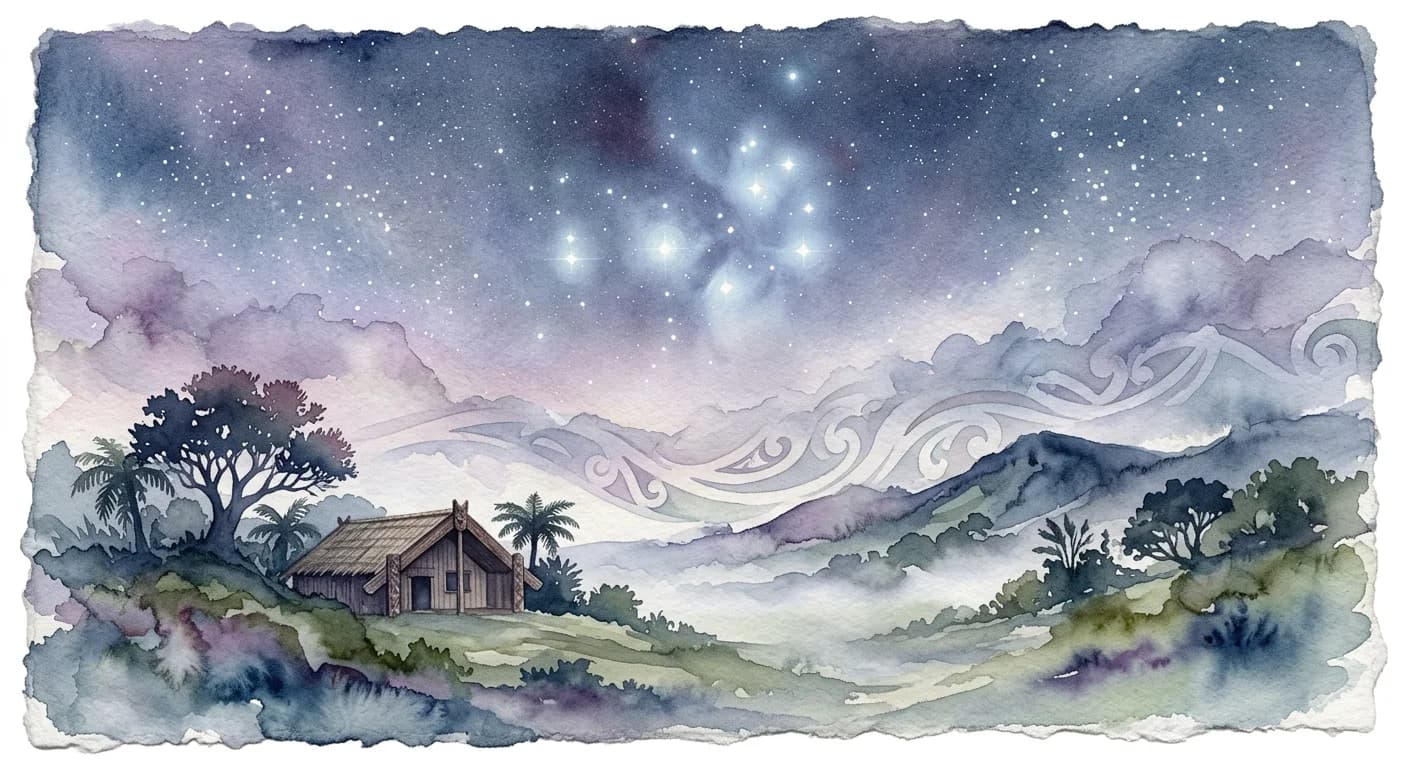
Matariki is the Māori New Year, a profound celestial event marked by the reappearance of the Pleiades star cluster in the winter sky. It's a sacred time for deep reflection, honoring ancestors, celebrating the bounty of the land, and looking forward with hope. Far more than a mere calendar date, Matariki embodies the cyclical nature of life, fostering community, connection to the cosmos, and a renewed sense of purpose for the year ahead.
Literal Translation
Eyes of the Sky
The Story Behind the Word
Matariki is woven into the very fabric of Māori cosmology and societal structure, acting as a crucial marker for seasonal activities and spiritual reflection. Its reappearance signaled the end of the harvest season, a time for preserving food, and the beginning of a new agricultural cycle. The stars of Matariki (the Pleiades) are seen not just as celestial bodies, but as living entities, deeply connected to the well-being of the land and its people. Observing its clarity and brightness helped tohunga (experts) predict the success of the upcoming harvest. This deep connection to the natural world and its rhythms underscores a worldview where humanity is an integral part of the environment, not separate from it.
Experience It
Family Remembrance
As the Matariki cluster gleamed in the pre-dawn sky, Hine and her whānau gathered. They softly called out the names of loved ones who had passed in the last year, releasing their spirits to join the stars, a tradition connecting generations through remembrance and love.
Community Feast
The village hummed with excitement for the Matariki feast. Shared kai (food) from the recent harvest filled the tables, as stories were told, waiata (songs) sung, and plans for the next planting season discussed, strengthening communal bonds and collective aspirations.
The Deeper Meaning
Matariki encapsulates a holistic Māori worldview that seamlessly integrates the spiritual, environmental, and social. It highlights the interconnectedness of all things – the sky, the land, the past, present, and future – and emphasizes the importance of collective well-being, stewardship of resources, and respect for ancestral wisdom in navigating the cycles of life.
Did You Know?
The visibility of Matariki was traditionally used to forecast the upcoming season's harvest: bright, clear stars indicated a bountiful year, while hazy stars suggested a less productive one.
How It's Used
Matariki is celebrated annually in late June or early July, coinciding with the heliacal rising of the Pleiades. It's a time for cultural ceremonies, feasts, planting, and honoring ancestors.