U.
HomeRegionsLanguagesEmotionsCollections
Find Your Word

“The limits of my language mean the limits of my world.”

— Ludwig Wittgenstein, Philosopher

Untranslatable

A curated collection of the world's most beautiful expressions—words that remind us language is humanity's greatest invention.

  • Home
  • Collections
  • Regions
  • Countries
  • Emotions
  • Tags
  • Contexts
  • Finder
  • Europe
  • Asia
  • Americas
  • Africa
  • Middle East
  • About
  • Contact
  • Privacy Policy
  • Terms of Service

2026 © Untranslatable. All rights reserved.

    /
    /
    1. Home
    2. /
    3. Americas
    4. /
    5. Mboira
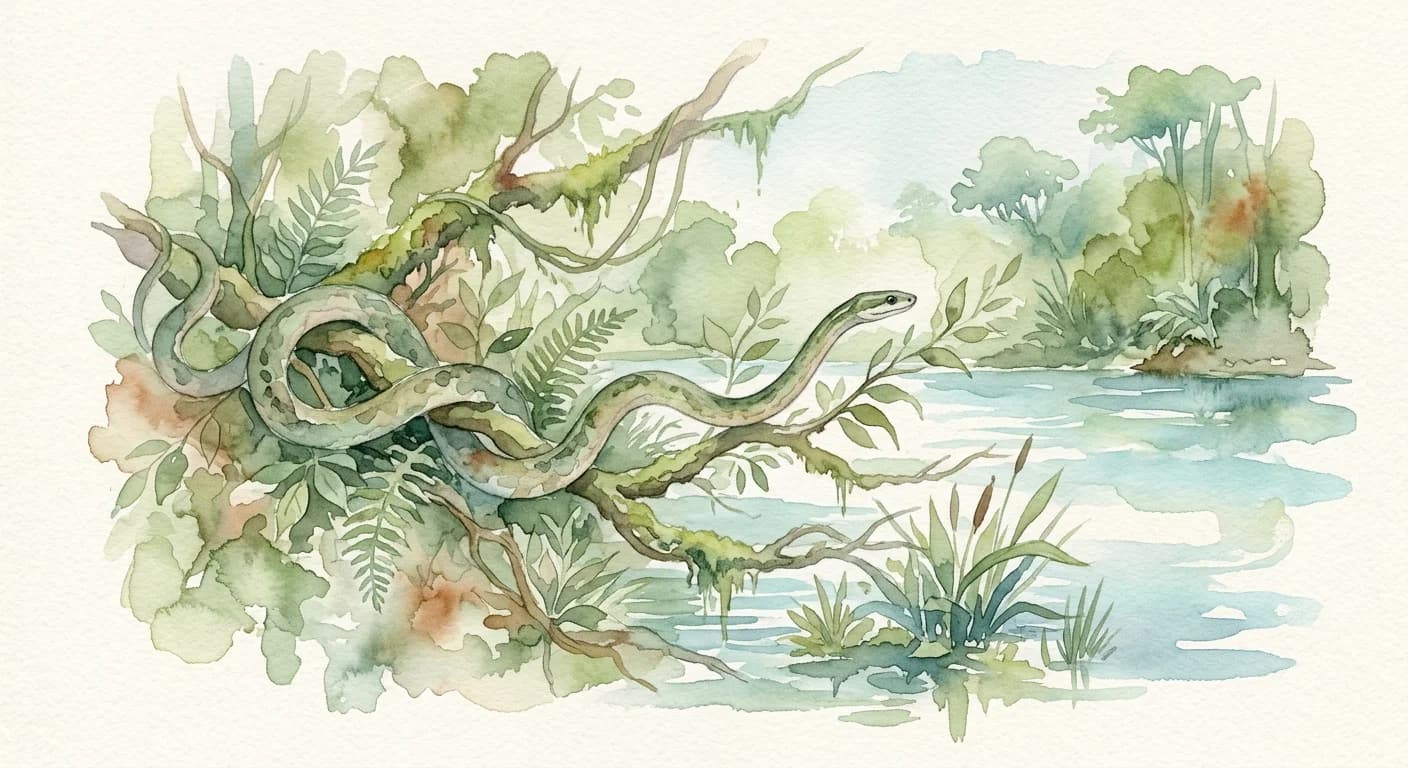
    Artistic representation of Mboira
    Guaraní•
    🇦🇷Argentina🇧🇷Brazil🇵🇾Paraguay

    Mboira

    /mboh-EE-rah/

    Meaning

    Mboira in Guaraní refers specifically to a non-venomous snake, embodying more than just its reptilian form; it's a living thread in the interwoven tapestry of the Guaraní world. The word evokes a primal sense of the wild, a creature to be observed with a respectful distance, symbolizing the intricate balance of nature. It carries an implicit understanding of the ecosystem, where every being, even a slithering one, holds its place and purpose, often linked to the cycles of the forest and river.

    Literal Translation

    Snake

    The Story Behind the Word

    The presence of 'mboira' in the Guaraní lexicon is deeply rooted in a worldview that perceives humans as integral, not superior, to nature. For the Guaraní, the forest is alive with spirits and interconnected life forms, and snakes, including the mboira, are often seen as guardians of places or indicators of environmental health. Their non-venomous nature differentiates them from more dangerous serpents, allowing for a relationship built on observation and coexistence rather than pure fear. The word's existence highlights an animistic understanding where animals are not just resources but fellow inhabitants with their own 'souls' or 'essences,' contributing to the rich oral traditions, myths, and daily interactions that define Guaraní life. It reflects a cultural emphasis on living in harmony with the environment, understanding its signs, and respecting its diverse inhabitants.

    Experience It

    Forest Path Encounter

    Maria walked quietly through the dense undergrowth, her eyes scanning the path. 'Cuidado,' whispered her grandmother, pointing with her chin. 'Mboira.' Maria saw the dark, coiled shape and gave it a wide berth, acknowledging its presence without fear, a silent agreement of shared space.

    Telling a Cautionary Tale

    During the evening storytelling, the elder spoke of a cunning merchant, 'He was like a mboira, sleek and quick, always finding a way to get what he wanted.' The children listened, understanding the nuance of slyness without malice.

    The Deeper Meaning

    The word 'mboira' encapsulates a philosophy of respectful coexistence with the natural world. It underscores the Guaraní belief that every creature, even one often feared, has its place and purpose, and that understanding and observing nature's intricate web is paramount. It reflects a humility toward the wild and an acceptance of its inherent mysteries and rhythms.

    Did You Know?

    While 'mboira' is non-venomous, its appearance can sometimes mimic more dangerous snakes, leading to initial caution, reinforcing the Guaraní respect for all serpentine forms.

    How It's Used

    Used to refer to a specific type of snake in Guaraní-speaking regions. It can also be used metaphorically to describe something sly or tricky, though its primary meaning is literal.

    Emotions
    fear,wonder
    Contexts
    nature,tradition
    🇦🇷Argentina🇧🇷Brazil🇵🇾Paraguay

    by Sofia Rossi·Written Mar 14, 2026·Updated Apr 3, 2026

    Related Words

    Explore more
    Pura vidaSpanish

    More than just 'pure life,' "Pura vida" encapsulates a profound philosophy of embracing the present moment with unwavering optimism and gratitude. It's a daily commitment to finding joy in simple pleasures, accepting life's challenges with a positive spirit, and prioritizing well-being over material possessions. This ubiquitous phrase reflects a national identity built on resilience, community, and an deep appreciation for nature's bounty.

    MamihlapinatapaiYaghan

    Mamihlapinatapai encapsulates that profound, unspoken moment when two individuals lock eyes, each silently acknowledging a mutual desire or intention, yet both hesitate to be the first to act upon it. It's a delicate dance of anticipation, a shared gaze brimming with common understanding and a quiet longing for the other to break the ice. This intricate look carries the weight of a shared, uninitiated potential, a silent conversation where both parties are perfectly aware of what could happen, but neither makes the first move.

    TingoPascuense

    Tingo describes the subtle, insidious process of progressively appropriating a neighbor's belongings by habitually requesting to borrow them, only to 'forget' their return. It's not outright theft, but a slow, deliberate erosion of another's possessions, often under the guise of neighborly exchange. This gradual accumulation, piece by piece, ultimately results in a significant transfer of goods without any direct confrontation or formal acknowledgment of the loss. It speaks to a passive-aggressive form of acquisition, where social niceties are weaponized.

    FolkeoplysningDanish

    Folkeoplysning is the vibrant heartbeat of Danish civil society, a profound commitment to public enlightenment that transcends formal schooling. It embodies the lifelong journey of knowledge acquisition and cultural immersion for every citizen, fostering critical thinking and active democratic participation. Through accessible institutions like folk high schools, libraries, and community initiatives, it empowers individuals to understand their world, engage meaningfully, and contribute to a cohesive, informed society, viewing education not as a privilege but as a fundamental right and societal pillar.