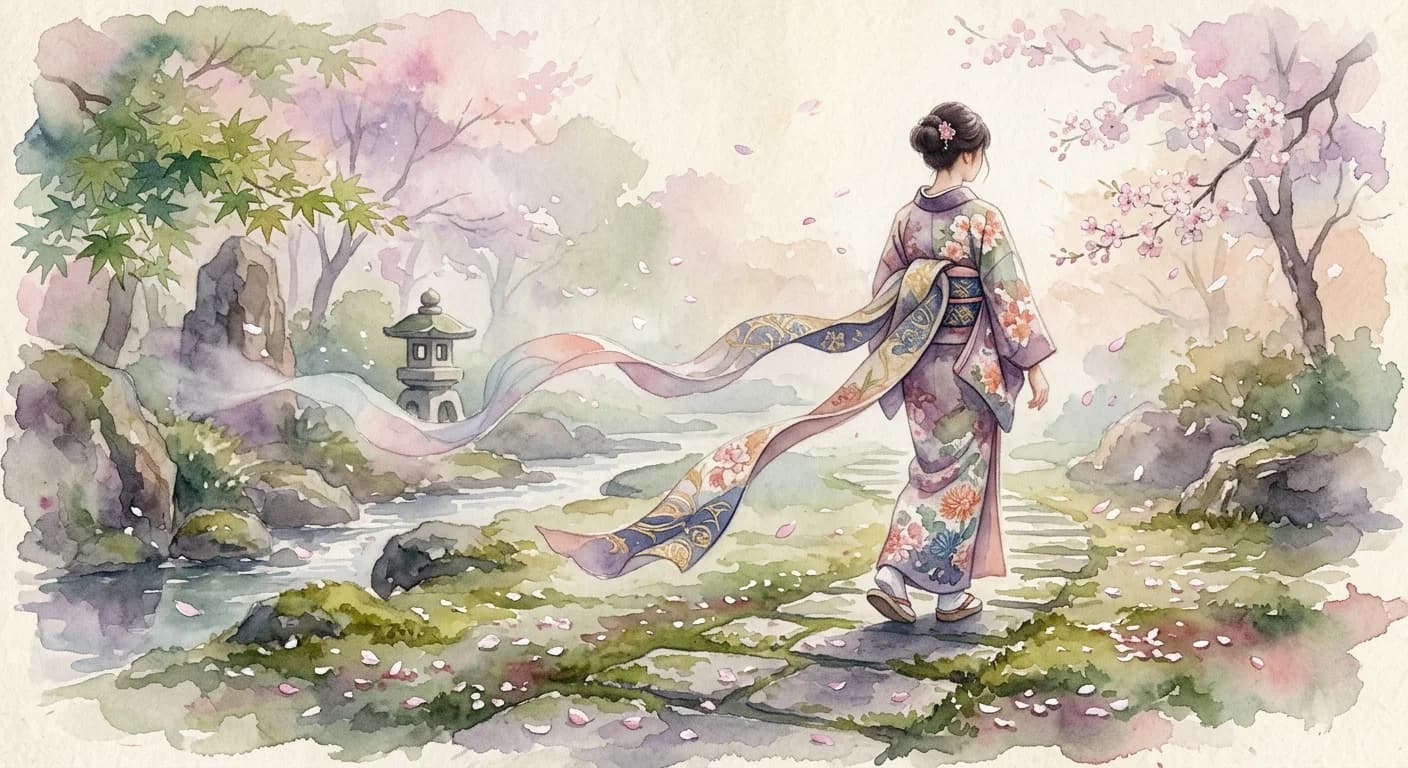
Obi
/OH-bee/
Meaning
The "obi" is far more than a mere sash in Japanese culture; it is an integral and highly symbolic component of traditional attire like the kimono and martial arts uniforms. It embodies an aesthetic philosophy where beauty is found in precision, balance, and deliberate form. The way an obi is tied, its material, and its design convey subtle messages about the wearer's status, occasion, and even their personal discipline, transforming a functional garment into a profound cultural statement.
Literal Translation
sash
The Story Behind the Word
The obi's cultural significance is deeply rooted in Japanese aesthetics and social structure. Historically, its evolution paralleled that of the kimono, becoming more elaborate and decorative over centuries, reflecting changing fashion and social hierarchies. In martial arts, the obi transcends mere clothing, serving as a visual representation of a practitioner's journey, discipline, and mastery. The color and knotting of an obi in judo or karate signify rank (kyu/dan), earned through rigorous training and unwavering dedication. This emphasis on visible markers of achievement and adherence to form reveals a society that values discipline, respect for tradition, and a meticulous attention to detail, where even a seemingly simple accessory carries profound meaning and weight.
Experience It
Kimono Dressing Ritual
A young woman carefully adjusted the intricate silk obi around her grandmother's kimono, ensuring every fold was perfect and the bow at the back was symmetrical. Each movement was deliberate, a silent act of respect for the garment's history and the family traditions it represented.
Dojo Promotion Ceremony
The sensei presented the student with a new black obi, a symbol of years of dedication and countless hours of training in the dojo. Tying it for the first time, the student felt the weight of responsibility and the honor of achieving a new level of mastery.
The Deeper Meaning
The obi exemplifies the Japanese aesthetic principle of 'shibui' – a subtle, unobtrusive beauty that often conceals complexity. Its seemingly simple form belies intricate tying methods and deep symbolic meaning, reflecting a worldview that values understated elegance, meticulous craftsmanship, and the profound significance found within deliberate restraint and adherence to established forms.
Did You Know?
Some elaborate formal kimonos can feature an obi that is over 4 meters (13 feet) long and up to 30 centimeters (12 inches) wide, requiring assistance to tie correctly!
How It's Used
The term 'obi' is used when referring to the sash of a kimono, judo gi, or other traditional Japanese clothing. It is also used in discussions about Japanese fashion, martial arts, and cultural attire.