Renga
/REN-gah/
Meaning
Renga is a highly sophisticated form of Japanese linked verse, where multiple poets engage in a delicate dance of collaborative creation, each contributing alternating stanzas to a single evolving poem. It transcends mere literary exercise, embodying a profound spirit of shared creativity and harmonious connection, where individual voices coalesce into a unified artistic expression. Each poet meticulously builds upon the preceding verse, extending its imagery, theme, or narrative in a seamless flow, creating a collective masterpiece that far surpasses the sum of its individual parts. This communal act fosters deep bonds among participants, celebrating the ephemeral beauty of shared expression and the intricate interplay of diverse perspectives.
Literal Translation
linked song
The Story Behind the Word
The practice of Renga emerged in Japan as early as the Nara period (710-794 CE) and flourished particularly during the Heian (794-1185 CE) and Kamakura (1185-1333 CE) periods. It was deeply intertwined with the aristocratic court culture, where literary gatherings were central to social life and intellectual discourse. Renga reflects the Japanese aesthetic of 'wabi-sabi' – the appreciation of imperfection and transience – as each verse, while beautiful in itself, gains deeper meaning through its connection to others. It also embodies the cultural value of harmony (wa) and collective effort over individual achievement. The strict rules and conventions of Renga, such as the alternating 5-7-5 and 7-7 syllable patterns, encouraged discipline and a profound understanding of poetic form, revealing a society that valued structure and refinement even in collaborative spontaneity.
Experience It
Moon-Viewing Renga Party
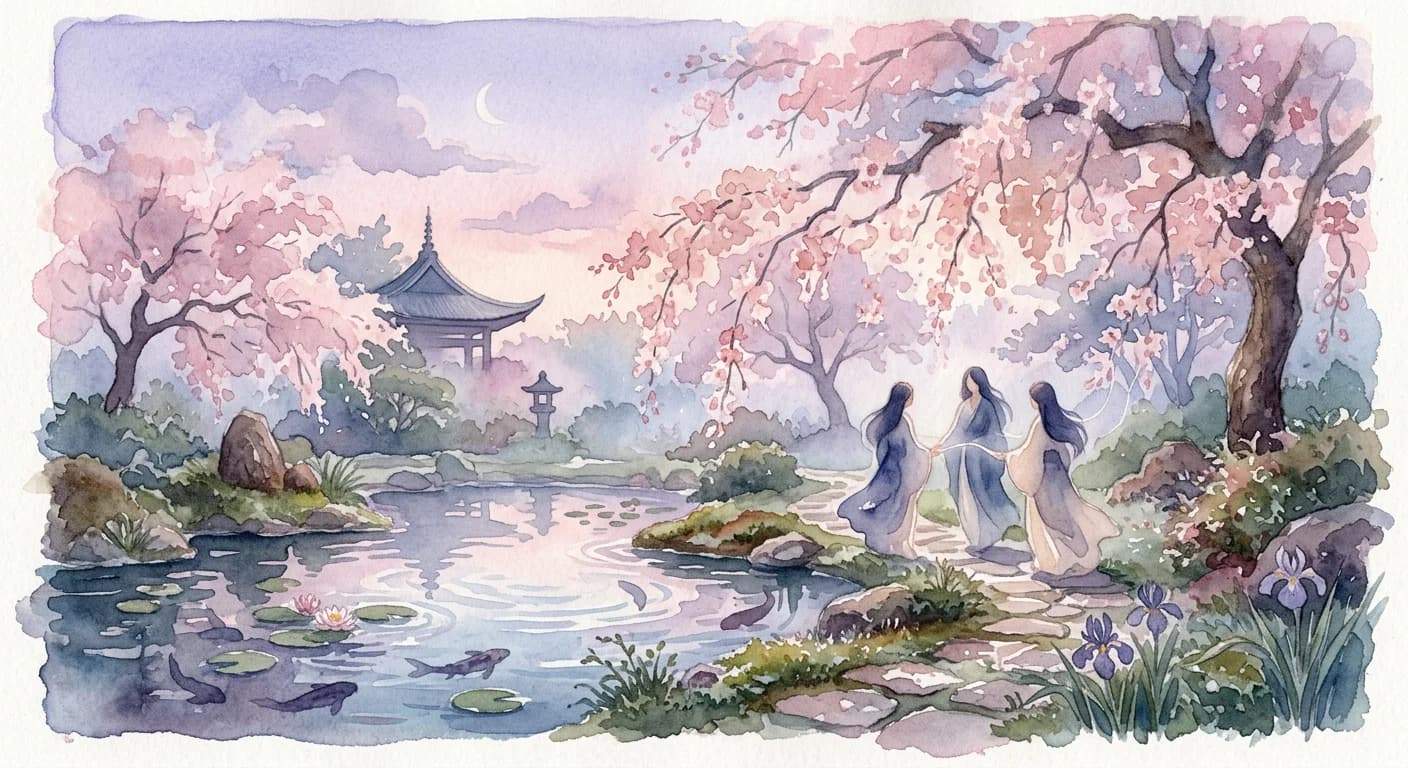
Under the soft glow of the autumn moon, a group of friends gathered in a traditional garden. One poet began with a verse about the moon's serene reflection on the pond, and the next immediately responded, weaving in the scent of chrysanthemums carried on the breeze, creating a tapestry of sensory detail.
Scholars' Winter Retreat
Inside a secluded mountain temple, a master and his students engaged in a Renga session, the warmth of the brazier contrasting with the falling snow outside. Each verse built upon the philosophical musings of the last, exploring themes of impermanence and enlightenment, their minds intertwining through poetry.
The Deeper Meaning
Renga profoundly illustrates the Japanese worldview of interconnectedness and the beauty found in collaborative creation rather than sole authorship. It suggests that truth and beauty are often best revealed through a dialogue of voices, where individual contributions gain deeper resonance when harmoniously linked. This practice underscores the idea that art, like life, is an ongoing conversation, constantly evolving and enriched by shared perspectives.
Did You Know?
The longest Renga ever recorded, the 'Shinsen Tsukuba-shū,' compiled in the 14th century, contained over 2,000 stanzas, showcasing an extraordinary feat of sustained collaborative artistry!
How It's Used
Renga is a form of Japanese poetry where poets compose verses in turns, creating a collaborative poem. It is a social and artistic activity.