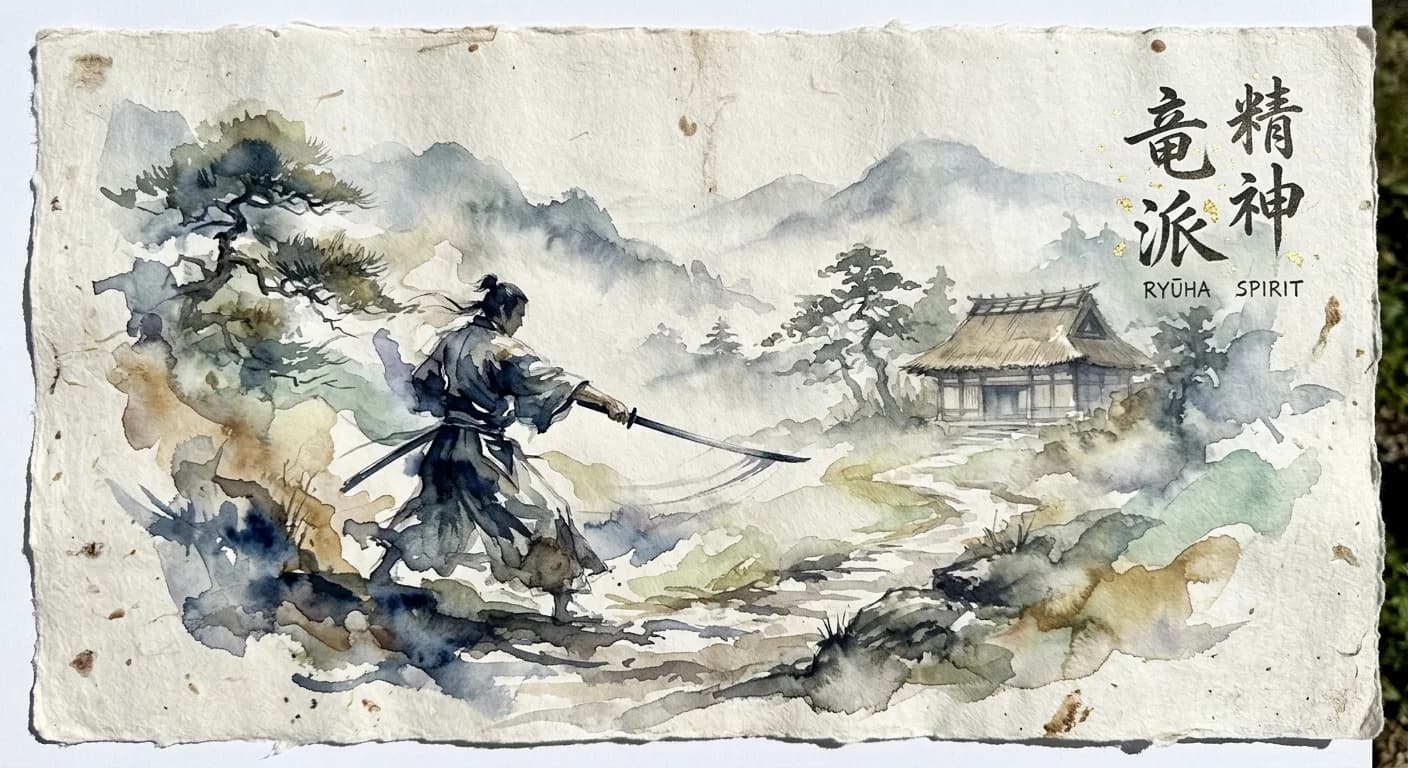
Ryūha
/RYOO-hah/
Meaning
Ryūha transcends a mere 'school' or 'style'; it embodies a living tradition, a profound lineage meticulously passed down through generations within Japanese arts like ikebana, tea ceremony, or martial arts. Each ryūha possesses its own distinct philosophy, aesthetic principles, and secret techniques, forming a unique interpretive lens through which the art is understood and practiced. It represents a dynamic, evolving repository of wisdom, reflecting the values and spiritual insights of its founders and successive masters, ensuring the art's continued depth and authenticity.
Literal Translation
Dragon school/style (龍 'ryū' = dragon, 派 'ha' = school/sect)
The Story Behind the Word
The concept of ryūha emerged from a deep-seated Japanese cultural value placed on lineage, mastery, and the transmission of knowledge through direct, personal instruction. Its origins can be traced back to medieval Japan, particularly in martial arts and performing arts, where distinct styles and secret techniques (okuden) were jealously guarded and passed down within families or closed groups. This system fostered intense dedication, discipline, and a profound respect for one's teachers and ancestors. Ryūha reveals a worldview where truth and beauty are not discovered individually, but inherited and refined through a collective, historical journey, emphasizing continuity, incremental perfection, and the sacredness of tradition. It underpins the idea that true mastery is not just about technique, but about embodying the spirit and philosophy of the lineage, ensuring cultural heritage is not merely preserved, but actively lived and evolved.
Experience It
Choosing a Tea School
A young woman, passionate about chado (tea ceremony), carefully researched the Urasenke and Omotesenke ryūha. She chose Urasenke for its more accessible approach to teaching and its emphasis on hospitality, feeling its philosophy resonated more deeply with her personal values.
Martial Arts Lineage
During a kendo demonstration, the sensei explained that their dojo practiced the Musashi-ryūha, a style known for its powerful, direct strikes. He stressed that understanding the ryūha's historical context and philosophical underpinnings was as crucial as mastering its physical forms.
The Deeper Meaning
Ryūha articulates a philosophy of inherited wisdom and continuous refinement, where individual expression is nurtured within the framework of a time-honored tradition. It suggests that true mastery is not about breaking from the past, but about deeply understanding and embodying it, allowing for subtle innovation that respects the lineage. This concept highlights the Japanese appreciation for depth, discipline, and the profound beauty found in the meticulous transmission of knowledge across generations.
Did You Know?
Some ryūha, especially in martial arts, still maintain 'secret techniques' (okuden) that are only taught to the most dedicated and trusted senior students, sometimes after decades of training.
How It's Used
Used to denote a specific lineage or school within a traditional Japanese art form, distinguishing it from other styles or approaches.