Guiri
/GHEE-ree/
Meaning
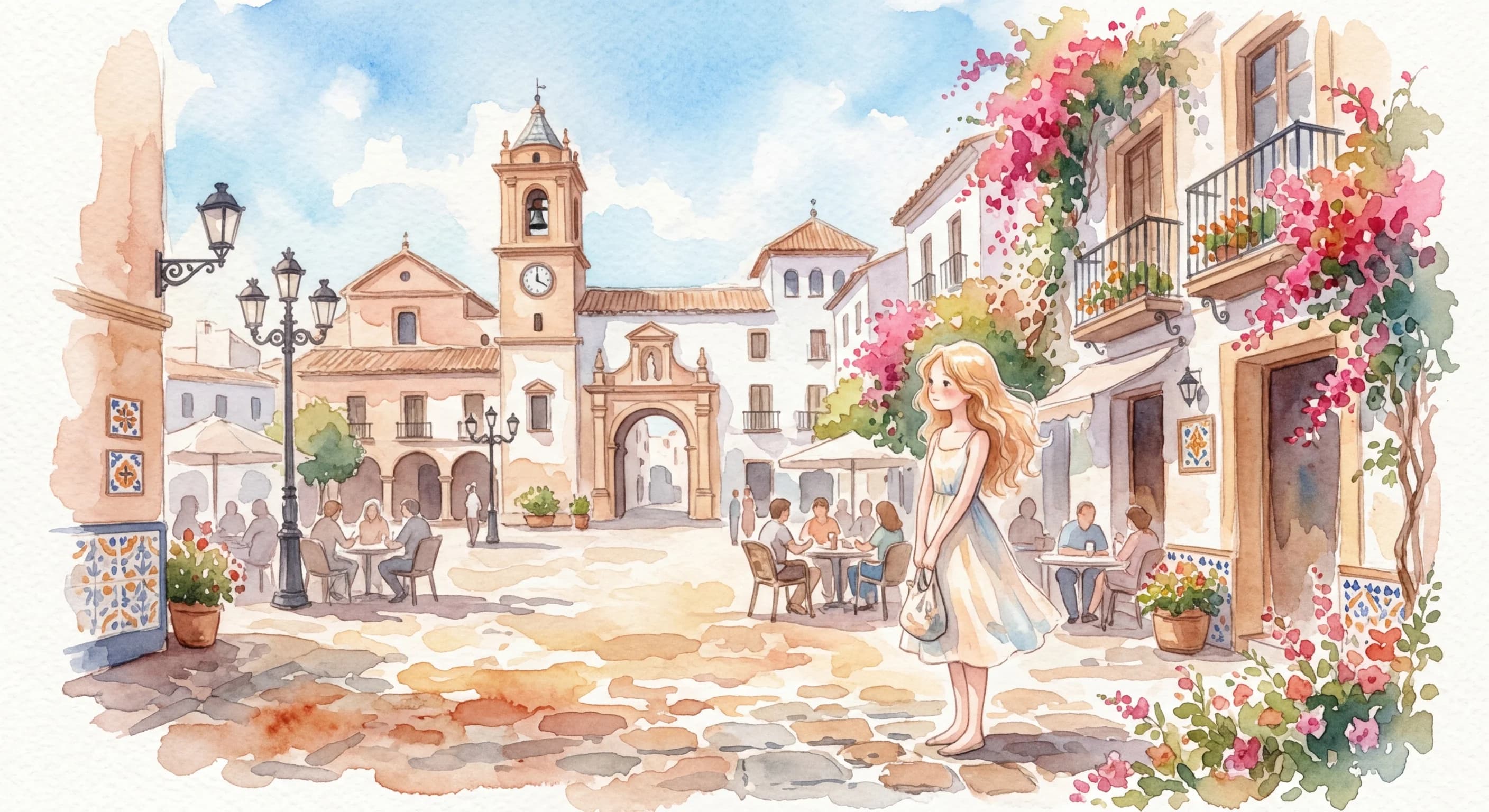
A 'guiri' is a distinctly non-Spanish foreigner, typically from Northern Europe, recognized by their pale complexion, often fair hair, and a style of dress that diverges from local norms – think shorts and sandals in cooler weather. This term encapsulates a tourist who, despite being physically present, remains culturally detached, often congregating in familiar enclaves and displaying a charming naivete about local customs. While not overtly offensive, it carries a nuanced blend of affectionate amusement, mild exasperation, and a subtle commentary on the visible markers of cultural difference.
Literal Translation
The origin of the word is debated, but one theory suggests it comes from the Basque word 'giri,' meaning 'light' or 'pale', referring to the complexion of many Northern European tourists.
The Story Behind the Word
The word 'guiri' emerged prominently in post-Franco Spain, especially with the explosion of mass tourism from Northern Europe. Spain, having experienced relative isolation for decades, suddenly became a prime destination for sun-seeking Europeans. The term reflects a dynamic of both fascination and slight bewilderment from the Spanish hosts towards these new visitors whose appearance, habits, and often louder demeanor stood in stark contrast to local traditions. It highlights a cultural self-awareness, defining 'Spanishness' in opposition to what is 'guiri,' revealing a society grappling with the impacts of globalization on its identity. It's a linguistic tool for categorizing and, in a way, processing the sheer volume of foreign presence, marking a boundary between 'us' and 'them' while acknowledging their economic contribution.
Experience It
Beachfront Breakfast Blunder
At a small, traditional cafe in Málaga, a Spanish waiter sighed good-naturedly to his colleague. 'Look at that guiri, ordering a full English breakfast at 9 AM, completely oblivious to our tostada con tomate.' The tourist, clad in a bright Hawaiian shirt, was indeed struggling with his unfamiliar fork, a picture of sunny, unselfconscious foreignness.
Lost in Translation
Two Spanish friends watched from a distance as a couple, clearly guiris by their sunburned shoulders and perpetually confused expressions, tried to order water in a bustling tapas bar using only English. 'Pobrecitos guiris,' one friend chuckled softly, 'they'll learn eventually, or just stick to places with picture menus.'
The Deeper Meaning
The existence of 'guiri' speaks to the inherent human tendency to categorize and differentiate 'self' from 'other,' especially when confronted with large-scale cultural influx. It reflects a society's contemplation of its own identity in the face of external influences, a subtle negotiation between hospitality and the preservation of cultural distinctiveness. It underscores how physical appearance and social behavior become powerful markers in defining who belongs and who remains an 'outsider,' even a welcome one.
Did You Know?
One popular, though likely apocryphal, theory suggests 'guiri' originated from the Carlist Wars, where government soldiers were called 'guiris' by Basque rebels, possibly from the word 'guiristino' (Cristino), a derogatory term for Isabeline forces.
How It's Used
Used informally to refer to foreign tourists, especially those from Northern Europe, who are visiting Spain. It can be used neutrally, humorously, or slightly disapprovingly, depending on the tone and context.