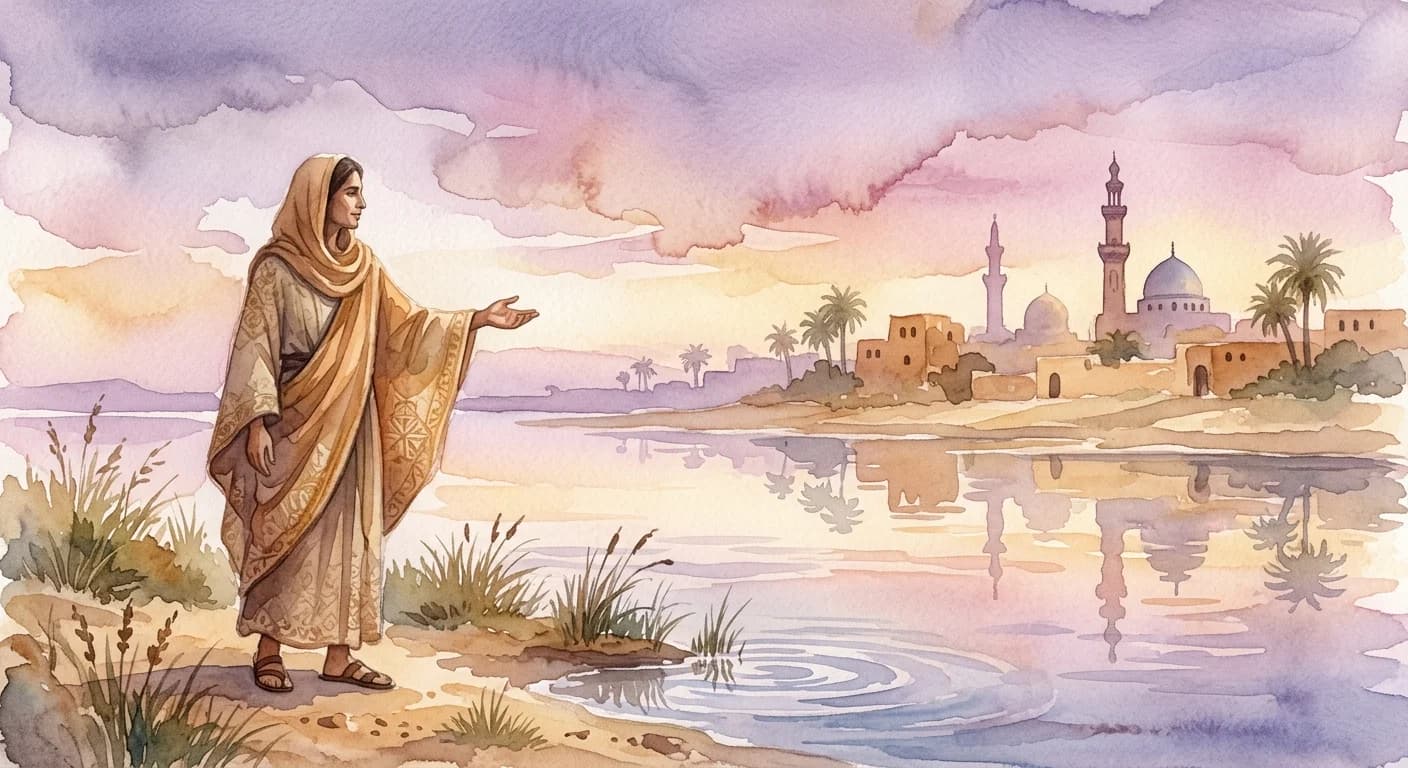
Salaam
/sa-LAAM/
Meaning
Beyond a simple 'hello,' 'Salaam' in Egypt is a profound invocation for peace, well-being, and divine blessings upon the recipient. It carries the weight of a prayer, expressing a genuine wish for tranquility to envelop the individual and their surroundings. This greeting fosters a deep sense of connection, mutual respect, and shared humanity, signifying a desire for harmony in every interaction. It's a wish that transcends mere politeness, aiming for spiritual and physical serenity.
Literal Translation
Peace
The Story Behind the Word
The deep cultural significance of 'Salaam' stems from its roots in Islamic tradition, where peace is considered a paramount virtue and a divine attribute. The word itself, 'Salam,' is one of the 99 names of God in Islam. Its prevalence reflects a worldview where social harmony, community cohesion, and individual well-being are intrinsically linked to a state of peace, both internal and external. In a region often marked by historical complexities, the constant reiteration of 'Salaam' serves as a cultural anchor, a perpetual aspiration for stability and goodwill. It underscores the belief that true prosperity, both spiritual and material, can only flourish in an environment of peace, making it a foundational element of social interaction and a constant reminder of shared human values.
Experience It
Marketplace Greeting
Ahmed enters the bustling Khan el-Khalili market. As he approaches a spice vendor, he extends his hand and says, 'Salaam alaikum!' The vendor, with a warm smile, returns the greeting, recognizing not just a customer, but a fellow human being with whom peace is wished.
Neighborly Farewell
After a long afternoon visit, Fatma bids farewell to her elderly neighbor. As she leaves the doorstep, she says, 'Ma'a as-salama!' (Go with peace), expressing a heartfelt wish for her neighbor's continued safety and well-being until their next encounter.
The Deeper Meaning
The pervasive use of 'Salaam' reveals a core philosophical tenet in Egyptian and broader Islamic culture: that peace is not merely the absence of conflict, but an active, desired state of being that must be cultivated and extended to others. It reflects a communal and spiritual worldview where individual well-being is intertwined with the collective harmony, and where every interaction is an opportunity to reinforce this fundamental value, seeking divine blessing for a tranquil existence.
Did You Know?
The full greeting, 'As-salamu alaykum,' means 'Peace be upon you,' and the response, 'Wa alaykumu as-salam,' means 'And upon you be peace.'
How It's Used
Used as a common greeting, equivalent to 'hello' or 'peace be upon you,' often accompanied by a handshake or placing the right hand over the heart. It is also used as a farewell.