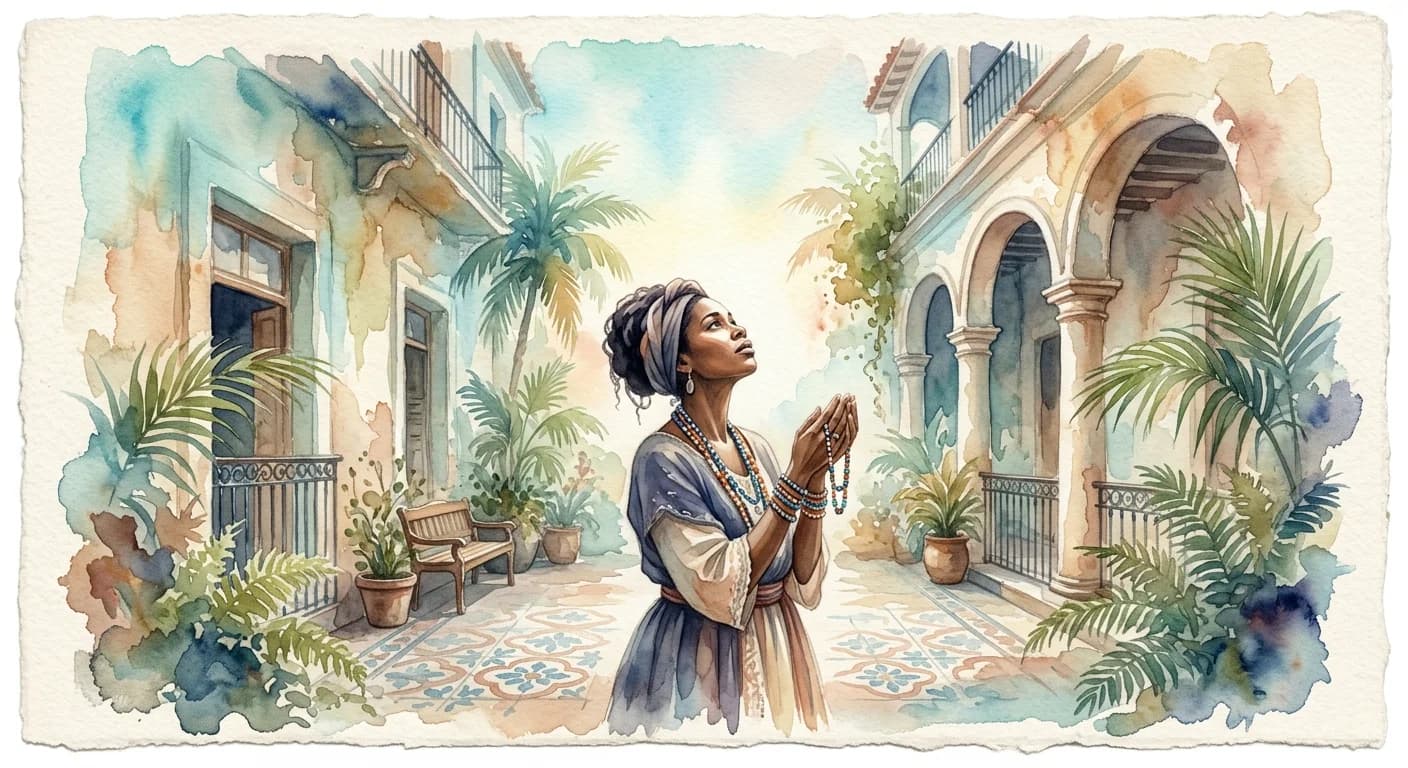
Santería
/sah-nteh-REE-ah/
Meaning
Santería, literally 'sainthood,' is a profound Afro-Cuban spiritual system that intricately weaves together Yoruba traditions with Roman Catholicism. It's not merely a religion, but a comprehensive worldview encompassing a vibrant pantheon of orishas, complex divination rituals, healing practices, and deep ancestor veneration. This living faith provides a framework for understanding the universe, navigating life's challenges, and maintaining harmony with both the spiritual and natural realms. It represents a resilient cultural heritage, born from the crucible of the transatlantic slave trade, offering a vital connection to ancestral wisdom and communal identity.
Literal Translation
Sainthood
The Story Behind the Word
Santería's existence is a testament to the extraordinary resilience and adaptability of enslaved Africans in Cuba. Stripped of their original spiritual practices, they ingeniously cloaked their Yoruba deities (orishas) behind the figures of Catholic saints, a process known as syncretism. This allowed them to preserve their ancestral faith under the oppressive gaze of colonial masters. The word 'Santería' itself, while sometimes used pejoratively by outsiders, reflects this historical necessity, literally referring to the 'way of the saints.' It reveals a culture's profound ability to maintain spiritual continuity and identity in the face of profound adversity, creating a unique spiritual cosmology where African deities and Catholic figures coexist and are revered. It's a living archive of resistance, cultural survival, and the enduring power of faith, deeply intertwined with Cuban national identity.
Experience It
Seeking Guidance
María felt lost after losing her job. She decided to visit her godmother, a respected *Santera*, to seek guidance. Through a divination ritual with cowrie shells, insights were offered regarding potential paths forward, emphasizing inner strength and the importance of family support.
Community Celebration
The community gathered for a *tambor* in honor of Changó, the orisha of thunder and fire. Rhythmic drumming filled the air as participants danced, some entering trance states, embodying the fiery energy of the deity. It was a joyous celebration of faith, community, and ancestral connection.
What Gets Lost in Translation
Many English speakers mistakenly associate Santería with 'black magic' or devil worship, often due to sensationalized media portrayals. In reality, it is a complex, ethical religion focused on personal growth, community harmony, and connection with divine forces, not malevolent practices. The use of animal sacrifice, though present, is for specific ritual purposes and not indiscriminate cruelty.
Across Cultures
Similar syncretic Afro-Diaspora religions exist across the Americas. In Brazil, Candomblé and Umbanda blend Yoruba traditions with Catholicism and indigenous beliefs. Haitian Vodou (often misspelled Voodoo) combines West African religions with Catholicism, while Louisiana Voodoo has its own distinct blend. These faiths all share a common thread of African spiritual resilience and adaptation.
The Deeper Meaning
Santería reveals a worldview where the sacred permeates the mundane, and the spiritual and material worlds are inextricably linked. It emphasizes a participatory cosmos, where humans are not passive observers but active agents in maintaining balance with the orishas and the natural world. This philosophy underscores the importance of destiny, personal character, and the continuous negotiation of one's path with the guidance of the divine.
Did You Know?
The iconic Cuban musical group, the Buena Vista Social Club, features members who are practitioners of Santería, and their music often incorporates rhythms and chants derived from Santería ceremonies, subtly sharing this rich cultural heritage with the world.
How It's Used
Santería is used to refer to the religion itself, its adherents, and its various practices and rituals. It is spoken within communities that practice the faith, particularly in Cuba and its diaspora.