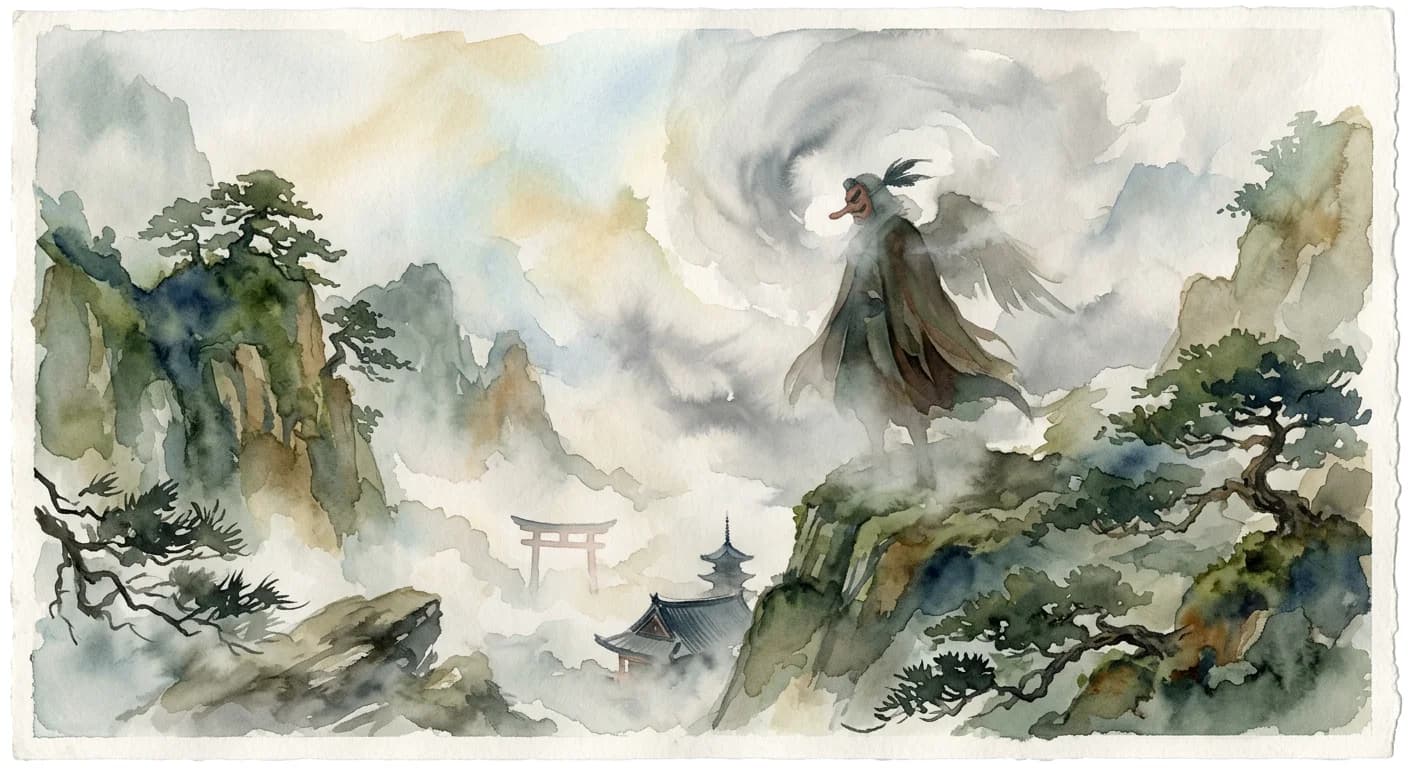
Tengu
/TEN-goo/
Meaning
Tengu are formidable and enigmatic kami (spirits) of Japanese folklore, often depicted as mountain hermits with avian features, particularly long noses or beaks, and wings. They embody both benevolent and malevolent aspects, capable of great wisdom and protection, yet also known for their pride, trickery, and sometimes violent retribution against the arrogant. Revered and feared, Tengu are deeply intertwined with the sacred nature of Japan's mountains, serving as guardians of forests and spiritual teachers, while simultaneously representing the untamed, unpredictable forces of nature.
Literal Translation
Dog-demon (though this literal translation doesn't fully capture the mythological concept)
The Story Behind the Word
The concept of Tengu evolved significantly over centuries, originating from early Buddhist texts that described 'dog-demons' (Tiangou in Chinese folklore) and later merging with indigenous Japanese mountain worship (Shugendō) and Shinto beliefs. Their association with mountains, particularly sacred peaks like Mount Kurama, positions them as powerful intermediaries between the human and spiritual realms. They often appear as stern, martial figures, sometimes punishing corrupt monks or arrogant warriors, reflecting a cultural emphasis on humility, discipline, and respect for nature's power. Their shifting portrayal, from destructive harbingers of war to wise protectors, reveals a complex cultural understanding of authority, morality, and the wild, untamed aspects of existence that demand both reverence and caution.
Experience It
Forest Guardian's Fury
A group of woodcutters, disrespecting the forest, began felling ancient trees indiscriminately. Suddenly, a powerful gust of wind swept through, followed by a terrifying shriek. They looked up to see a towering figure with a long red nose and feathered wings, the Tengu of the mountain, glaring down, a clear warning against their greed.
Martial Arts Master
A young samurai, seeking to master the sword, ventured deep into the mountains, hoping to learn from the legendary Tengu. After days of arduous climbing, he encountered a white-haired, long-nosed hermit who, through a series of impossible feats, taught him not just techniques, but the deeper philosophy of humility and connection to nature in combat.
The Deeper Meaning
Tengu personify the Japanese worldview's intricate relationship with nature and the supernatural. They represent the idea that true power often resides in the wild, untamed aspects of the world, beyond human control. Their dual nature—both wise and mischievous—reflects a philosophical understanding that morality is not always black and white, and that even powerful beings can be susceptible to flaws like pride, offering a potent reminder for human humility.
Did You Know?
Did you know that the long nose of the Daitengu, the most powerful type of Tengu, is thought to symbolize their pride and arrogance, but also their wisdom and connection to the spiritual realm?
How It's Used
Used to refer to the mythical beings in Japanese folklore, appearing in stories, art, and religious contexts.