Thermae
/THER-mee/
Meaning
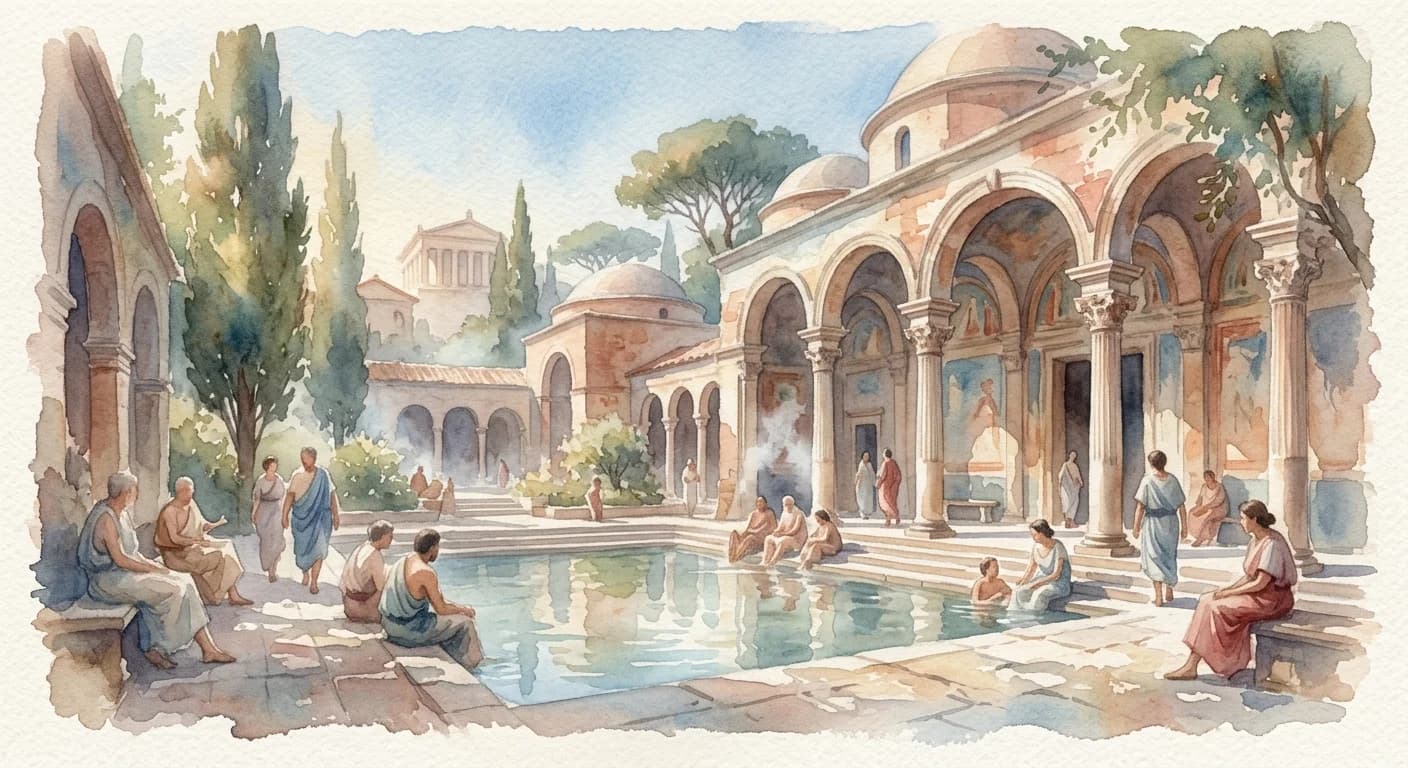
Thermae refers to the monumental public bath complexes that formed the pulsating heart of Roman and Greek urban life. Far more than mere washing facilities, these were sprawling, multi-functional sanctuaries dedicated to holistic well-being, where citizens could cleanse, exercise, socialize, and engage in intellectual discourse. They often housed libraries, gardens, lecture halls, and gymnasia, embodying a sophisticated concept of civic life where physical health, mental stimulation, and community bonding were inextricably linked and daily rituals.
Literal Translation
from Greek 'thermos' (hot) and Latin 'thermae' (baths)
The Story Behind the Word
The existence and prominence of Thermae underscore a fundamental Roman value: the communal aspect of daily life and the importance of public health and leisure. These structures were not just architectural marvels but democratic spaces, accessible to nearly all free citizens, regardless of social standing, for a nominal fee or even free of charge. This reveals a society that prioritized collective well-being and understood the power of shared experiences in fostering civic identity. The Thermae were also crucial for social mobility and political networking; deals were struck, alliances forged, and news disseminated within their steamy confines. Their elaborate construction, often funded by emperors or wealthy benefactors, served as powerful symbols of imperial grandeur and a ruler's benevolence, reflecting a worldview where public works were essential for maintaining social order and projecting power.
Experience It
A Senator's Afternoon Ritual
Senator Lucius concluded his morning's duties and headed to the Thermae. After a vigorous workout in the palaestra, he moved through the warm tepidarium, then the hot caldarium, engaging in lively debate with fellow senators before a refreshing plunge in the frigidarium, emerging invigorated for an evening symposium.
Family Day at the Baths
Young Cornelia, accompanied by her mother and grandmother, spent the afternoon at the women's section of the Thermae. While her grandmother enjoyed a gentle massage, Cornelia splashed in the cool pool, learning about Roman history from her mother in the adjoining library, a perfect blend of recreation and education.
The Deeper Meaning
The Thermae embody a philosophy of 'mens sana in corpore sano' (a sound mind in a sound body), demonstrating a deep-seated belief in the interconnectedness of physical health, intellectual pursuit, and social harmony. They reveal a worldview where well-being was not a solitary endeavor but a collective responsibility and a cornerstone of a flourishing society, recognizing the therapeutic power of communal space and ritual.
Did You Know?
Many Roman Thermae were heated by a sophisticated underfloor heating system called a hypocaust, where hot air circulated beneath raised floors and through wall cavities.
How It's Used
Used to refer to ancient Roman or Greek public baths, often emphasizing their scale and social importance.