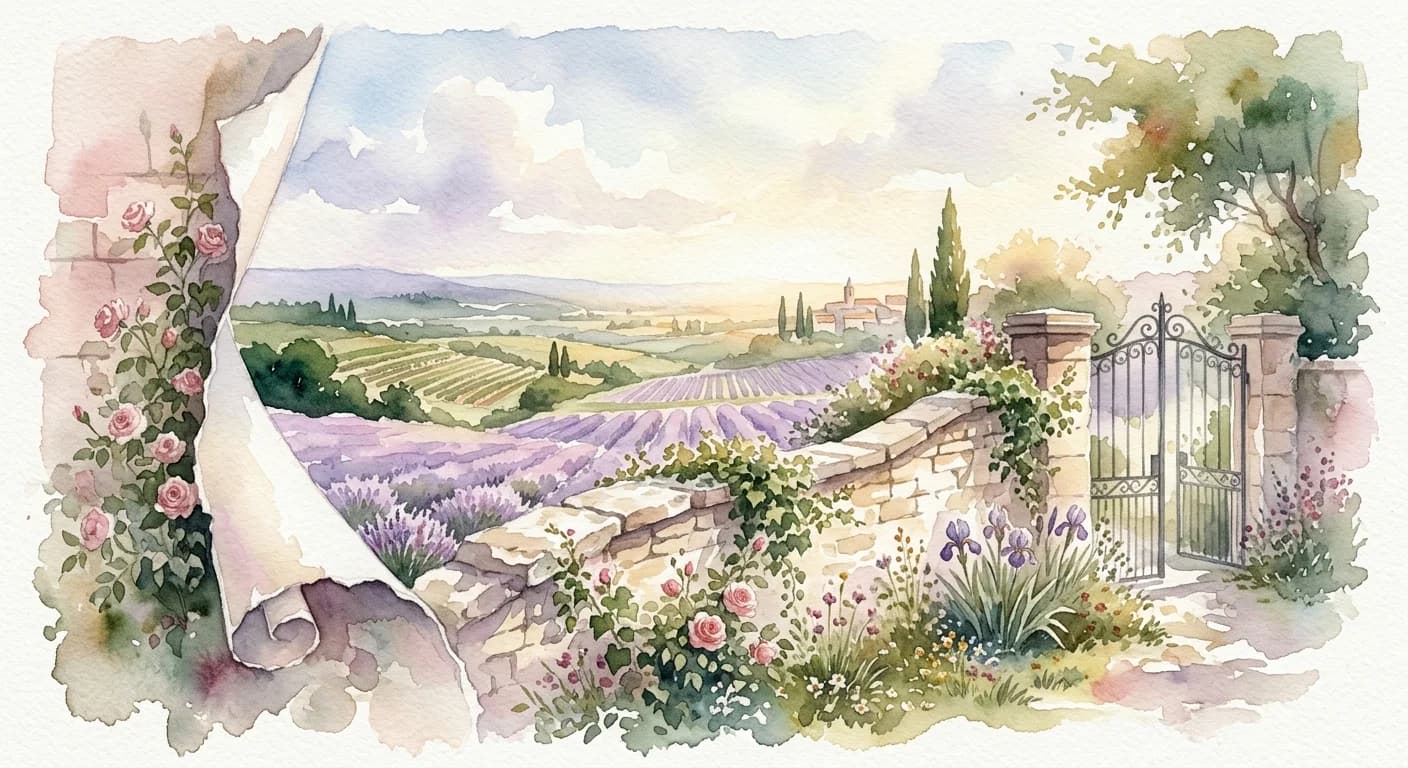
Trompe l'oeil
/tromp LOY/
Meaning
Trompe l'oeil is a captivating artistic technique that masterfully employs realistic imagery to conjure the powerful optical illusion that two-dimensional objects possess three-dimensional depth. Literally translating to 'deceive the eye,' it meticulously manipulates perspective, light, and shadow to trick the viewer into perceiving a flat surface as having tangible relief and space. This age-old practice invites a delightful sense of wonder and playful disorientation, challenging our very perception of reality and dissolving the conventional boundaries between art and the physical world.
Literal Translation
deceive the eye
The Story Behind the Word
The concept of 'trompe l'oeil' has a rich lineage deeply embedded in Western art history, particularly flourishing in France from the Renaissance onwards. Its existence reflects a long-standing fascination with mimesis – the imitation of reality – and the artist's power to create illusions. In French culture, where aesthetics and intellectual play often intertwine, trompe l'oeil isn't just a technique; it's a testament to human ingenuity and a celebration of visual wit. It speaks to a cultural appreciation for craftsmanship that can manipulate perception, turning observation into an active, delightful engagement. The phrase itself, 'deceive the eye,' suggests a playful challenge, an invitation to look closer and appreciate the artistry behind the illusion, rather than being merely tricked. It highlights a philosophical inclination to question appearances and to find beauty in the cleverness of creation.
Experience It
The Painted Window
Guests entered the elegant Parisian apartment, marveling at the sun-drenched window overlooking a bustling street scene. Only upon closer inspection did they realize the 'view' was a meticulously painted trompe l'oeil, transforming a blank wall into a vibrant urban vista, complete with faux shadows from imaginary windowpanes.
The Missing Archway
In a grand chateau, renovation plans called for a new archway to connect two rooms, but structural limitations prevented it. Instead, a skilled artist created a trompe l'oeil archway, complete with crumbling plaster effects and a glimpse of a 'distant' garden. Visitors often paused, surprised when their hand met a flat wall.
What Gets Lost in Translation
English speakers sometimes overuse 'trompe l'oeil' for any realistic painting. The key nuance is the *illusion* – it's not just about being realistic, but about actively *deceiving the eye* into believing a flat surface has depth or that a painted object is real. It implies a deliberate, often playful, trickery of perception, rather than mere verisimilitude.
Across Cultures
While 'trompe l'oeil' is French, the concept of creating realistic illusions in art is universal. Ancient Roman frescoes often featured architectural elements or landscapes that extended the perceived space of a room. In Japan, ukiyo-e woodblock prints sometimes employed clever perspective to create depth. The term 'anamorphosis' describes another related artistic technique where an image appears distorted unless viewed from a specific angle, also playing with perception.
The Deeper Meaning
'Trompe l'oeil' reveals a profound philosophical insight into the nature of perception and reality itself. It playfully underscores that what we perceive as real is often an interpretation, a construct influenced by visual cues and our brain's processing. By blurring the lines between illusion and reality, it invites us to question the certainty of our senses and ponder how much of our perceived world is, in fact, an elaborate 'deception of the eye.'
Did You Know?
Ancient Greek legend tells of a competition between painters Zeuxis and Parrhasius. Zeuxis painted grapes so realistic birds flew down to peck at them. Parrhasius, however, painted a curtain so convincing Zeuxis tried to pull it aside, admitting defeat!
How It's Used
Primarily used in the context of art, painting, and interior design to describe a style or specific artwork that creates a powerful illusion of depth and reality.