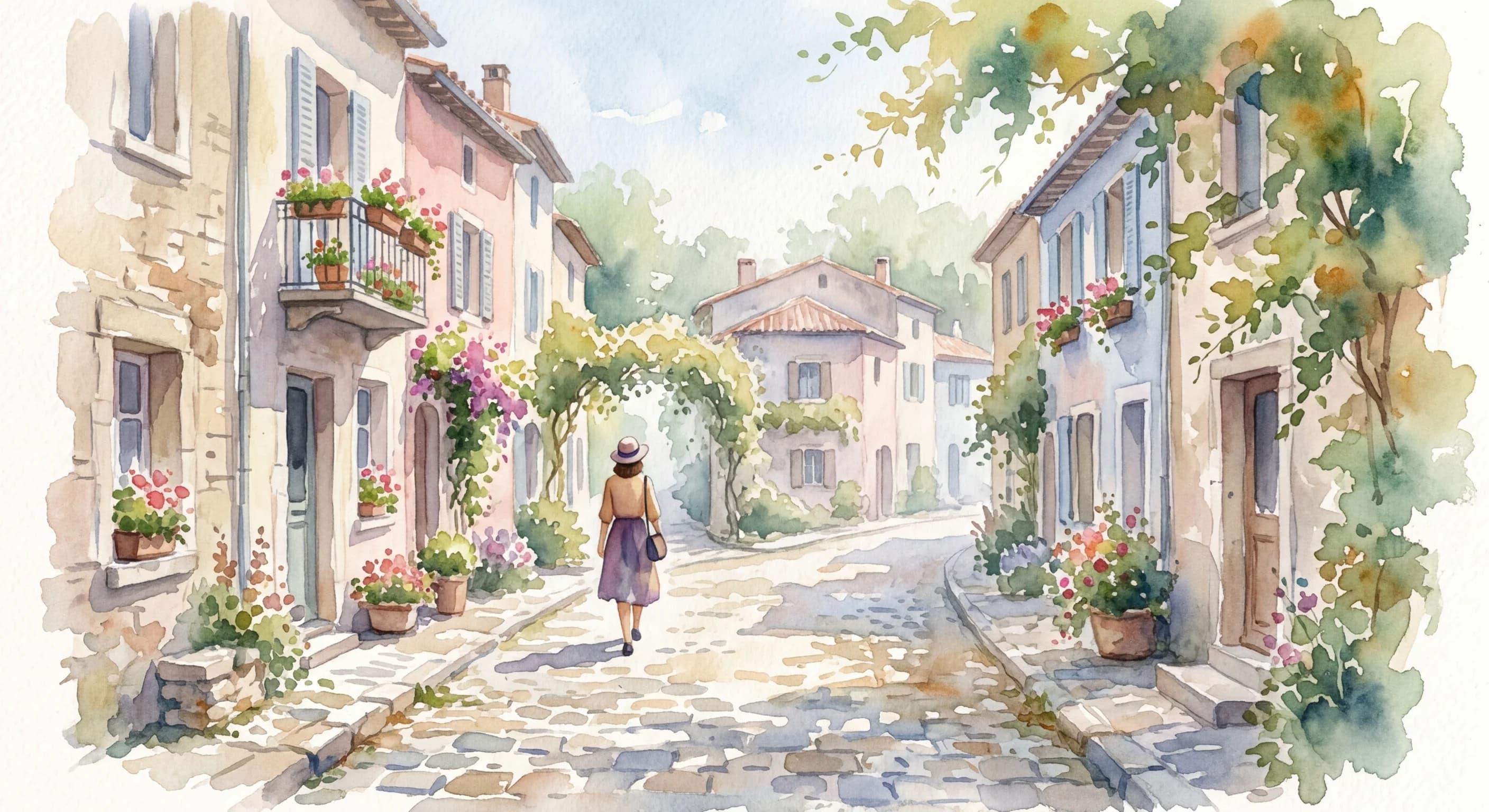
Flâner
/flah-NAY/
Meaning
Flâner transcends mere walking; it is the art of aimless, observant wandering, a deliberate cultivation of idleness. It involves immersing oneself in the sensory tapestry of one's surroundings, whether the bustling streets of a city or the quiet paths of nature, without agenda or destination. This leisurely exploration fosters a profound connection to the immediate environment, inviting serendipitous discoveries and a heightened appreciation for the present moment, a true pause from the relentless pace of modern life.
Literal Translation
To stroll, to saunter
The Story Behind the Word
The concept of "flâner" is deeply rooted in 19th-century Parisian culture, epitomized by the figure of the "flâneur" – an urban explorer, a connoisseur of the street. Coined and explored by writers like Charles Baudelaire and Walter Benjamin, the flâneur was an observer, an artist of the city, who found inspiration and meaning in the anonymous crowds and shifting urban landscape. This practice reflects a French appreciation for aesthetic contemplation, individual freedom, and the belief that profound insights can emerge from unhurried observation. It speaks to a cultural value placed on slowing down, processing the world around oneself, and finding beauty and narrative in the everyday, contrasting with a purely utilitarian view of movement.
Experience It
A Parisian Afternoon
Lost in thought, Jean-Luc decided to flâner through the Marais district. He wasn't looking for anything specific, just enjoying the intricate architecture, the scent of fresh bread from a boulangerie, and the murmur of conversations spilling from cafés, feeling utterly present.
Coastal Contemplation
On her vacation, Marie loved to flâner along the rocky coastline. She'd watch the waves crash, collect interesting pebbles, and let her mind wander, finding peace in the rhythm of the sea without any particular destination in mind.
The Deeper Meaning
Flânerie embodies a philosophy of mindful existence and radical presence. It suggests that true understanding and connection to the world aren't found through goal-oriented pursuit, but through open, receptive observation and a willingness to simply 'be' within one's environment. It champions the value of idleness as a pathway to deeper insight and appreciation.
Did You Know?
The term "flâneur" gained philosophical weight through Walter Benjamin's work, who saw the flâneur as a key figure for understanding the modern metropolis and its social dynamics.
How It's Used
Used to describe someone who enjoys leisurely walks, often in a city, with no particular goal other than to observe and enjoy the surroundings.