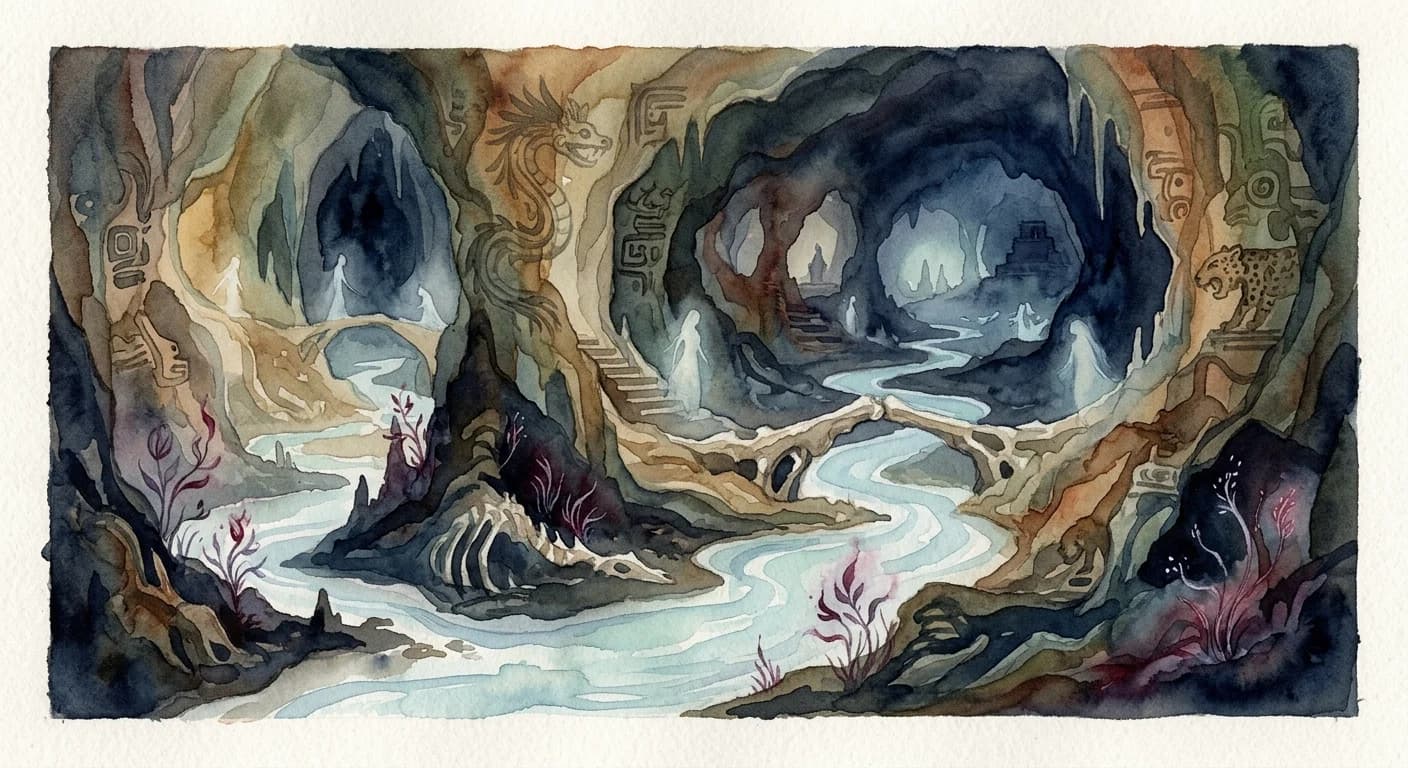
Xibalba
/shee-BAL-bah/
Meaning
Xibalba is not merely an afterlife, but a vibrant, perilous underworld in Maya cosmology, a subterranean realm teeming with challenges and presided over by formidable death gods. It is a place of inescapable judgment and transformation, where the souls of the deceased embark on a difficult journey, and where even living heroes might venture to prove their courage and cunning. This profound concept embodies the Maya's deep understanding of life's cyclical nature, the inevitability of death, and the trials inherent in existence, both mortal and spiritual.
Literal Translation
Often translated as 'place of fear' or 'underworld'
The Story Behind the Word
Xibalba is central to Maya cosmology, reflecting a worldview where the cosmos is layered: the heavens above, the earthly plane, and the intricate underworld below. Its existence underscores the Maya belief in a continuous cycle of creation, destruction, and rebirth, where death is not an end but a transition. The Popol Vuh, the sacred K'iche' Maya text, vividly details the hero twins Hunahpu and Xbalanque's descent into Xibalba to avenge their father's death, highlighting themes of sacrifice, resilience, and the triumph of life over death. This narrative cemented Xibalba not just as a place of dread, but as a crucible for heroism and a vital part of the cosmic balance, essential for the regeneration of life and the continuation of the world.
Experience It
The Shaman's Vision
During a trance, the shaman sees a jaguar god leading souls down a dark, winding path. He knows these souls are beginning their perilous journey through Xibalba, facing trials before finding their place in the cosmic cycle.
Tale of the Hero Twins
The elder recounts the story of Hunahpu and Xbalanque, emphasizing their cleverness in outwitting the Lords of Xibalba. Their victory is a reminder that even in the face of ultimate darkness, wit and courage can prevail.
The Deeper Meaning
Xibalba reveals a Maya philosophy where duality is paramount: life and death, light and dark, creation and destruction. It posits that true existence involves navigating these opposing forces, and that even the most terrifying aspects of the cosmos serve a purpose in maintaining balance and facilitating transformation. Death is not an emptiness, but a dynamic, challenging stage of being.
Did You Know?
Many natural caves and cenotes (sinkholes) in the Yucatán Peninsula were considered entrances to Xibalba by the ancient Maya, serving as sacred sites for rituals and offerings to the underworld deities.
How It's Used
Used in mythology, cosmology, and discussions of Maya spirituality to refer to the underworld.