U.
HomeRegionsLanguagesEmotionsCollections
Find Your Word

“The limits of my language mean the limits of my world.”

— Ludwig Wittgenstein, Philosopher

Untranslatable

A curated collection of the world's most beautiful expressions—words that remind us language is humanity's greatest invention.

  • Home
  • Collections
  • Regions
  • Countries
  • Emotions
  • Tags
  • Contexts
  • Finder
  • Europe
  • Asia
  • Americas
  • Africa
  • Middle East
  • About
  • Contact
  • Privacy Policy
  • Terms of Service

2026 © Untranslatable. All rights reserved.

    /
    /
    1. Home
    2. /
    3. Americas
    4. /
    5. Allyu
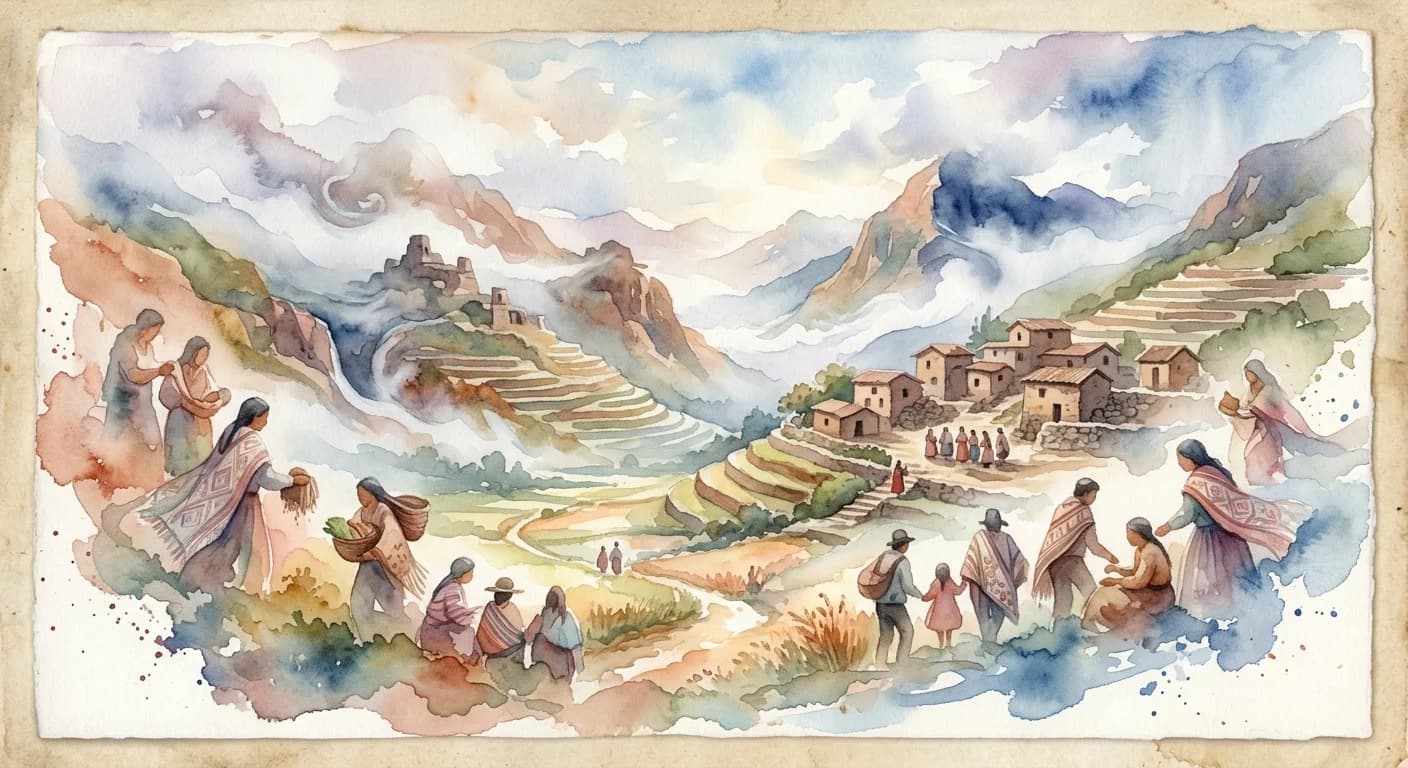
    Artistic representation of Allyu
    Quechua•
    🇧🇴Bolivia🇪🇨Ecuador🇵🇪Peru

    Allyu

    /AH-lyoo/

    Meaning

    Allyu signifies a profound and ancient Andean social structure, embodying a collective identity rooted in shared ancestry, sacred territory, and reciprocal relationships. It's more than just a group; it’s a living organism where individuals are interconnected by deep-seated trust, mutual responsibility, and a shared destiny. The well-being of each member is intrinsically linked to the health of the entire Allyu, fostering an unwavering solidarity where collective survival and prosperity take precedence over individual pursuits. This concept forms the very bedrock of Andean life, guiding interactions and ensuring communal resilience.

    Literal Translation

    Often translated as 'community', 'family', or 'kin'.

    The Story Behind the Word

    The concept of Allyu is ancient, predating the Inca Empire and persisting through centuries of colonial rule, demonstrating its fundamental importance to Andean identity. It's deeply intertwined with Andean cosmology, where the land (Pachamama) is a living entity and ancestors are ever-present. The Allyu acts as a microcosm of this cosmic order, emphasizing harmony, reciprocity (Ayni), and collective labor (Mink'a) as essential for survival in the harsh mountain environment. It reflects a worldview where humans are not separate from nature but an integral part of a larger ecological and spiritual community. This word exists because it encapsulates the very essence of Andean social organization, emphasizing interdependence and collective well-being as the highest virtues.

    Experience It

    Harvesting the Fields Together

    During harvest season, families from different households gather in one member's field, working tirelessly from dawn till dusk. They laugh, share food, and sing, knowing that tomorrow, or next week, their neighbors will return the favor, ensuring everyone's crops are brought in safely. This collective effort is the Allyu in action.

    Building a New Home

    When a young couple decides to build their home, the entire village descends with tools, materials, and food. Walls rise quickly through shared labor, and by evening, a new dwelling stands. The community's contribution is not a favor, but an expected act of solidarity, strengthening the bonds of the Allyu.

    The Deeper Meaning

    Allyu reveals a profound philosophical stance where identity is primarily communal, not individual. It champions the idea that true well-being and prosperity are achieved through interdependence and reciprocal relationships, rather than individual competition. This worldview sees humanity as deeply embedded within a social and natural fabric, where collective harmony is the ultimate goal.

    Did You Know?

    Many modern indigenous communities in the Andes still organize themselves around the Allyu system, demonstrating its enduring power and adaptability across millennia.

    How It's Used

    This term is used to refer to a community, a group of relatives, or a social collective that shares a common bond, often in rural Andean communities.

    Emotions
    belonging,comfort,gratitude,peace
    Contexts
    community,family,friendship
    🇧🇴Bolivia🇪🇨Ecuador🇵🇪Peru

    by Kwame Nkrumah·Written Mar 14, 2026·Updated Apr 3, 2026

    Related Words

    Explore more
    Dolce far nienteItalian

    Dolce far niente captures the profound joy and effortless pleasure derived from simply existing without obligation or purpose. It's the art of savoring moments of pure, unadulterated idleness – lying in the sun, watching the clouds drift, or enjoying a leisurely coffee – not as a break from work, but as a valuable state in itself. This 'sweetness of doing nothing' is a conscious embrace of stillness and contentment, allowing the soul to breathe and the senses to fully engage with the present.

    SobremesaSpanish

    Sobremesa is the cherished, often extended period immediately following a meal, particularly lunch or dinner, where diners remain seated at the table to enjoy conversation, coffee, and digest not just the food, but the company itself. It’s a dedicated time for unhurried social bonding, storytelling, and shared laughter, transforming a simple meal into a profound communal experience. Far from just clearing the dishes, sobremesa is an integral part of Spanish social life, often lasting for hours.

    Pura vidaSpanish

    More than just 'pure life,' "Pura vida" encapsulates a profound philosophy of embracing the present moment with unwavering optimism and gratitude. It's a daily commitment to finding joy in simple pleasures, accepting life's challenges with a positive spirit, and prioritizing well-being over material possessions. This ubiquitous phrase reflects a national identity built on resilience, community, and an deep appreciation for nature's bounty.

    MamihlapinatapaiYaghan

    Mamihlapinatapai encapsulates that profound, unspoken moment when two individuals lock eyes, each silently acknowledging a mutual desire or intention, yet both hesitate to be the first to act upon it. It's a delicate dance of anticipation, a shared gaze brimming with common understanding and a quiet longing for the other to break the ice. This intricate look carries the weight of a shared, uninitiated potential, a silent conversation where both parties are perfectly aware of what could happen, but neither makes the first move.