Anchanchu
/ahn-CHAHN-choo/
Meaning
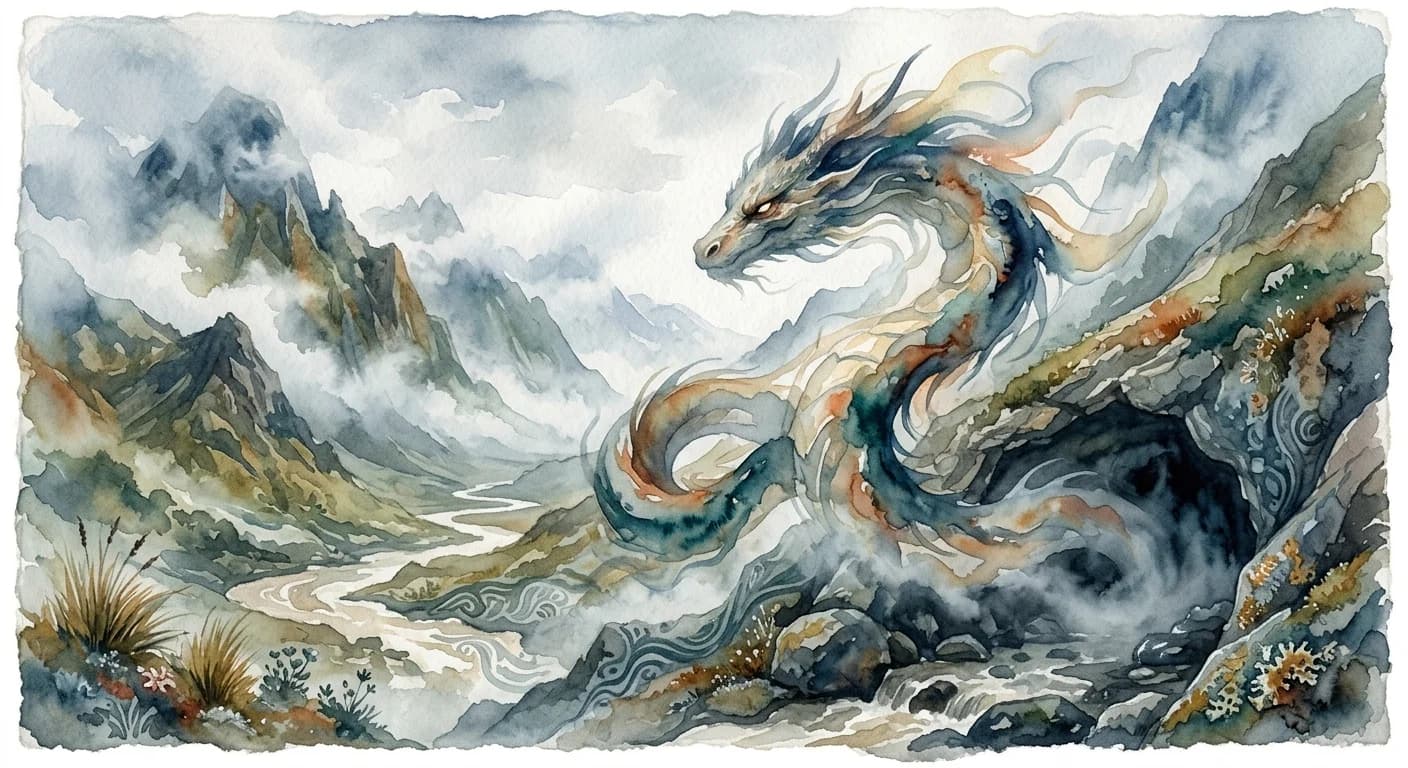
Anchanchu is a malevolent, often serpentine or dragon-like spirit in Aymara folklore, dwelling in hidden, wild places like caves, rivers, and remote mountains. It embodies the untamed, dangerous aspects of nature, capable of causing illness, misfortune, and even death, particularly to those who trespass upon its domain or fail to show proper respect to the Pachamama (Mother Earth). This creature serves as a potent reminder of the precarious balance between human existence and the formidable, often terrifying, power of the natural world in the Andean highlanders' cosmology.
Literal Translation
The literal translation is debated, but often linked to 'serpent' or 'dragon-like creature'.
The Story Behind the Word
The Anchanchu exists as a powerful manifestation of the Aymara worldview, which deeply respects and fears the forces of nature. Unlike Western perspectives that often seek to conquer or control nature, the Aymara understand themselves as intricately linked to and dependent on it, but also vulnerable to its unpredictable wrath. The Anchanchu acts as a guardian of sacred and wild spaces, enforcing a traditional ecological knowledge that warns against exploitation and disrespect. Its presence in oral traditions reinforces communal values of caution, humility, and the necessity of ritual offerings to appease powerful spirits, ensuring harmony between humans and the unseen world. It represents the 'other' — the wild, uncultivated, and potentially hostile forces that surround human settlements, serving as a cautionary tale for children and a spiritual explanation for unexplained misfortunes or illnesses.
Experience It
Lost in the Mountains
Young Mateo, venturing too far into the remote peaks without an offering, suddenly felt a chilling wind and a crushing weight in his chest. His grandmother later whispered, 'The Anchanchu claimed a piece of your spirit for your disrespect. We must make amends to the mountain.'
Mysterious Illness
After the new road construction disturbed the ancient riverbed, several villagers fell ill with an unknown fever. The elders consulted a yatiri, who declared, 'The Anchanchu of the river is angered. We must perform a cleansing ritual to appease its fury.'
The Deeper Meaning
The Anchanchu encapsulates a profound ecological philosophy, highlighting the Aymara understanding of nature not as a resource to be exploited, but as a living entity with agency and temperament. It underscores the concept of 'reciprocity' (ayni), where humans must maintain a respectful, balanced relationship with the spiritual forces of the land to avoid calamity, thus revealing a worldview where spiritual well-being is inextricably linked to environmental harmony.
Did You Know?
Some Aymara communities believe the Anchanchu can be appeased with offerings of coca leaves, alcohol, or even a small sacrifice, transforming its malevolence into a more neutral or even protective force for those who show proper reverence.
How It's Used
Used in storytelling, folklore, and cultural discussions within Aymara communities to describe a malevolent supernatural entity.