Farniente
/far-nee-EN-tay/
Meaning
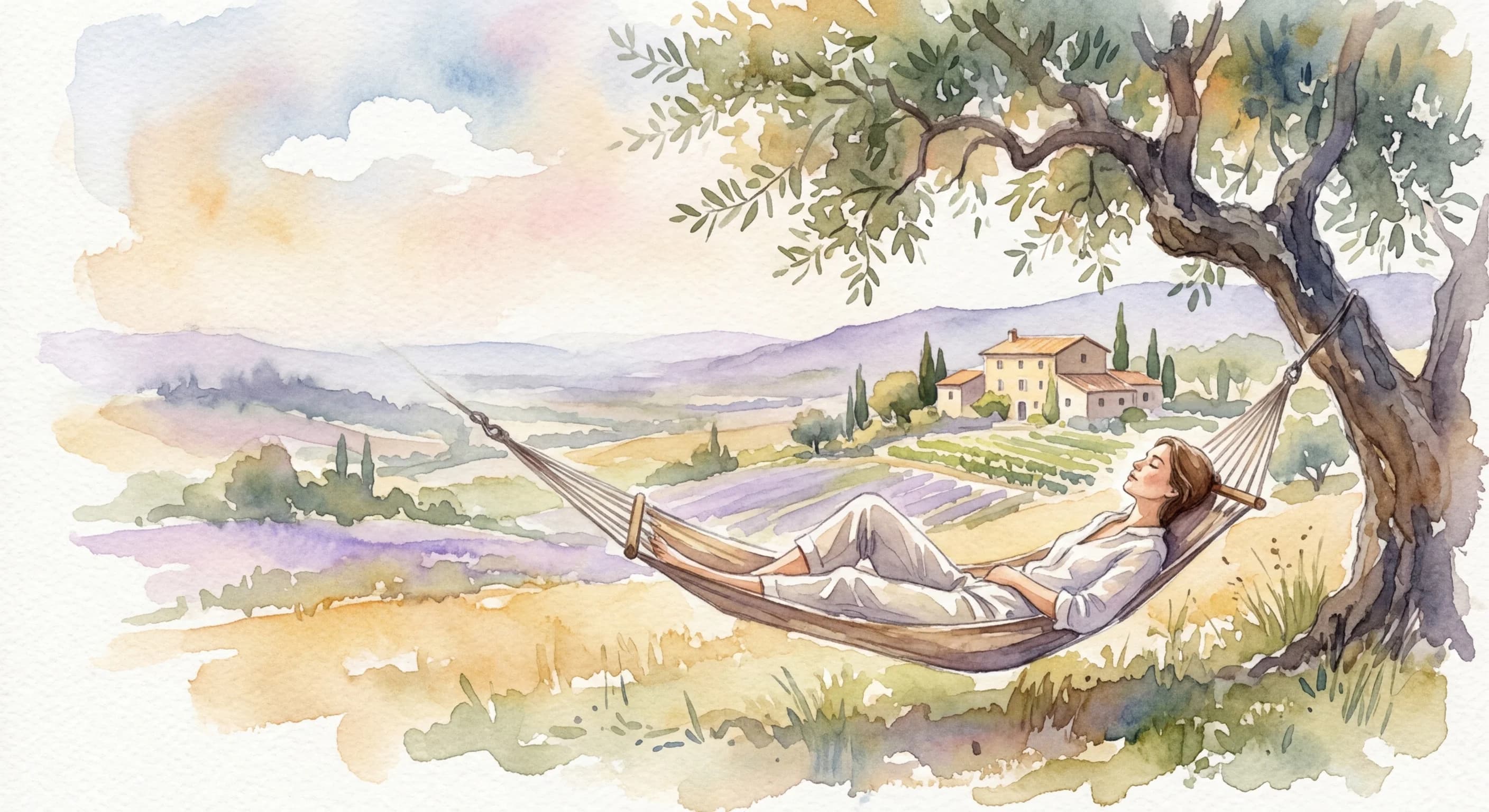
Farniente embodies the exquisite art of doing nothing, a conscious and cherished idleness that transcends mere laziness. It signifies a deliberate suspension of all activity, a soulful surrender to moments of pure, unadulterated leisure and relaxation, entirely free from the shackles of guilt or obligation. This concept is woven into the fabric of Mediterranean life, where pausing to simply exist, to absorb the ambiance, and to revel in the present moment is foundational to genuine well-being. It's about discovering profound contentment in peaceful inactivity, a serene embrace of the 'now' that English terms like 'idleness' or 'leisure' only partially grasp.
Literal Translation
from 'far niente' (Italian: doing nothing)
The Story Behind the Word
The concept of 'farniente' is deeply rooted in the Mediterranean ethos, particularly influenced by Southern European cultures where the climate and historical agricultural rhythms encouraged periods of rest during the hottest parts of the day. It reflects a societal valuation of leisure not as an absence of work, but as a vital component of a balanced, fulfilling life. This perspective contrasts sharply with cultures that prioritize constant productivity, revealing a worldview where time is not solely a commodity to be optimized, but also a resource to be savored. 'Farniente' underscores a belief in the inherent worth of being over doing, and the importance of sensory engagement with one's surroundings, contributing to a slower, more deliberate pace of life.
Experience It
Afternoon Siesta Delight
Under the dappled shade of an olive tree, Jean-Pierre reclines in a worn armchair, a half-read book resting on his chest. He's not sleeping, nor is he actively reading; he's simply observing the butterflies, feeling the gentle breeze, and letting his thoughts drift, completely absorbed in the farniente of the afternoon.
Riverside Repose
On a warm Sunday, a group of friends gather by the river, not for a picnic or a game, but just to sit. They chat sporadically, watch the water flow, and enjoy the quiet companionship, each lost in their own peaceful farniente, without any agenda or pressure to 'do' anything.
The Deeper Meaning
Farniente embodies a philosophical rejection of constant striving and a celebration of mindful presence. It suggests that true well-being is not solely derived from achievement or productivity, but also from the capacity to disengage, to appreciate the simple act of existing, and to find joy in stillness. This worldview challenges the modern compulsion for perpetual motion, advocating for a deliberate embrace of leisure as a pathway to inner peace and a richer sensory experience of life.
Did You Know?
The word 'farniente' is a direct borrowing from the Italian phrase 'far niente', literally meaning 'to do nothing', highlighting its deep Mediterranean linguistic and cultural origins.
How It's Used
Used to describe periods of enjoyable inactivity, often spent outdoors or in a relaxed setting, without any specific purpose or task.