Babanuki
/bah-bahn-oo-kee/
Meaning
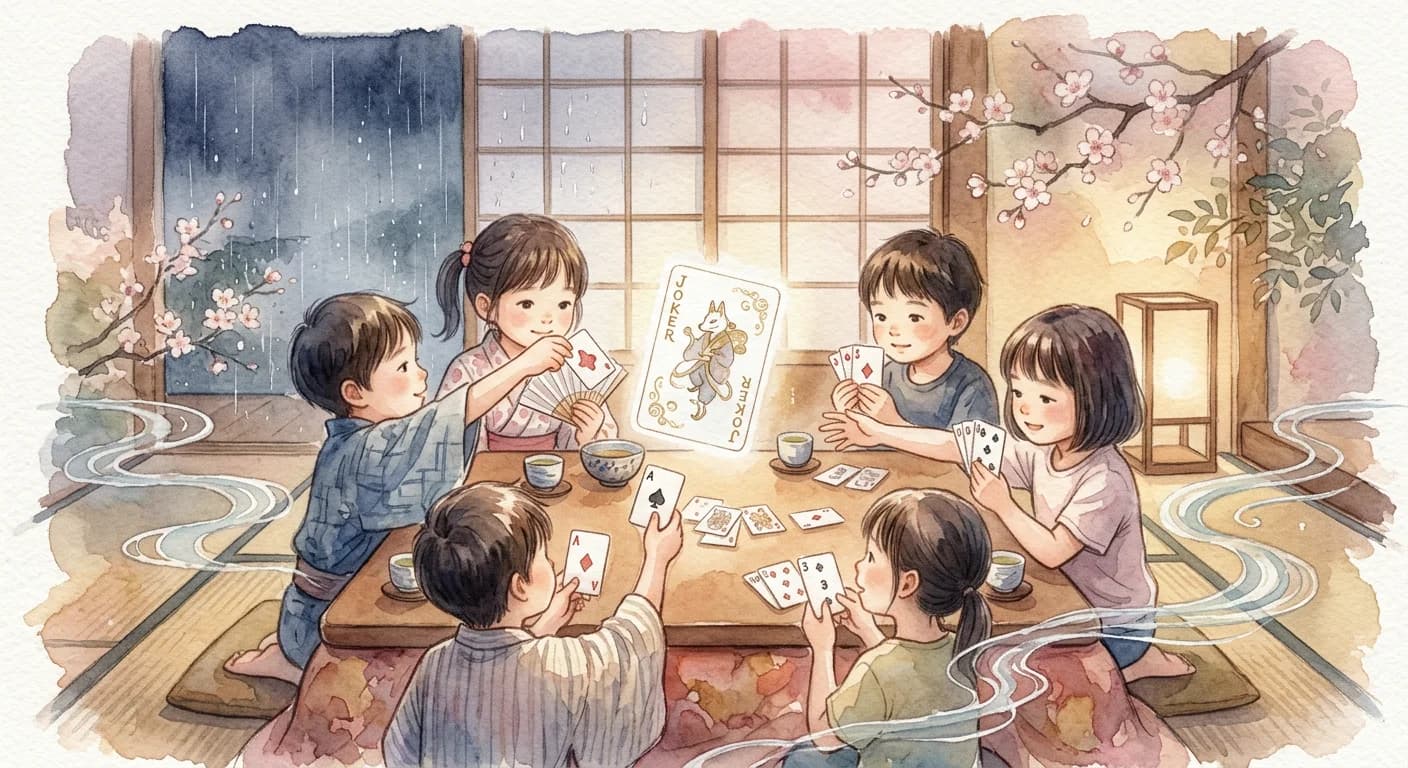
Babanuki is a cherished Japanese card game, a playful adaptation of 'Old Maid,' where the goal is to skillfully offload all your cards and avoid being saddled with the singular, dreaded 'Babanuki' card – often represented by a Joker. It's a game deeply woven into the fabric of Japanese childhood, conjuring images of rainy afternoons spent around a low table or boisterous family gatherings. The shared anticipation and lighthearted strategy cultivate bonds, making it more than just a game, but a memory-making ritual that evokes warmth and innocent suspense.
Literal Translation
Old Woman/Joker (in the context of the card game)
The Story Behind the Word
While seemingly a simple children's game, Babanuki subtly reflects aspects of Japanese social dynamics, particularly the emphasis on avoiding being an outlier or 'sticking out.' The 'Babanuki' card itself, often depicted as an 'old hag' (Baba) or a mischievous Joker, embodies a humorous, non-threatening form of social exclusion. The game's structure, where players are constantly trying to pass the unwanted card to someone else, mirrors a collective responsibility in maintaining harmony and subtly deflecting awkward situations. It teaches children about strategic social interaction and the mild consequences of being left holding the 'unwanted' item, all within a safe and playful context. The shared laughter when someone is caught with the Babanuki card fosters camaraderie rather than genuine ridicule, reinforcing group cohesion.
Experience It
Family Game Night
During a New Year's family gathering, Auntie Emiko shuffles the deck for a round of Babanuki. Laughter erupts as little Kenji, eyes wide, realizes he's been passed the Joker, his cheeks puffing out in mock frustration while everyone else cheers good-naturedly.
Rainy Day Club
At school during a torrential downpour, a group of elementary students huddle around a desk, engrossed in Babanuki. 'Oh no, it's me!' giggles Hana, holding up the 'old woman' card, prompting a chorus of playful teasing from her friends.
The Deeper Meaning
Babanuki, in its innocent simplicity, offers a subtle commentary on the human desire for belonging and the avoidance of being the 'odd one out.' It playfully simulates the social dance of navigating collective experiences, where individuals strive to blend in and pass on any 'undesirable' elements, ultimately reinforcing group harmony through shared amusement rather than genuine ostracization. The game teaches a gentle lesson about the fluidity of fortune and the collective joy found in both winning and losing within a supportive community.
Did You Know?
The word 'Babanuki' literally combines 'Baba' (old woman or hag) and 'nuki' (to pull out or remove), referring to the singular, unwanted card that must be 'removed' from your hand.
How It's Used
Played as a card game, usually with a deck of cards where one Joker is removed. Players discard pairs, and the person left holding the single unpaired card loses.