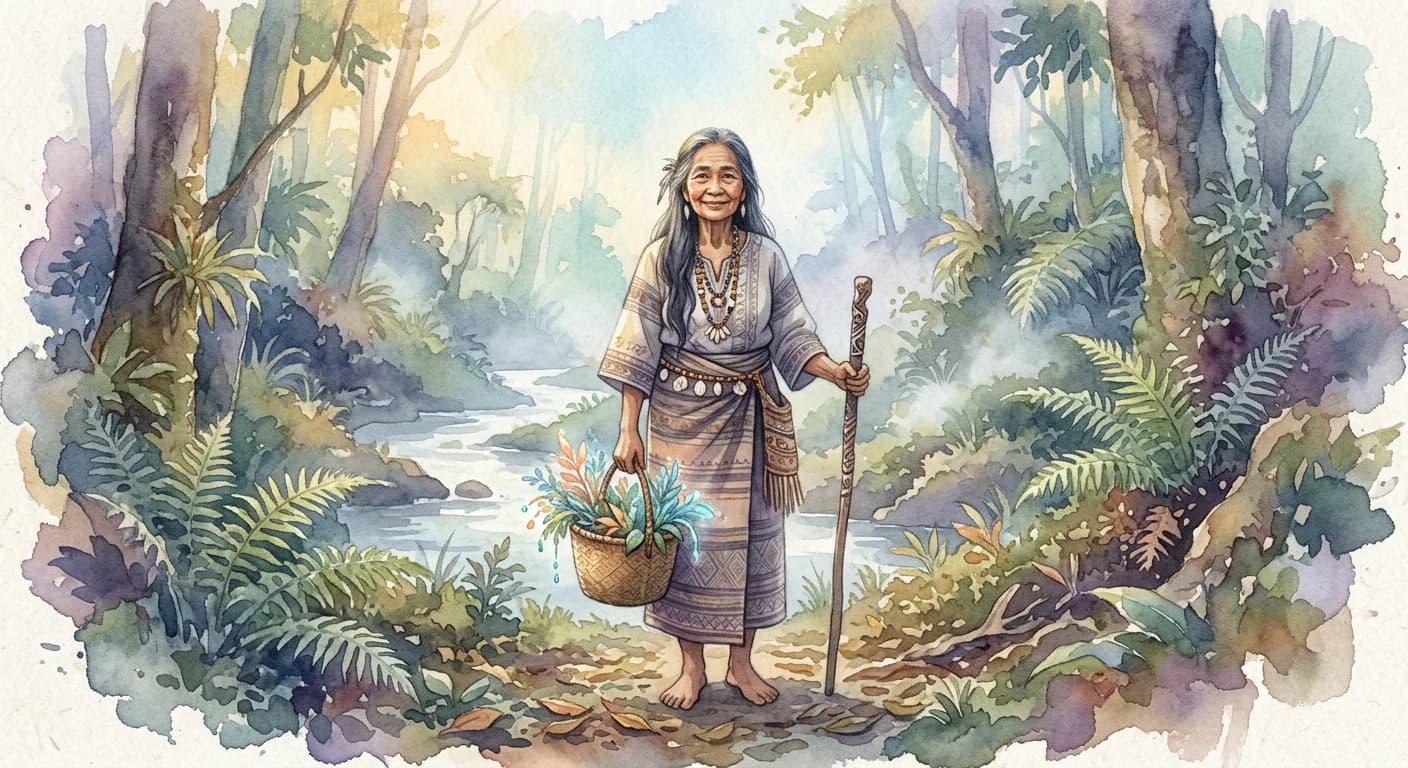
Babaylan
/BAH-bah-yahn/
Meaning
The Babaylan embodies a profound spiritual conduit, a revered healer, and a sagacious figure within pre-colonial Filipino societies, especially among the Visayans. Far beyond a mere shaman, the Babaylan wielded immense social and political influence, serving as the vital nexus between the tangible world and the ancestral spirit realms. They meticulously safeguarded ancient traditions, intricate lore, and potent medicinal knowledge, guiding their communities through sacred rituals, profound healing ceremonies, and insightful spiritual counsel, thereby weaving the very fabric of communal well-being and spiritual life across the islands.
Literal Translation
Often translated as 'shaman' or 'spiritual leader', but carries deeper connotations of wisdom, healing, and community guidance.
The Story Behind the Word
The Babaylan's existence is deeply rooted in the animistic worldview prevalent in pre-colonial Philippines, where the spiritual and physical realms were not separate but intimately intertwined. This word reflects a society that valued harmony with nature, respect for ancestors, and the belief in unseen forces influencing daily life. The Babaylan was the living embodiment of this interconnectedness, interpreting omens, mediating disputes with spirits, and ensuring the health and prosperity of the community through their spiritual authority. Their role transcended gender, though often associated with women, highlighting a societal structure that recognized spiritual power as paramount, often placing it above purely physical or martial prowess. The Babaylan was not just a leader; they were the spiritual heart and conscience of the indigenous Filipino community, signifying a holistic approach to life that integrated faith, healing, governance, and cultural preservation.
Experience It
A Community's Plea
A strange illness sweeps through the village, baffling the elders. The community gathers, their faces etched with worry, turning to Apo Laki, the Babaylan, for guidance. She enters a trance, communing with the ancestors, seeking the root cause and the spiritual remedy for their affliction.
Blessing the Harvest
Before the crucial rice harvest, the villagers prepare offerings. Babaylan Elena leads the ritual, her chants echoing through the fields, calling upon the spirits of the land and sky to ensure a bountiful yield and protect the community from famine, reinforcing their connection to the earth.
The Deeper Meaning
The Babaylan embodies a philosophy of holistic existence, where individual and communal well-being are inseparable from spiritual harmony and environmental balance. It reveals a worldview that sees the cosmos as alive and interconnected, where humanity is but one part of a larger, sacred tapestry. This perspective emphasizes reverence for nature, respect for ancestral wisdom, and the understanding that true leadership stems from spiritual insight and the ability to bridge visible and invisible worlds.
Did You Know?
Did you know that while often perceived as female, historical accounts and archaeological findings indicate that male Babaylan, known as Asog, also existed and were equally revered for their spiritual prowess, sometimes even adopting female roles or attire?
How It's Used
The term 'Babaylan' is used to refer to these indigenous spiritual leaders and healers, particularly in historical contexts or in discussions about indigenous Philippine culture and spirituality.