Beguinage
/BEG-in-aj/
Meaning
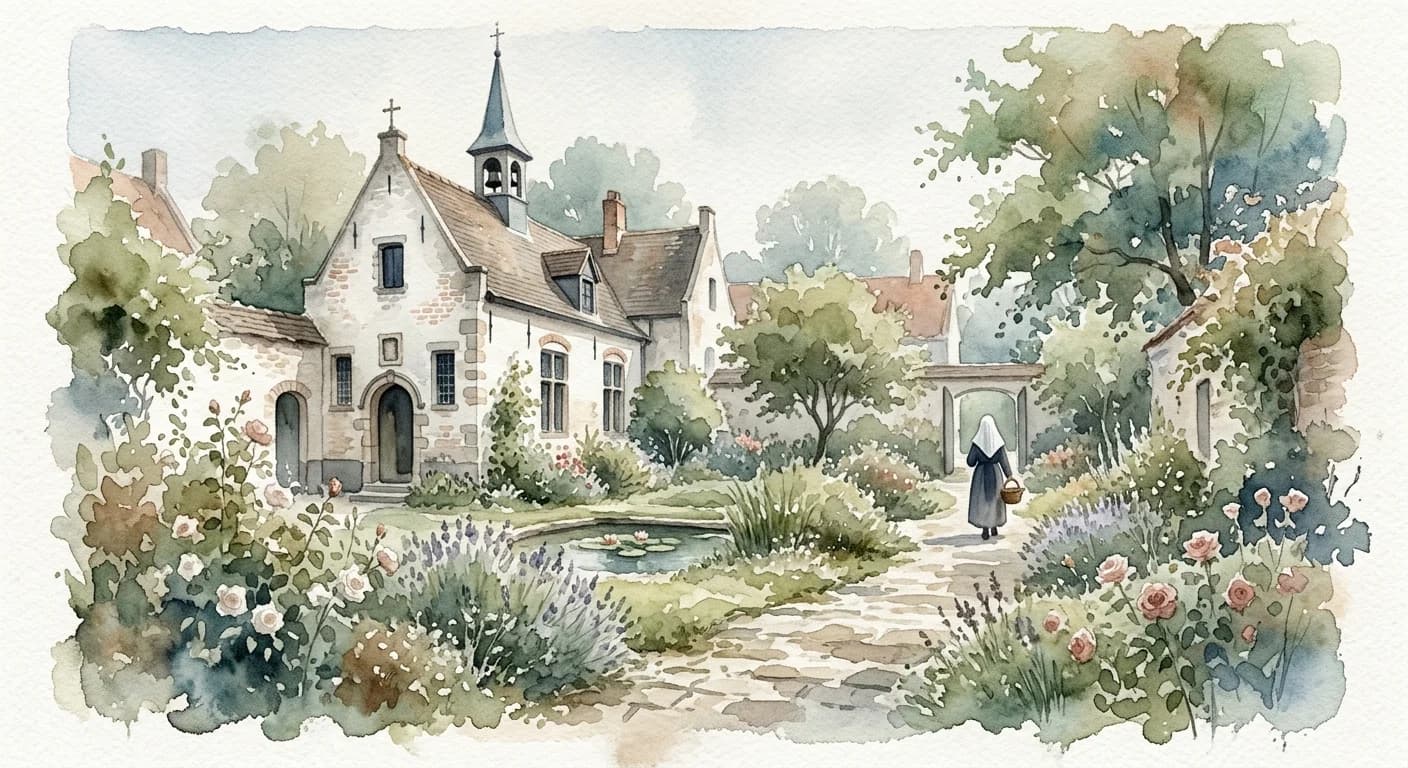
A beguinage refers to a captivating historical community, often a tranquil oasis within bustling medieval cities, built for beguines. These extraordinary women lived a semi-monastic life, dedicating themselves to piety, prayer, and charitable works without taking formal vows, offering a unique path distinct from marriage or the cloister. These walled enclaves fostered a profound sense of sisterhood, spiritual devotion, and economic self-sufficiency, preserving a tangible legacy of female empowerment and communal living in a bygone era.
Literal Translation
From Old French 'beguinage', referring to the dwelling place of beguines.
The Story Behind the Word
The concept of the beguinage emerged in the Low Countries during the 12th century, a time of profound societal change and religious fervor. It represented a radical and pragmatic solution for women who felt a spiritual calling but lacked the dowry for a convent or rejected the constraints of traditional marriage. The beguinages provided economic independence through various crafts, especially lacemaking and weaving, allowing women to live devout lives "in the world" while maintaining a protected, communal environment. This phenomenon highlights a unique blend of spiritual aspiration, social innovation, and female agency, reflecting a culture that, while patriarchal, could also create spaces for unconventional ways of life. The beguinage reveals a pragmatic yet deeply spiritual worldview, where communal support and practical work were intertwined with religious devotion, offering an alternative social structure that empowered women for centuries.
Experience It
Visiting a Historic Site
During her trip to Bruges, Sarah wandered into the Begijnhof, immediately struck by the quiet serenity. The white-washed houses and inner garden transported her back in time, allowing her to imagine the lives of the beguines who once resided there, weaving and praying within its peaceful walls.
Discussing Urban Planning
The architect pointed to the map, explaining, "The medieval beguinage structure is a fascinating example of early urban planning for communal living." He elaborated on how these self-contained communities provided both security and a distinct social fabric within the larger city, influencing later residential designs.
The Deeper Meaning
The beguinage embodies a philosophy of practical spirituality and communal self-determination. It demonstrates that profound religious devotion need not be confined to rigid institutional structures, and that women could forge independent, self-sufficient lives rooted in shared values and mutual support, challenging conventional societal roles and expectations.
Did You Know?
Many beguinages, like the one in Bruges, are still inhabited today, often by nuns or single women, continuing a tradition of female communal living that spans over 800 years.
How It's Used
The term 'beguinage' is primarily used to refer to the architectural complex or the historical phenomenon of beguinages. It is often encountered when discussing historical sites, religious history, or urban heritage, particularly in Flanders and the Netherlands.