U.
HomeRegionsLanguagesEmotionsCollections
Find Your Word

“The limits of my language mean the limits of my world.”

— Ludwig Wittgenstein, Philosopher

Untranslatable

A curated collection of the world's most beautiful expressions—words that remind us language is humanity's greatest invention.

  • Home
  • Collections
  • Regions
  • Countries
  • Emotions
  • Tags
  • Contexts
  • Finder
  • Europe
  • Asia
  • Americas
  • Africa
  • Middle East
  • About
  • Contact
  • Privacy Policy
  • Terms of Service

2026 © Untranslatable. All rights reserved.

    /
    /
    1. Home
    2. /
    3. Europe
    4. /
    5. Pantofolaio
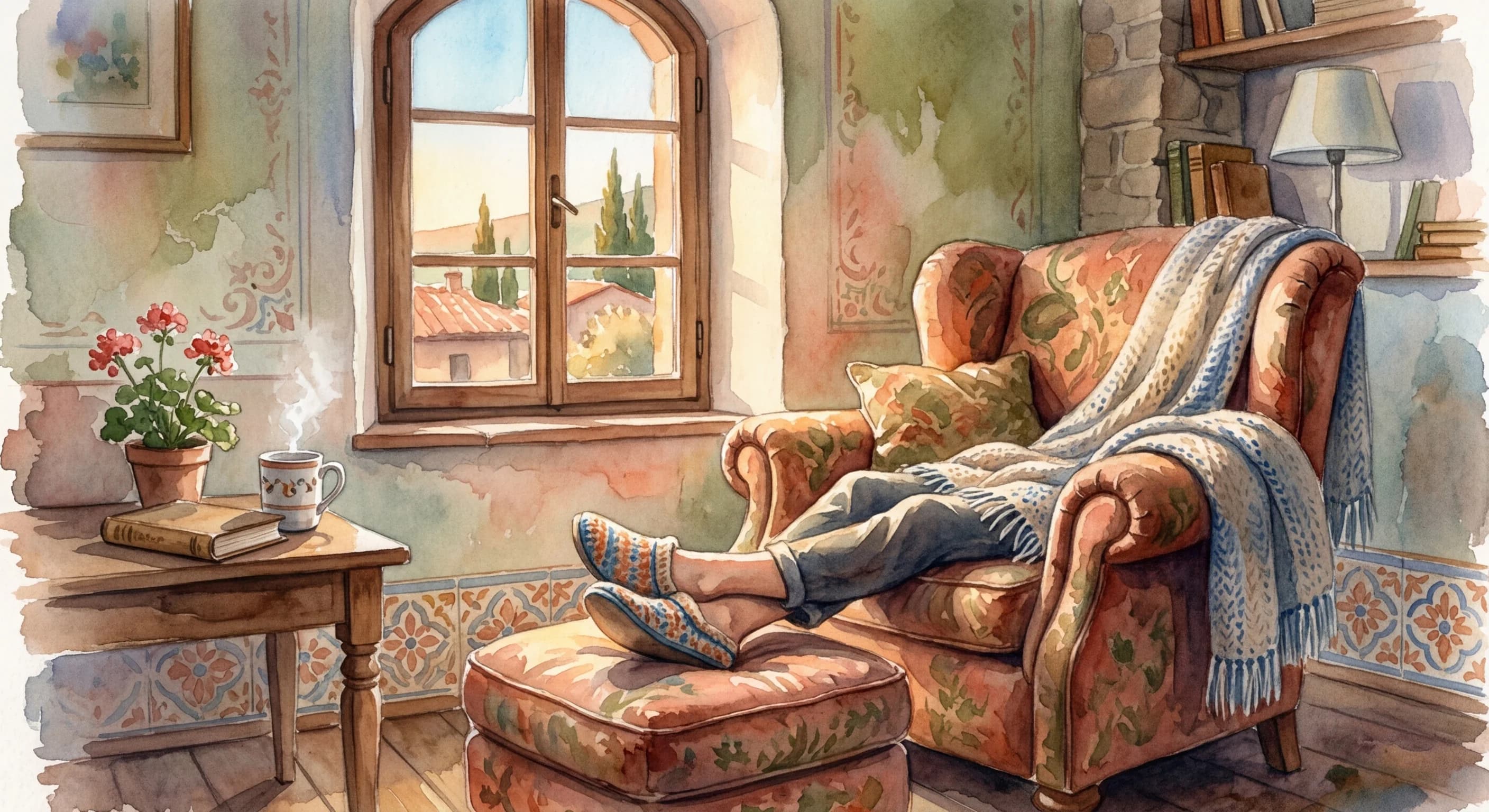
    Artistic representation of Pantofolaio
    Italian•
    🇮🇹Italy

    Pantofolaio

    /pahn-toh-foh-LAH-yoh/

    Meaning

    A 'pantofolaio' is more than just a homebody; it's someone who has mastered the art of domestic bliss, finding profound comfort and contentment within the walls of their own sanctuary. This individual deliberately chooses their private space, often adorned with the soft embrace of 'pantofole' (slippers), over the clamor of the outside world. It's a cherished appreciation for simple, personal pleasures, a testament to the Italian value of 'dolce far niente' – the sweetness of doing nothing – but with a dedicated focus on the home. The term carries a warm, slightly teasing affection, acknowledging a deep-seated love for one's personal haven.

    Literal Translation

    Slipper-wearer (derived from 'pantofola', meaning slipper)

    The Story Behind the Word

    The 'pantofolaio' embodies a deeply ingrained aspect of Italian culture: the centrality of the home (la casa) as the ultimate refuge and heart of family life. Italy's strong family values and emphasis on communal meals often mean that home is not just a dwelling, but a vibrant, living entity filled with warmth, history, and comfort. The word highlights a preference for genuine, intimate connections within a familiar setting over perhaps more superficial social obligations. It reflects a society that values comfort, relaxation, and personal well-being, often finding these more genuinely within the domestic sphere. This isn't about reclusiveness, but a conscious choice to cultivate a rich inner life and enjoy the simple, profound pleasures that home offers, echoing a philosophy where true happiness is often found in the small, cherished moments of daily life.

    Experience It

    Sunday Afternoon Retreat

    Giovanni declined yet another invitation to the piazza, smiling. 'No, thank you. Today, I am a true pantofolaio,' he declared, already settled into his favorite armchair with a book and a steaming espresso, his well-worn slippers providing perfect comfort.

    The Comfort of Routine

    After a long week, Sofia's husband, Marco, shed his work clothes, donned his softest 'pantofole,' and announced, 'Ah, finally, the life of a pantofolaio begins!' He then proceeded to putter contentedly in his study, completely at peace.

    The Deeper Meaning

    The 'pantofolaio' reveals a philosophy centered on 'la quiete' (quietude) and 'il benessere' (well-being) found in one's personal domain. It suggests that true contentment often lies not in external validation or endless social engagement, but in cultivating a rich, peaceful inner world within the comforts of home. It's an affirmation of the value of slowness, introspection, and the simple joys that a well-loved personal space can provide.

    Did You Know?

    While traditionally applied to men, the spirit of being a 'pantofolaio' (or 'pantofolaia' for women) is increasingly embraced by anyone who cherishes their home as a personal haven.

    How It's Used

    Used to describe someone, typically male, who prefers staying home and relaxing in comfortable attire, often to the point of avoiding social engagements.

    Emotions
    comfort,contentment,serenity
    Contexts
    home,relaxation,solitude
    🇮🇹Italy

    by Annelise Dubois·Written Mar 10, 2026·Updated Apr 3, 2026

    Related Words

    Explore more
    HyggeDanish

    Hygge is more than mere coziness; it's a holistic embrace of comfort, warmth, and belonging that nourishes the soul. It describes the intentional creation of an intimate atmosphere where simple pleasures, genuine connection, and mindful presence converge, fostering a profound sense of contentment and well-being. It's about finding joy and peace in the small, everyday moments, often shared with loved ones.

    SaudadePortuguese

    Saudade encapsulates a profound, melancholic longing for something or someone cherished that is absent, often with the bittersweet knowledge that it may never return. It's a deep emotional state tinged with nostalgia, evoking a sense of loss for past experiences, places, or people, yet also holding a tender appreciation for the beauty of what once was. This yearning is not merely sadness, but a complex tapestry of desire, memory, and a poignant acceptance of absence, holding the beloved in a warm, persistent embrace within the heart.

    GezelligDutch

    Gezellig encapsulates a profound sense of warmth, belonging, and convivial comfort, extending beyond mere coziness to embrace the social and emotional atmosphere. It's the feeling of being truly at ease, surrounded by good company, laughter, and a shared sense of contentment. This untranslatable term describes not just a physical space, but a holistic experience where time seems to slow down, fostering genuine connection and a deep sense of well-being.

    Dolce far nienteItalian

    Dolce far niente captures the profound joy and effortless pleasure derived from simply existing without obligation or purpose. It's the art of savoring moments of pure, unadulterated idleness – lying in the sun, watching the clouds drift, or enjoying a leisurely coffee – not as a break from work, but as a valuable state in itself. This 'sweetness of doing nothing' is a conscious embrace of stillness and contentment, allowing the soul to breathe and the senses to fully engage with the present.

    Featured in 1 collection

    ☕Sweet Idleness