U.
HomeRegionsLanguagesEmotionsCollections
Find Your Word

“The limits of my language mean the limits of my world.”

— Ludwig Wittgenstein, Philosopher

Untranslatable

A curated collection of the world's most beautiful expressions—words that remind us language is humanity's greatest invention.

  • Home
  • Collections
  • Regions
  • Countries
  • Emotions
  • Tags
  • Contexts
  • Finder
  • Europe
  • Asia
  • Americas
  • Africa
  • Middle East
  • About
  • Contact
  • Privacy Policy
  • Terms of Service

2026 © Untranslatable. All rights reserved.

    /
    /
    1. Home
    2. /
    3. Europe
    4. /
    5. Passeggiata
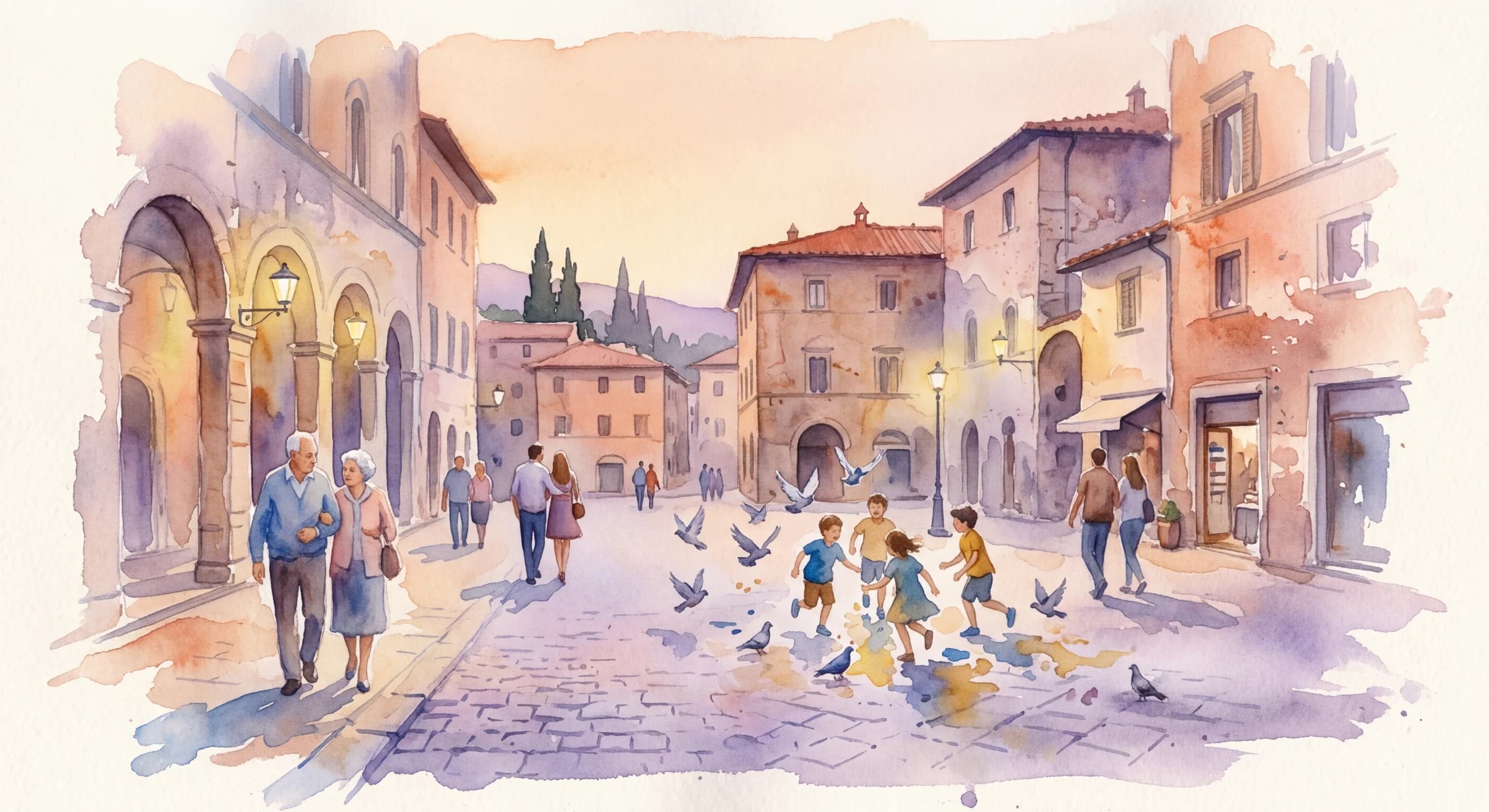
    Artistic representation of Passeggiata
    Italian•
    🇮🇹Italy

    Passeggiata

    /pah-seh-JAH-tah/

    Meaning

    The 'passeggiata' transcends a mere walk; it's a cherished Italian daily ritual, a deliberate, unhurried promenade typically enjoyed in the early evening. This gentle perambulation transforms public spaces into vibrant social stages, fostering community, connection, and a keen observation of life's unfolding tapestry. It’s a time for casual conversations, greeting neighbors, and soaking in the atmosphere, embodying a profound commitment to slowing down and savoring shared moments.

    Literal Translation

    Stroll, walk

    The Story Behind the Word

    The 'passeggiata' is deeply rooted in Italy's communal and family-centric culture, evolving from a time when public spaces were the primary arenas for social interaction and courtship. It reflects a Mediterranean philosophy that values the present moment, human connection, and the aesthetic enjoyment of one's surroundings. This ritual underscores the Italian appreciation for 'bella figura' – presenting oneself well – and 'dolce vita' – the sweet life – by transforming the simple act of walking into an occasion for social engagement, display, and observation. It's a testament to a society that prioritizes human interaction and leisure over relentless productivity, viewing public life as an extension of one's home and community.

    Experience It

    Evening Piazza Ritual

    As the golden hour bathes the piazza, the Rossi family emerges, dressed smartly but comfortably. Nonna links arms with her granddaughter, pointing out friends, while Papa chats with a shopkeeper, pausing every few steps to greet passersby. The air hums with murmurs and laughter, a symphony of shared existence.

    Coastal Promenade

    Along the Ligurian coast, couples and families meander slowly, gelato in hand, as the sun dips below the horizon. Teenagers flirt playfully, children chase pigeons, and elders sit on benches, observing the vibrant tableau. It's a collective breath, a moment of unadulterated enjoyment before dinner.

    The Deeper Meaning

    The 'passeggiata' embodies a profound philosophy of 'essere' over 'avere' – being over having. It champions the value of presence, observation, and human connection as essential components of a well-lived life, rather than endless acquisition or hurried achievement. It reflects a cultural commitment to savoring the journey, not just the destination, fostering a collective, unhurried engagement with the world.

    Did You Know?

    Many Italian towns have a designated 'struscio' (literally 'rubbing' or 'dragging') street or piazza specifically for the evening passeggiata, where the social energy is most concentrated.

    How It's Used

    Typically performed in the early evening, especially in towns and cities, as a social activity before dinner or as a way to see and be seen.

    Emotions
    belonging,contentment,serenity,warmth
    Contexts
    community,dining,greeting,relaxation
    🇮🇹Italy

    by Sofia Rossi·Written Mar 10, 2026·Updated Apr 3, 2026

    Related Words

    Explore more
    HyggeDanish

    Hygge is more than mere coziness; it's a holistic embrace of comfort, warmth, and belonging that nourishes the soul. It describes the intentional creation of an intimate atmosphere where simple pleasures, genuine connection, and mindful presence converge, fostering a profound sense of contentment and well-being. It's about finding joy and peace in the small, everyday moments, often shared with loved ones.

    SaudadePortuguese

    Saudade encapsulates a profound, melancholic longing for something or someone cherished that is absent, often with the bittersweet knowledge that it may never return. It's a deep emotional state tinged with nostalgia, evoking a sense of loss for past experiences, places, or people, yet also holding a tender appreciation for the beauty of what once was. This yearning is not merely sadness, but a complex tapestry of desire, memory, and a poignant acceptance of absence, holding the beloved in a warm, persistent embrace within the heart.

    GezelligDutch

    Gezellig encapsulates a profound sense of warmth, belonging, and convivial comfort, extending beyond mere coziness to embrace the social and emotional atmosphere. It's the feeling of being truly at ease, surrounded by good company, laughter, and a shared sense of contentment. This untranslatable term describes not just a physical space, but a holistic experience where time seems to slow down, fostering genuine connection and a deep sense of well-being.

    Dolce far nienteItalian

    Dolce far niente captures the profound joy and effortless pleasure derived from simply existing without obligation or purpose. It's the art of savoring moments of pure, unadulterated idleness – lying in the sun, watching the clouds drift, or enjoying a leisurely coffee – not as a break from work, but as a valuable state in itself. This 'sweetness of doing nothing' is a conscious embrace of stillness and contentment, allowing the soul to breathe and the senses to fully engage with the present.