Cazzeggiare
/cat-zed-JAH-reh/
Meaning
Cazzeggiare is the delightful art of unproductive leisure, a conscious and often defiant embrace of idleness. It's not mere laziness, but a spirited rejection of schedules and obligations, choosing instead to revel in frivolous, aimless activities. This can manifest as anything from unhurried conversations with friends to simply gazing out a window, savoring the unburdened present moment. It embodies a uniquely Italian appreciation for life's simple, non-utilitarian pleasures, standing in playful contrast to the relentless pursuit of productivity often celebrated elsewhere.
Literal Translation
Literally translates to 'to do with a penis', but this is a vulgar and not the true conceptual meaning.
The Story Behind the Word
The word 'cazzeggiare' encapsulates a profound aspect of Italian culture: the prioritizing of human connection, spontaneous enjoyment, and the 'dolce vita' over relentless efficiency. Its existence reflects a society that, while certainly capable of hard work, also deeply values the art of living well, which often includes moments of pure, unadulterated non-productivity. Historically, in a culture rich with art, food, and social interaction, time spent 'cazzeggiando' was not wasted but rather an essential ingredient for a full, balanced life. It’s a subtle rebellion against the Protestant work ethic, suggesting that true wealth isn't just in what you produce, but in the quality of your unburdened moments. It reveals a worldview that finds joy and meaning not solely in achievement, but in the simple, often trivial, unfolding of life.
Experience It
Afternoon Piazza Idleness
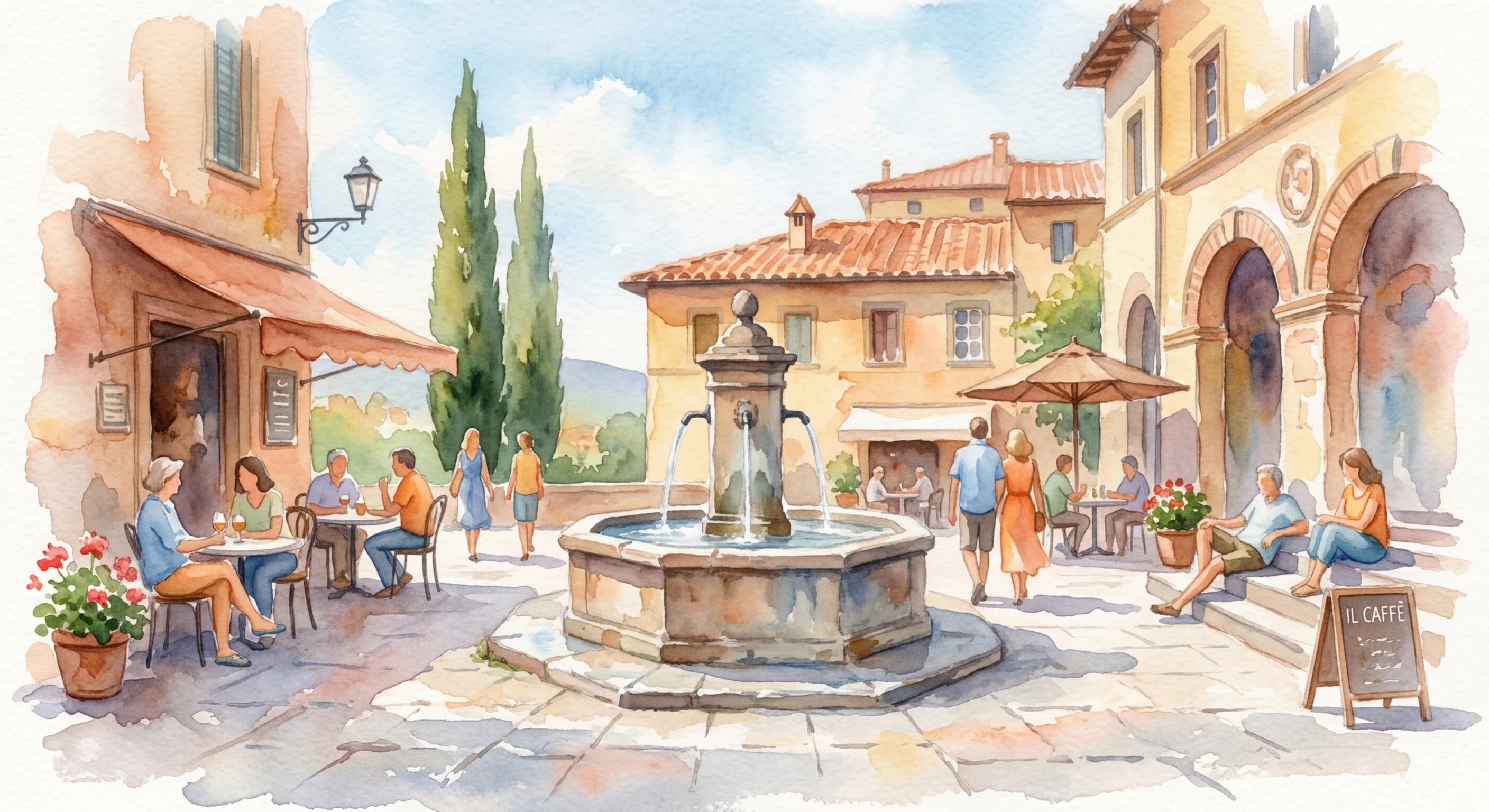
Luca and his friends are sitting in the piazza, sipping espresso that's long gone cold. They're not discussing anything important, just watching people pass by, occasionally cracking jokes, and enjoying the sun. They are cazzeggiando, perfectly content in their shared, aimless presence.
Weekend Garage Project (Not)
Marco planned to clean out his garage all weekend. Instead, he spent Saturday afternoon tinkering with an old radio, then got distracted by a butterfly, and eventually just sat on a stool, lost in thought. He didn't achieve his goal, but he cazzeggiato happily, feeling refreshed.
The Deeper Meaning
This word champions a philosophy of 'being' over 'doing.' It suggests that true human flourishing isn't solely defined by output or achievement, but by the capacity for unhurried presence and the enjoyment of life's simple, often 'unproductive,' moments. It's an affirmation of leisure as a vital component of well-being, challenging the modern obsession with constant utility and efficiency.
Did You Know?
Despite its vulgar literal root, 'cazzeggiare' is so widely used and understood in Italy that it's often heard in casual, non-offensive contexts, highlighting its conceptual shift.
How It's Used
Used colloquially to describe spending time in a leisurely, unproductive, and often humorous way, without any specific goal or task in mind. It's often said with a shrug and a smile, embracing the spontaneous and the trivial.