Logos
/LOH-gohs/
Meaning
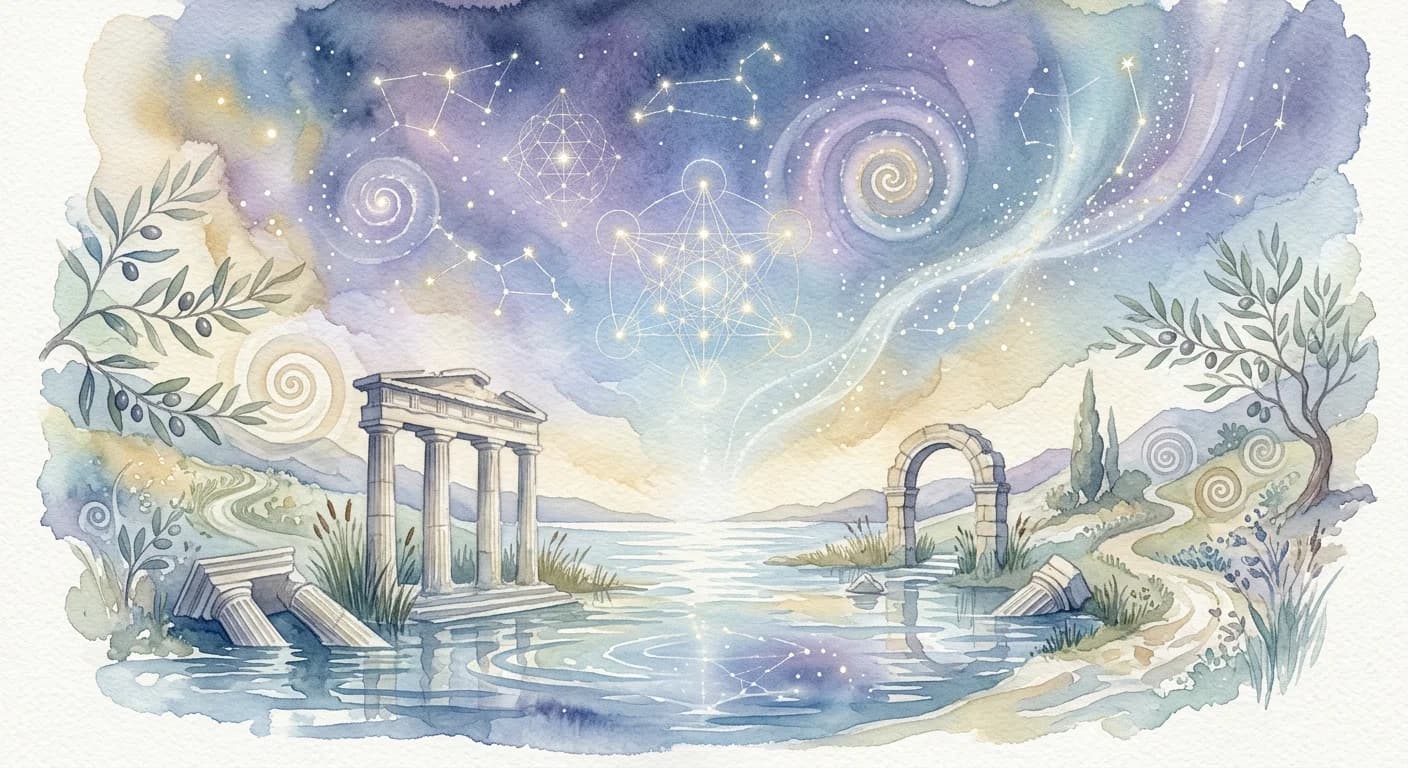
Logos, far more than a simple 'word' or 'reason,' encapsulates the foundational principle of order, intelligence, and divine rationality that permeates the cosmos. It represents the inherent structure and logic governing the universe, a universal coherence that makes existence intelligible. From the grand design of the stars to the intricate patterns of nature, Logos is the underlying blueprint and animating force, a concept central to understanding the Greek worldview and its profound philosophical contributions.
Literal Translation
word, reason, speech, account, logic, principle
The Story Behind the Word
The concept of Logos emerged from ancient Greek attempts to comprehend the world's underlying order, moving beyond mythological explanations to a more rational inquiry. Pre-Socratic philosophers like Heraclitus first posited Logos as the universal, ever-present law that governs change and maintains cosmic harmony. Later, Stoic philosophers adopted and expanded Logos to signify the divine reason immanent in all things, guiding human destiny and natural processes. This belief in a rational, ordered cosmos shaped Greek ethics, politics, and science, fostering a culture that valued inquiry, logic, and the pursuit of wisdom. It reveals a deep-seated Greek conviction that the universe is not chaotic but inherently intelligible and governed by discoverable principles, a worldview that laid the groundwork for Western scientific and philosophical thought.
Experience It
Stoic Contemplation
Marcus, a Stoic philosopher, observes the changing seasons and the consistent cycles of nature. He reflects that these phenomena are not random but are manifestations of the universal Logos, an intelligent principle guiding all existence. He finds peace in understanding his place within this grand, rational order.
Rhetorical Persuasion
In the Athenian agora, an orator crafts his speech to appeal not just to emotions, but to the logical understanding of his audience. He meticulously structures his arguments, presenting clear evidence and reasoned deductions, believing that a well-articulated Logos will ultimately sway the citizens towards truth and sound judgment.
The Deeper Meaning
Logos reveals a worldview deeply rooted in the belief that the universe possesses an inherent, discoverable rationality. It suggests that reality is not arbitrary but operates according to intelligent principles, making knowledge and understanding possible. This concept implies a profound interconnectedness, where human reason (also a form of logos) can align with and comprehend the cosmic order, fostering a sense of purpose and ethical living within a structured universe.
Did You Know?
The opening of John's Gospel in the New Testament famously declares, 'In the beginning was the Logos, and the Logos was with God, and the Logos was God,' profoundly linking this Greek philosophical concept to Christian theology.
How It's Used
The term 'Logos' is used in philosophical discourse, theological discussions, and academic contexts when referring to ancient Greek thought and its influence.