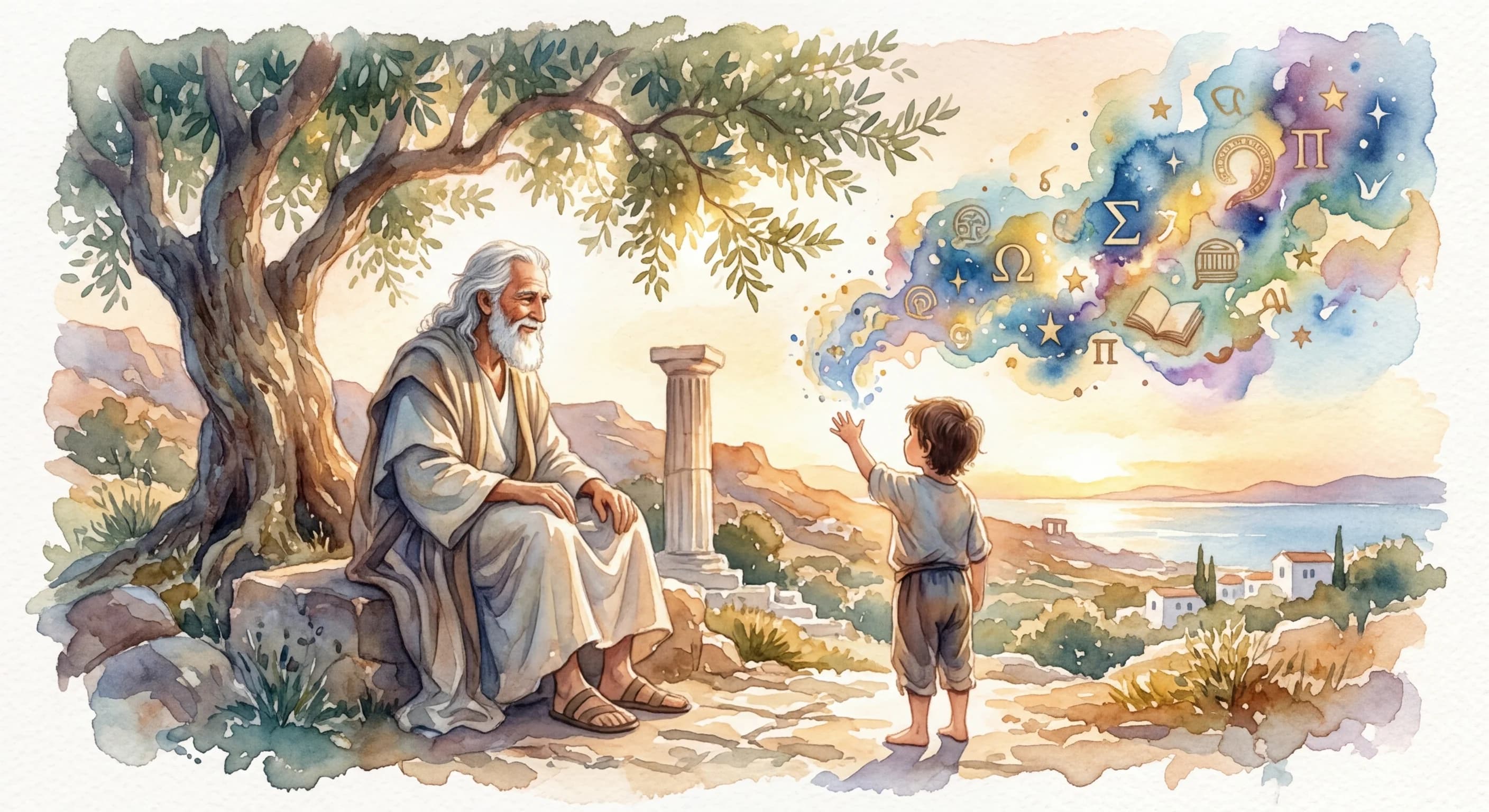
Paideia
/pie-deh-YAH/
Meaning
Paideia transcends mere schooling; it is the holistic cultivation of an individual into an ideal citizen, encompassing the rigorous development of the mind, body, and spirit. It's the lifelong journey of intellectual and moral growth, meticulously shaping character through education, art, philosophy, and civic engagement. This profound concept aimed to transmit the highest cultural values and traditions across generations, forging well-rounded, virtuous individuals who would contribute meaningfully to the flourishing of their polis and embody the pinnacle of human potential.
Literal Translation
child-rearing, upbringing
The Story Behind the Word
The concept of Paideia is deeply rooted in the aristocratic ideals and philosophical traditions of ancient Greece, particularly Athens. It emerged from a society that highly valued civic participation, intellectual discourse, and physical prowess. Paideia was not just about acquiring knowledge, but about shaping a person's entire being to live a life of virtue (aretê) and excellence, essential for the health of the polis. Philosophers like Plato, in his 'Republic,' extensively explored its principles, believing that proper Paideia was fundamental to creating a just society and producing wise leaders. It reflects a worldview where human potential was seen as something to be actively sculpted and perfected, not just nurtured, emphasizing the collective responsibility of the community in the development of each citizen.
Experience It
The Aspiring Citizen
Young Theron spent his days not only studying rhetoric and philosophy with his tutor but also training in the gymnasium and participating in civic discussions. His elders consistently reminded him that each lesson, each physical exertion, and each debate was a step in his Paideia, molding him into a citizen worthy of Athens' ideals and capable of leadership.
A Teacher's Vision
Isocrates, the renowned rhetorician, didn't merely teach his students how to speak persuasively; he instilled in them a comprehensive understanding of history, ethics, and statesmanship. He believed he was engaged in their Paideia, fostering not just skilled orators, but individuals with sound judgment and moral character, prepared to guide the city.
The Deeper Meaning
Paideia reveals a profound ancient Greek belief that human excellence is not innate but must be meticulously cultivated through a lifelong, holistic process. It underscores the idea that education is fundamentally about character formation and moral development, aiming to align the individual's virtues with the highest ideals of their community. This concept highlights a worldview where the personal quest for perfection is inextricably linked to the well-being and flourishing of society as a whole.
Did You Know?
The gymnasium in ancient Greece wasn't just for physical training; it was a central hub for intellectual discourse and philosophical debate, embodying the holistic ideal of Paideia where mind and body were cultivated together.
How It's Used
Used in academic and philosophical discussions, particularly when referring to the educational and cultural ideals of ancient Greece, and by extension, to holistic education and character development in any culture.