U.
HomeRegionsLanguagesEmotionsCollections
Find Your Word

“The limits of my language mean the limits of my world.”

— Ludwig Wittgenstein, Philosopher

Untranslatable

A curated collection of the world's most beautiful expressions—words that remind us language is humanity's greatest invention.

  • Home
  • Collections
  • Regions
  • Countries
  • Emotions
  • Tags
  • Contexts
  • Finder
  • Europe
  • Asia
  • Americas
  • Africa
  • Middle East
  • About
  • Contact
  • Privacy Policy
  • Terms of Service

2026 © Untranslatable. All rights reserved.

    /
    /
    1. Home
    2. /
    3. Europe
    4. /
    5. Kolo
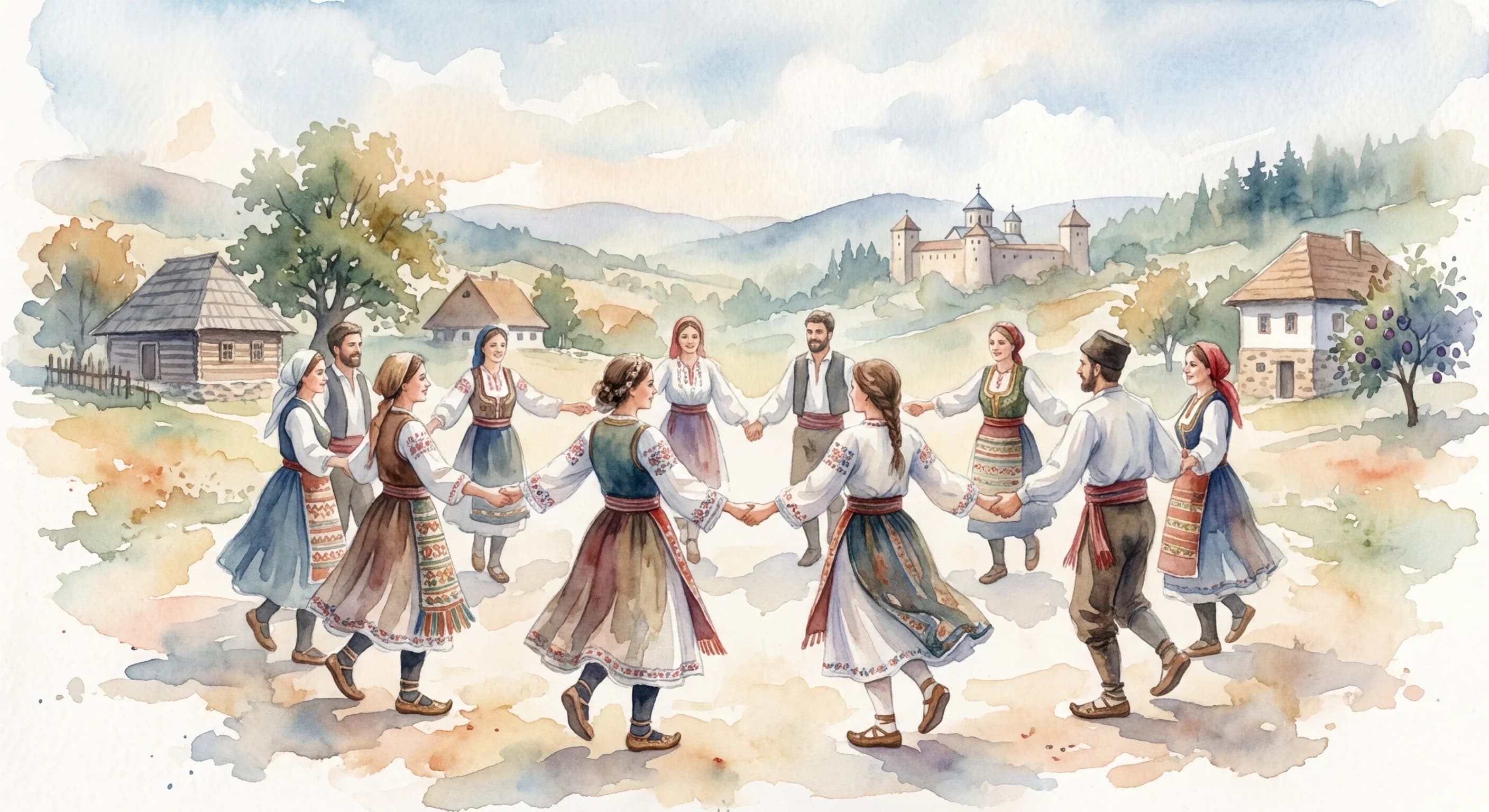
    Artistic representation of kolo
    Serbian•
    🇧🇦Bosnia and Herzegovina🇧🇬Bulgaria🇭🇷Croatia🇲🇰North Macedonia🇷🇸Serbia

    Kolo

    /KOH-loh/

    Meaning

    Kolo, literally meaning "circle," transcends its simple translation to embody a vibrant, traditional folk dance central to Balkan culture. It's a spontaneous celebration of community, where people of all generations join hands in a continuous ring, moving in synchronized steps to lively folk music. This collective movement fosters an profound sense of belonging, unity, and shared heritage, acting as a living testament to collective joy and cultural identity at gatherings and festivities.

    Literal Translation

    circle

    The Story Behind the Word

    The kolo is more than just a dance; it's a living historical document and a profound expression of Balkan identity. Its origins are ancient, rooted in pre-Christian rituals and agricultural cycles, where circle dances were performed to ensure fertility, ward off evil, and celebrate harvests. The circular formation symbolizes eternity, unity, and the cyclical nature of life, connecting individuals to the land and their ancestors. Throughout centuries of foreign occupation and political upheaval, the kolo remained a resilient symbol of Serbian nationhood and cultural preservation, a space where communal bonds were reaffirmed and cultural traditions passed down. It embodies the spirit of collective resilience and the joy found in shared experience, reflecting a worldview where individual identity is deeply intertwined with the community.

    Experience It

    Wedding Celebration Kolo

    At Marko and Jelena's wedding, after the formal dinner, the live band struck up a familiar folk tune. Suddenly, an elder initiated the kolo, and within minutes, aunts, uncles, cousins, and friends, young and old, formed a joyous, ever-expanding circle, their laughter and synchronized steps filling the hall with an infectious energy.

    Village Festival Kolo

    During the annual village festival, as the sun began to set, the main square transformed into an open-air dance floor. Children, still in their traditional costumes from the earlier parade, enthusiastically joined the kolo alongside their parents and grandparents, demonstrating steps learned over generations, a testament to enduring tradition.

    The Deeper Meaning

    The kolo embodies a deep-seated philosophy of collectivism and continuity. It highlights the importance of the group over the individual, where mutual support and shared rhythm are paramount. The unbroken circle represents the eternal cycle of life, the interconnectedness of past, present, and future generations, and the enduring strength found in communal bonds, suggesting that true joy and identity are found within the collective.

    Did You Know?

    There are hundreds of different kolo dances, each with unique steps, rhythms, and regional variations, often named after the village or region they originated from!

    How It's Used

    Kolo is used to refer to the dance itself, as well as the music that accompanies it. It is performed at various social gatherings, celebrations, weddings, festivals, and holidays throughout the year.

    Emotions
    belonging,gratitude,joy,warmth
    Contexts
    celebration,family,friendship,seasons
    🇧🇦Bosnia and Herzegovina🇧🇬Bulgaria🇭🇷Croatia🇲🇰North Macedonia🇷🇸Serbia

    by Dr. Kenji Tanaka·Written Mar 10, 2026·Updated Apr 3, 2026

    Related Words

    Explore more
    HyggeDanish

    Hygge is more than mere coziness; it's a holistic embrace of comfort, warmth, and belonging that nourishes the soul. It describes the intentional creation of an intimate atmosphere where simple pleasures, genuine connection, and mindful presence converge, fostering a profound sense of contentment and well-being. It's about finding joy and peace in the small, everyday moments, often shared with loved ones.

    SaudadePortuguese

    Saudade encapsulates a profound, melancholic longing for something or someone cherished that is absent, often with the bittersweet knowledge that it may never return. It's a deep emotional state tinged with nostalgia, evoking a sense of loss for past experiences, places, or people, yet also holding a tender appreciation for the beauty of what once was. This yearning is not merely sadness, but a complex tapestry of desire, memory, and a poignant acceptance of absence, holding the beloved in a warm, persistent embrace within the heart.

    GezelligDutch

    Gezellig encapsulates a profound sense of warmth, belonging, and convivial comfort, extending beyond mere coziness to embrace the social and emotional atmosphere. It's the feeling of being truly at ease, surrounded by good company, laughter, and a shared sense of contentment. This untranslatable term describes not just a physical space, but a holistic experience where time seems to slow down, fostering genuine connection and a deep sense of well-being.

    Dolce far nienteItalian

    Dolce far niente captures the profound joy and effortless pleasure derived from simply existing without obligation or purpose. It's the art of savoring moments of pure, unadulterated idleness – lying in the sun, watching the clouds drift, or enjoying a leisurely coffee – not as a break from work, but as a valuable state in itself. This 'sweetness of doing nothing' is a conscious embrace of stillness and contentment, allowing the soul to breathe and the senses to fully engage with the present.