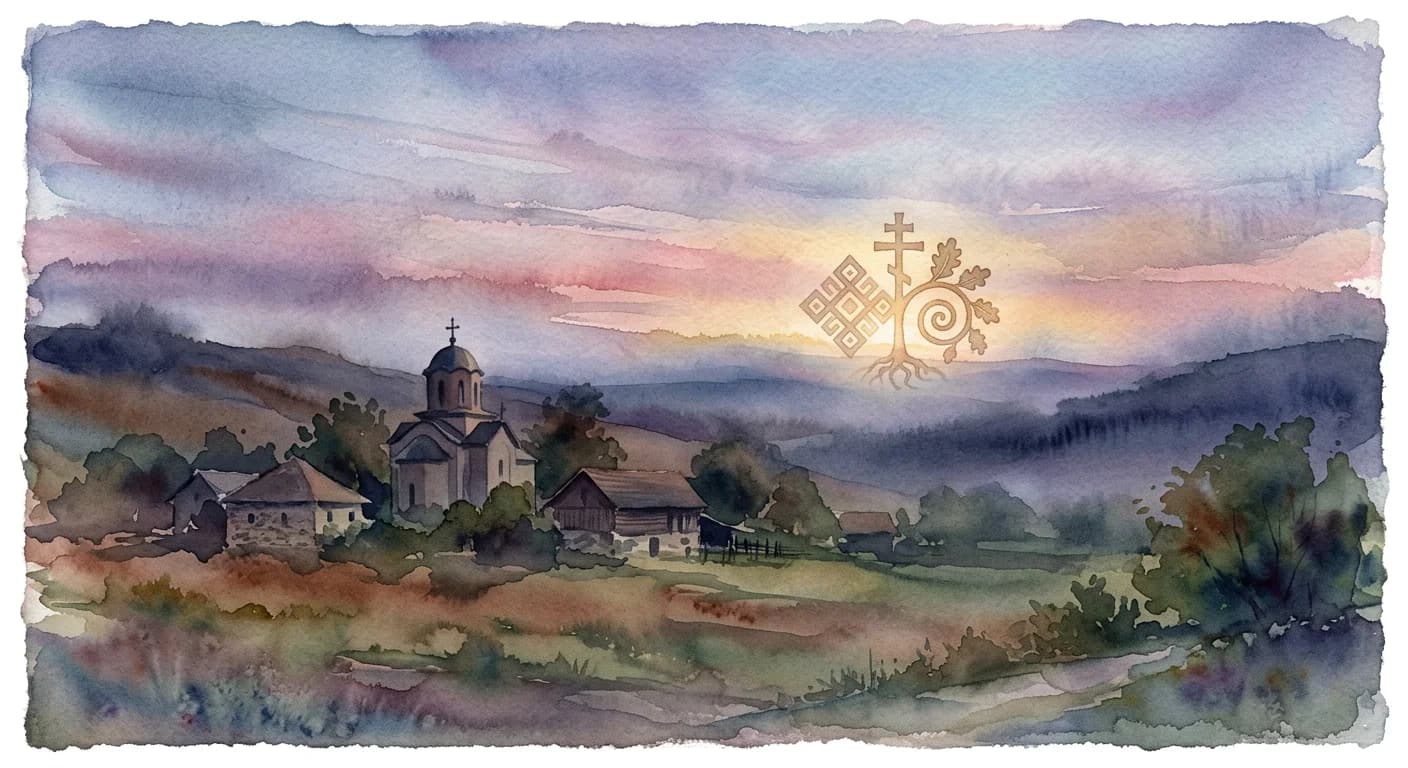
Zavet
/ZAH-vet/
Meaning
The word 'zavet' encapsulates a sacred vow, a solemn and often generational promise that transcends mere personal commitment. It embodies a profound legacy, a spiritual covenant, or a testament inherited from ancestors, carrying the weight of collective identity and historical responsibility. This term evokes deep reverence for tradition, binding individuals not just to a pledge, but to an enduring agreement that shapes their very being and the continuity of their community's memory.
Literal Translation
vow, testament, covenant
The Story Behind the Word
The concept of 'zavet' is deeply interwoven with Serbian historical and spiritual identity, particularly through the narrative of the Battle of Kosovo in 1389. The 'Kosovo Zavet' refers to Prince Lazar's legendary choice of a heavenly kingdom over an earthly one, symbolizing a spiritual commitment to faith and freedom that has resonated through centuries of Serbian history. This foundational myth instilled a worldview where spiritual principles and national honor are paramount, often requiring sacrifice. 'Zavet' reflects a culture that values long-term commitments, ancestral ties, and the enduring power of faith and collective memory in shaping destiny. It signifies that certain promises are not just words, but existential declarations binding future generations.
Experience It
Family Land Zavet
Grandfather gathered his children, his voice solemn. 'This land, it's our zavet,' he declared, 'passed down from our great-grandparents. You must protect it, farm it, and never sell it, for it holds the memory of all who came before us.'
Monastic Zavet
Before the altar, the young monk made his zavet, pledging his life to God and the monastic order. This wasn't just a personal promise; it was a sacred commitment that bound him to centuries of spiritual tradition and the community's collective devotion.
The Deeper Meaning
'Zavet' reveals a worldview where time is not purely linear, but cyclical and cumulative, with past commitments profoundly shaping the present and future. It speaks to a philosophy of inherited responsibility and collective destiny, where individual actions are often understood within the larger framework of ancestral promises and communal obligations, emphasizing spiritual endurance over fleeting material gains.
Did You Know?
The 'Kosovo Zavet' is a central pillar of Serbian national identity, referring to a legendary pledge made before the 1389 Battle of Kosovo, shaping centuries of cultural and spiritual commitment.
How It's Used
Used to describe a solemn promise, a testament, a spiritual vow, or a legacy passed down through generations.