Hajnalpír
/HAHJ-nahl-peer/
Meaning
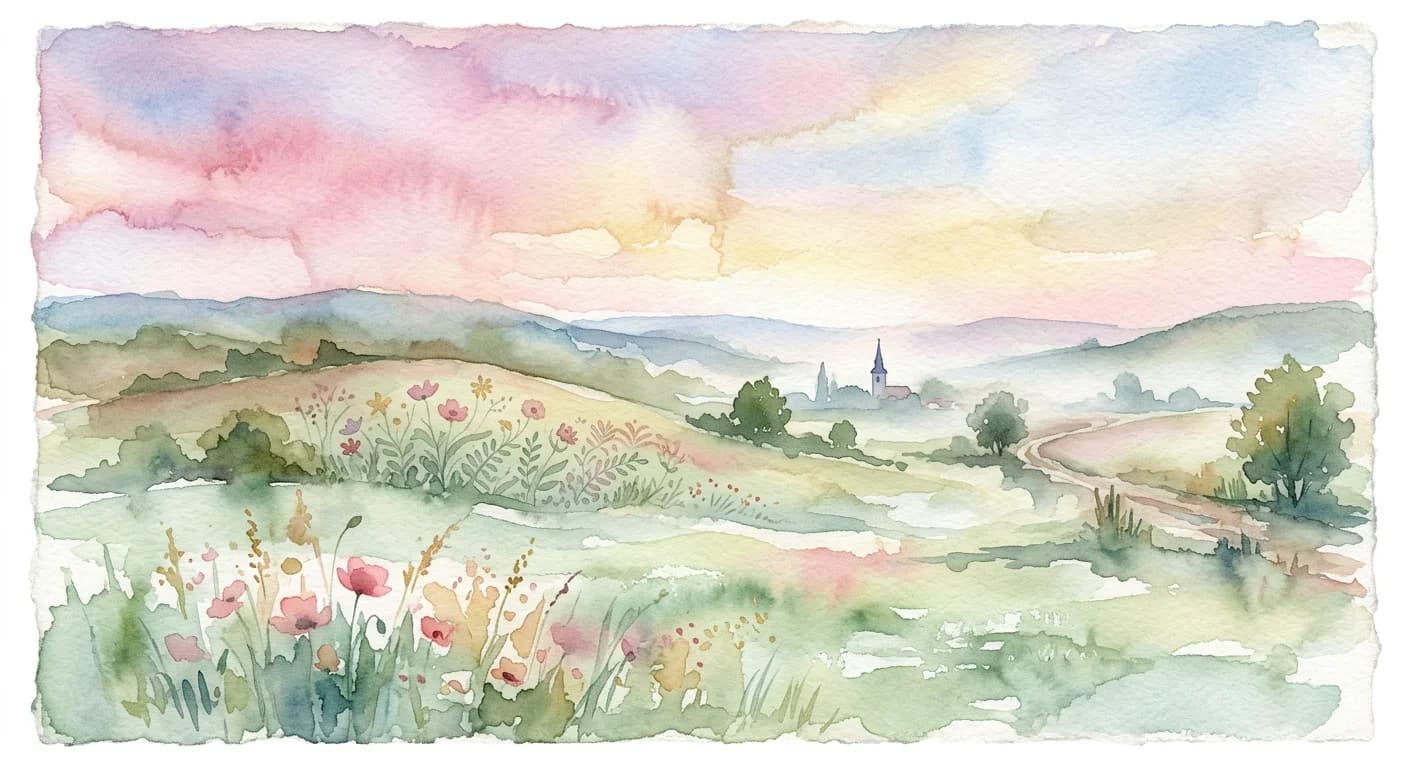
Hajnalpír encapsulates the exquisite, fleeting beauty of the sky's initial blush as dawn breaks, preceding the sun's full emergence. It describes the soft, rosy, and often orange-tinted hues that paint the eastern horizon, transforming the darkness into a canvas of gentle light. This term evokes a profound sense of quietude and anticipation, marking the world's tender awakening and the promise of a new day, a moment of ethereal splendor that is both deeply moving and inherently transient.
Literal Translation
dawn-redness
The Story Behind the Word
The existence of 'hajnalpír' in Hungarian reflects a culture deeply attuned to nature's subtle shifts and the profound symbolism of light. For a people whose history is intimately tied to agricultural cycles and a deep connection to the land, the dawn holds significant meaning beyond mere timekeeping. It represents renewal, hope, and the cyclical nature of existence. The specificity of 'hajnalpír' suggests a society that values observation, poetic expression, and the ability to articulate precise emotional and visual experiences. It speaks to a cultural inclination to find beauty and meaning in the ephemeral, recognizing the sacred in everyday natural phenomena. This meticulous description of dawn's earliest moments underscores a contemplative and appreciative worldview, where even the slightest change in the sky is deemed worthy of a distinct linguistic marker and emotional resonance.
Experience It
Mountain Dawn
From the peak, she watched the 'hajnalpír' bloom across the eastern sky, painting the distant clouds in shades of rose and gold. The world below was still shrouded in shadow, but the horizon promised the day's arrival with breathtaking, silent beauty.
Fisherman's Start
The old fisherman pushed his boat into the lake, his eyes fixed on the 'hajnalpír' that was just beginning to streak the sky. It was his favorite time, a peaceful prelude to the day's work, filled with the quiet promise of the morning catch.
The Deeper Meaning
This word reveals a philosophy that champions mindful observation and appreciation for transient beauty. It suggests that profound meaning can be found in moments of transition and that the subtle, often overlooked phases of natural cycles are as significant as their more dramatic counterparts. It underscores a worldview that values anticipation and the quiet unfolding of existence over immediate gratification.
Did You Know?
Unlike 'sunrise,' which denotes the sun's appearance, 'hajnalpír' specifically refers to the colors in the sky *before* the sun is visible, highlighting a distinct, pre-solar phenomenon.
How It's Used
Used to describe the visual phenomenon of the sky at the very beginning of dawn.