Burrnesha
/BOOR-neh-shah/
Meaning
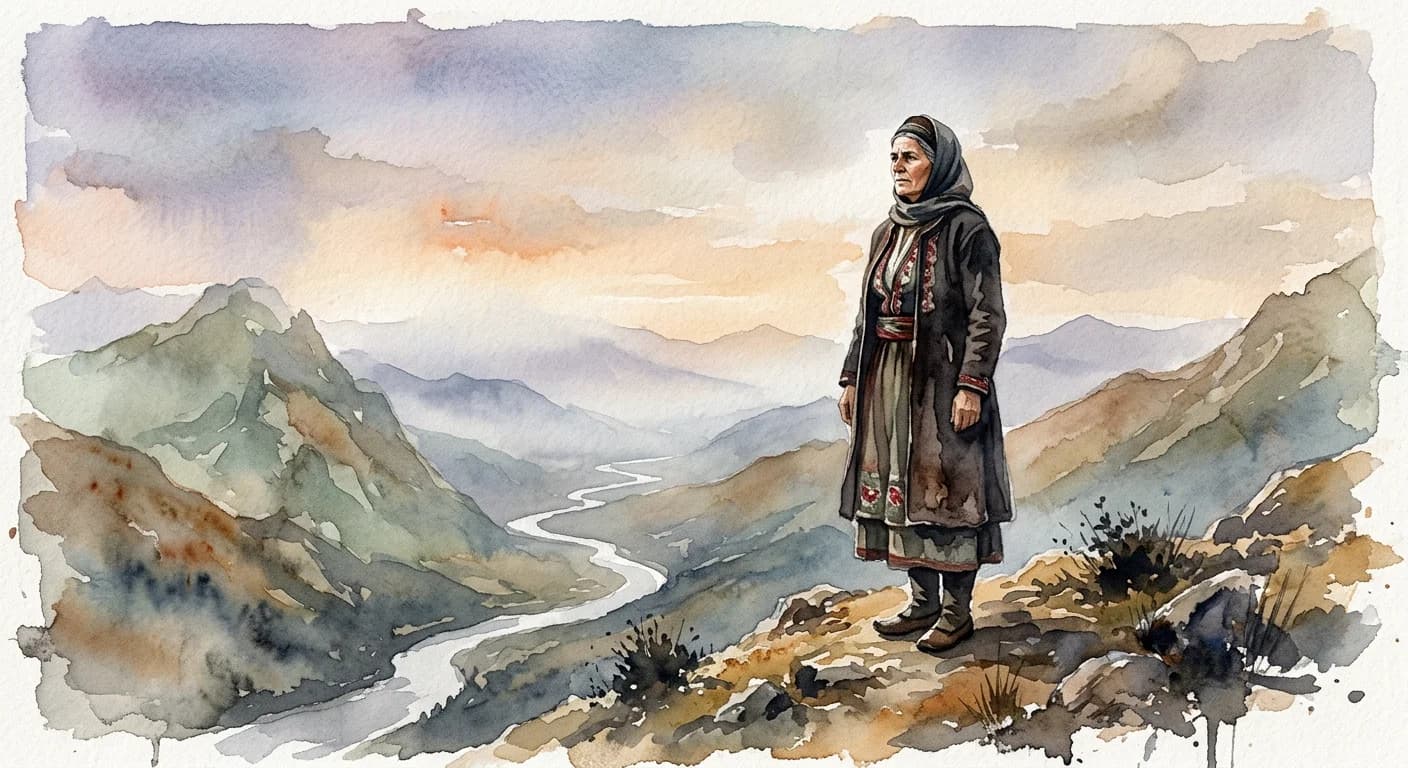
A Burrnesha, or sworn virgin, embodies a profound societal transformation where a woman, often in the absence of male heirs, publicly vows celibacy and adopts a male identity. This radical choice grants her the rights and responsibilities typically reserved for men in fiercely patriarchal Albanian society, allowing her to work, own property, carry a weapon, and participate in public life. It is a testament to both the restrictive gender roles and the ingenious ways individuals navigated them, offering a unique path to status and autonomy.
Literal Translation
Sworn virgin
The Story Behind the Word
The phenomenon of the Burrnesha is deeply embedded in the Kanun, the traditional customary law of Albania, which historically placed immense value on male lineage and property inheritance. In families without a male head, a Burrnesha ensured the family name continued, property remained intact, and the family's honor (nder) was protected. This practice reveals a societal structure where female autonomy was severely limited, yet also highlights a pragmatic approach to survival within those confines. It speaks to a cultural perception where gender was not solely biological but could be socially constructed through oath and performance, granting a woman a 'third gender' status that transcended typical female limitations and offered a unique form of empowerment within a patriarchal framework.
Experience It
Inheriting the Farm
After her father and brothers were lost to a blood feud, young Mrika faced the prospect of her family's land being seized. With a heavy heart, she stood before the village elders, taking the solemn vow to become a Burrnesha, publicly forsaking marriage and motherhood to ensure her mother and younger sisters had a protector and provider.
The Village Mediator
Gjergj, once known as Gjeneta, sat at the council table, his voice carrying authority as he deliberated on a boundary dispute between two families. His status as a Burrnesha, having lived for decades as a man and earning respect as a wise and impartial figure, allowed him to mediate conflicts and uphold the Kanun with an influence no ordinary woman could ever wield.
The Deeper Meaning
The Burrnesha reveals a complex philosophy regarding gender fluidity and societal necessity within extreme patriarchy. It suggests that while biological sex was fixed, gender roles and their associated power could be transcended through a profound personal sacrifice and public oath. This offers a unique lens into how societies can create exceptions to their own rigid rules, granting a form of individual agency even when it requires a complete redefinition of one's identity within the community.
Did You Know?
Did you know that some Burrnesha underwent a formal 'swearing-in' ceremony, often before village elders, solidifying their new male identity and the irrevocable nature of their vow?
How It's Used
This term is used to describe women in specific historical and cultural contexts in Albania and surrounding regions who have taken vows to live as men.