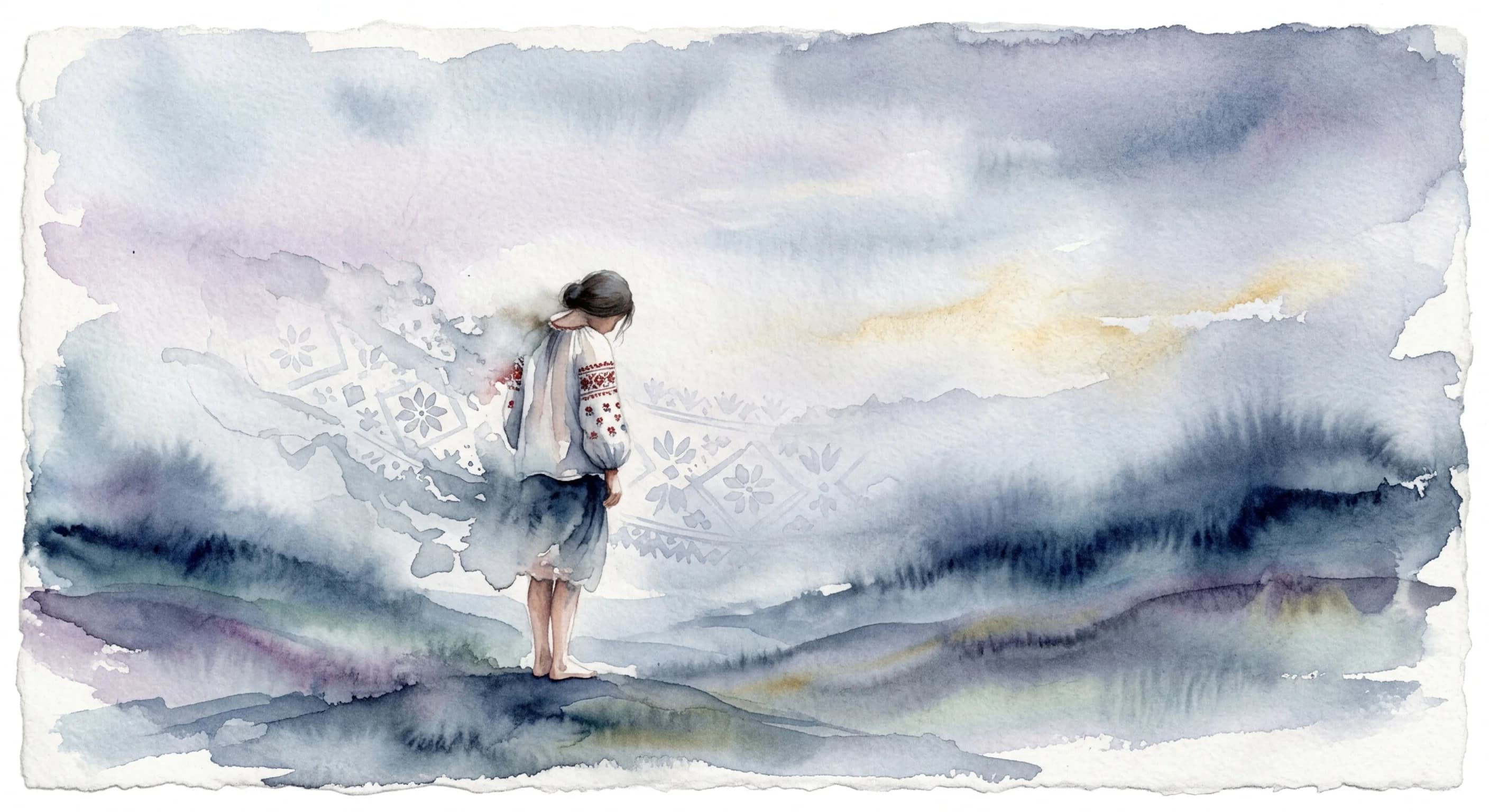
Plach
/PLAHCH/
Meaning
Plach describes a profound, soul-wrenching cry or lament, far exceeding mere tears. It signifies an open, unashamed outpouring of deep sorrow, grief, or even a cathartic release of overwhelming emotions. This powerful expression can arise from personal tragedy, the suffering of loved ones, or a shared national anguish, embodying a raw vulnerability and the communal embrace of pain as a vital part of healing and solidarity.
Literal Translation
cry, lament, wail
The Story Behind the Word
The concept of 'plach' is deeply interwoven with Ukrainian history, marked by centuries of hardship, invasions, and profound national suffering. From the laments for fallen Cossacks to the cries during the Holodomor and ongoing conflicts, 'plach' became a culturally sanctioned, even necessary, response to collective trauma. It reflects a worldview where grief is not to be suppressed but expressed openly, often communally, as a way to acknowledge pain, maintain memory, and foster resilience. Traditional Ukrainian funeral rituals and folk songs (like 'holosinnya') are replete with 'plach,' highlighting its role in processing loss and reinforcing community bonds. This word reveals a culture that understands the power of shared sorrow in forging identity and continuity, seeing vulnerable expression as a strength rather than a weakness.
Experience It
A Mother's Plach
After hearing the devastating news, Marta let out a deep, guttural plach that echoed through the quiet house. It wasn't just crying; it was a primal scream of sorrow, a complete surrender to her unbearable grief, witnessed and understood by her gathered family.
Communal Plach
At the memorial for the fallen soldiers, a collective plach rose from the crowd, a wave of shared anguish and lament. Strangers embraced, their tears and wails intertwining, a powerful testament to their communal pain and solidarity.
The Deeper Meaning
Plach reveals a philosophy that embraces the full spectrum of human emotion, particularly sorrow, as an integral part of existence and healing. It suggests that true strength lies not in stoicism, but in the courageous and communal expression of vulnerability, transforming individual pain into a shared human experience that binds communities and honors memory. This word underscores the cathartic and unifying power of uninhibited grief.
Did You Know?
Traditionally, professional mourners called 'holosylnytsi' would perform highly structured, poetic 'plach' at funerals, guiding the community through the grieving process.
How It's Used
Used to describe a lament, wail, or deep cry of sorrow or grief, often expressed publicly or communally.