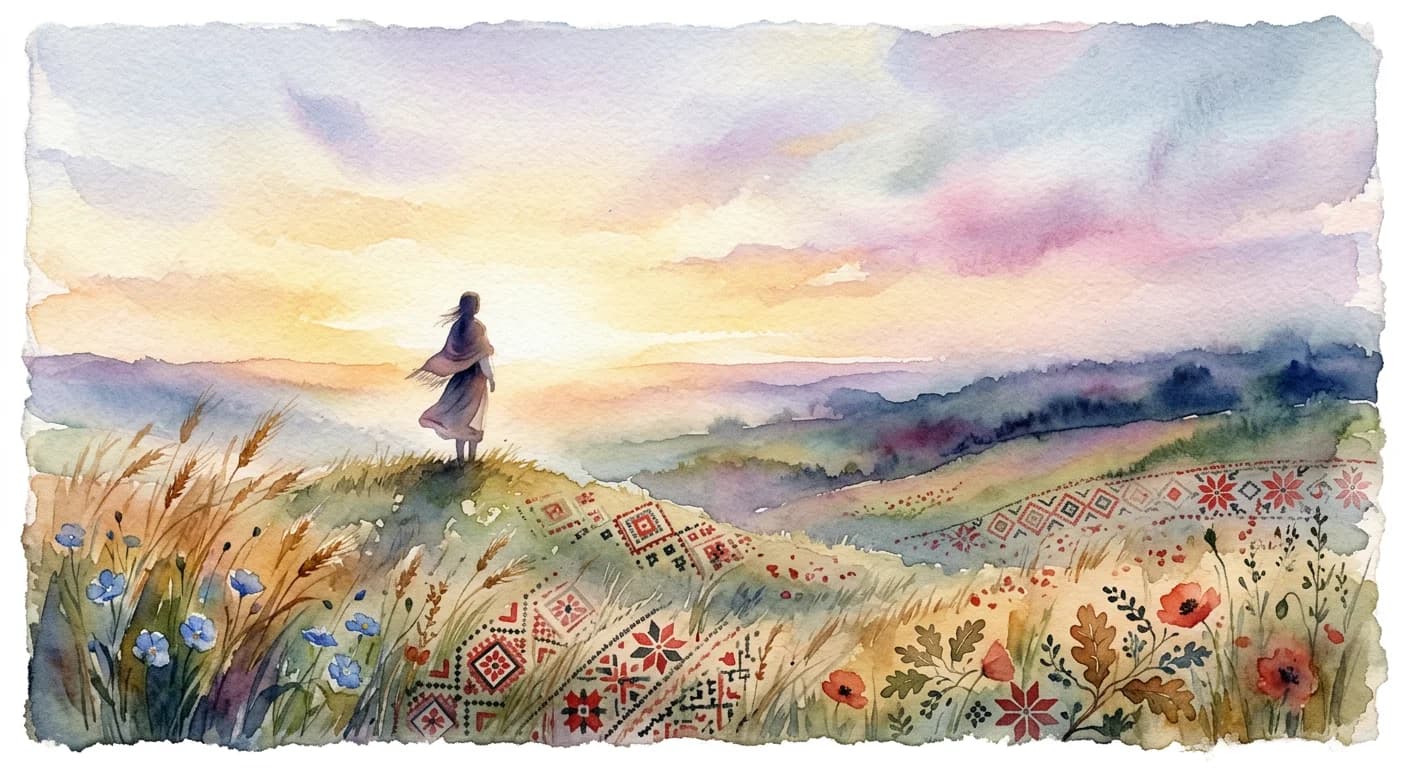
Volya
/VOL-yah/
Meaning
Volya embodies a profound, almost spiritual yearning for unhindered freedom and self-determination, going far beyond mere political liberty. It signifies an innate desire to live authentically, guided by one's own will, completely unbound by external oppression, restrictive norms, or foreign dominion. This concept is deeply rooted in the Ukrainian psyche, representing a historical struggle for sovereignty and the cherished right to exist as a free individual and a free nation. It carries the weight of past sacrifices and an enduring, fierce hope for an unconstrained future.
Literal Translation
Will, freedom, liberty
The Story Behind the Word
Volya is the bedrock of Ukrainian national identity, forged through centuries of struggle against various empires and foreign domination. It's not an abstract ideal but a lived experience and a historical imperative, explaining the fierce resistance to any perceived encroachment on sovereignty. This word encapsulates the Cossack spirit of independent warriors, the longing of serfs for emancipation, and the modern nation's fight for self-determination. It reveals a worldview where freedom isn't granted but is an inherent right, constantly fought for, defining the very essence of Ukrainian nationhood and individual spirit. The concept is deeply embedded in folk songs, literature, and even everyday expressions, emphasizing resilience and an unyielding spirit.
Experience It
A Nation's Volya
After years under foreign rule, the people rallied, their hearts burning with 'volya.' They yearned not just for independence, but for the fundamental right to govern themselves, speak their language, and forge their own destiny, embodying a collective defiance against oppression.
Personal Volya
Despite societal pressures to conform, the artist refused to compromise her vision. She lived by her 'volya,' creating art that was bold and unconventional, choosing authenticity over easy acceptance, demonstrating an inner freedom that transcended external expectations.
What Gets Lost in Translation
English speakers often conflate 'volya' solely with 'freedom' or 'liberty,' missing its profound spiritual and existential dimensions. It's not just about what one is allowed to do, but about an intrinsic, often defiant, inner state of being. The nuance of 'will' combined with 'freedom' implies an active, self-directed agency rather than a passive state of not being enslaved, which is a crucial distinction.
Across Cultures
While direct equivalents are rare, concepts like 'sankofa' (Ghanaian Twi, looking back to move forward) share the historical weight, and 'ubuntu' (Southern African Bantu, humanity towards others) touches on collective identity. 'Dharma' (Sanskrit, righteous conduct) or 'svadharma' (one's own duty) in some interpretations can intersect with living authentically according to one's inner truth, albeit with different emphasis. The closest European parallels might be certain aspects of German 'Freiheit' or Polish 'wolność' when imbued with a strong national struggle context, but 'volya' retains a unique intensity.
The Deeper Meaning
Volya signifies a deeply existential philosophy where true freedom is an internal state, a defiant assertion of self against external constraint. It posits that human dignity is inextricably linked to the ability to live according to one's own will, making the struggle for 'volya' not merely political but a fundamental quest for authentic being. This worldview emphasizes resilience, self-reliance, and an unwavering commitment to one's inherent right to self-determination, both individually and collectively.
Did You Know?
The Ukrainian national anthem famously begins with 'Shche ne vmerla Ukraina ni slava, ni volya,' meaning 'Ukraine's glory and freedom (volya) has not yet perished,' directly linking the nation's existence to this profound concept.
How It's Used
Used to describe a person's or nation's desire for freedom, independence, and self-determination. It can refer to personal liberty, political freedom, or a spiritual state of being unbound.