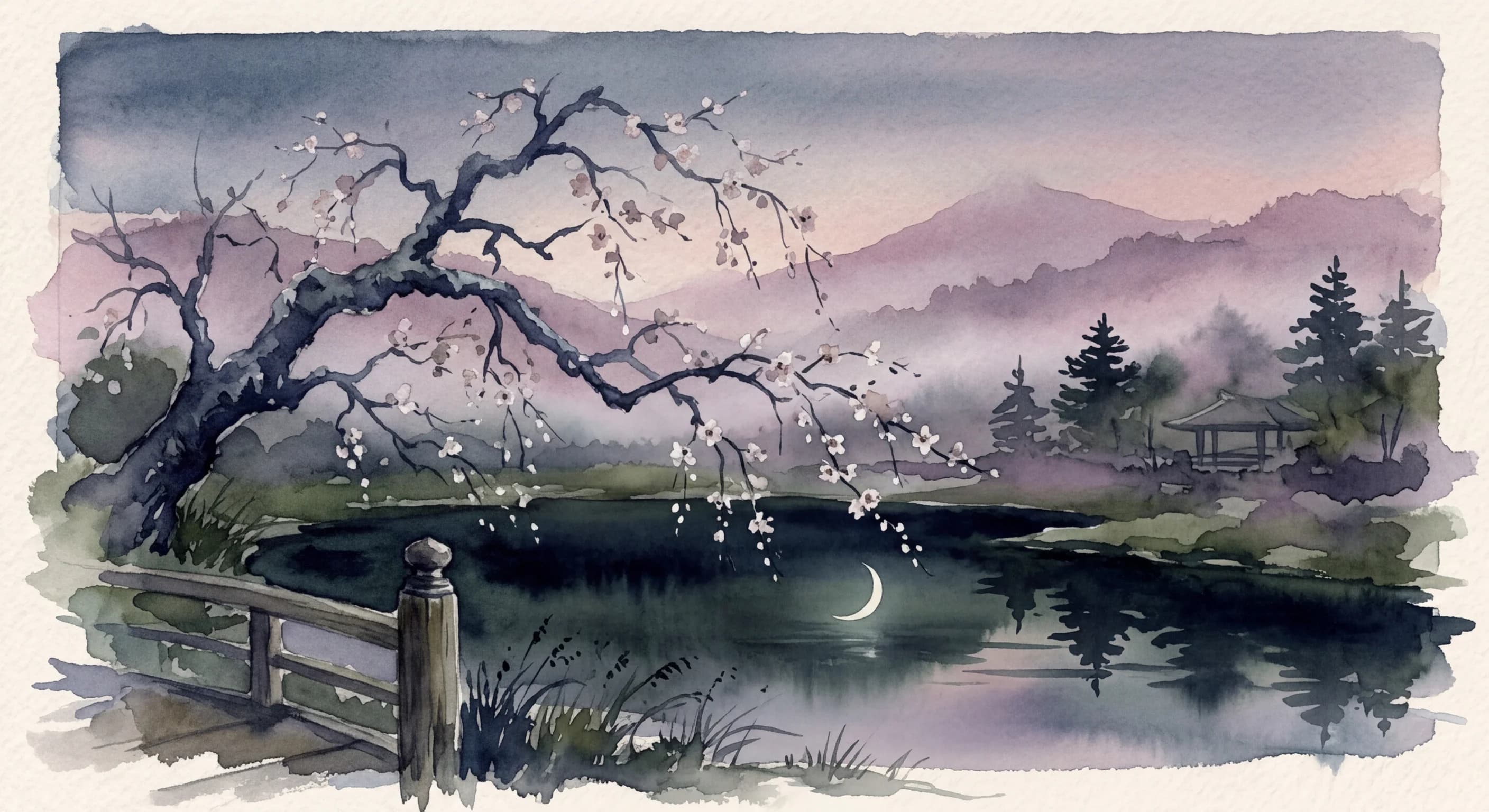
Yūgen
/YOO-gen/
Meaning
Yūgen encapsulates the profound, ineffable beauty of the universe, intertwined with the poignant transience of human existence. It's not about explicit clarity, but rather the subtle, evocative intimation of something deeper, an awareness of the unseen truths lurking beneath the surface. This aesthetic ideal transcends mere visual appreciation, hinting at mysteries that stir awe and wonder, suggesting that true beauty resides in suggestion, subtlety, and the unexpressed, rather than in overt definition.
Literal Translation
profound grace or subtle profundity
The Story Behind the Word
Originating in classical Japanese aesthetics, particularly within court literature and Noh theater of the Heian and Kamakura periods (794-1333 AD), Yūgen was initially associated with elegant, refined beauty and aristocratic sentiment. Over centuries, influenced by Zen Buddhism, its meaning deepened to embrace the mysterious, the ephemeral, and the sublime. It reflects a worldview deeply attuned to nature's cycles, impermanence (mujō), and the belief that ultimate truth often lies beyond rational comprehension, fostering a contemplative appreciation for the subtle nuances of existence. This word is central to how Japanese culture perceives beauty not as a static object, but as an experience of profound, often melancholy, wonder.
Experience It
Moon Hidden by Clouds
A poet gazes at the night sky, where the full moon is partially veiled by thin, wispy clouds. The obscured light and the suggestion of its hidden brilliance evoke a deep sense of yūgen, more profound than if the moon were starkly visible, stirring a melancholic beauty.
Ancient Mossy Garden
Walking through an ancient temple garden, one encounters a weathered stone lantern, half-hidden by centuries-old moss and dappled sunlight filtering through dense foliage. The scene doesn't scream for attention, but its quiet, aged beauty and the sense of time passing evoke a powerful yūgen.
The Deeper Meaning
Yūgen reveals a deeply contemplative and non-dualistic philosophical stance. It suggests that reality's most profound truths are not found in logical exposition or material clarity, but in the suggestive, the ambiguous, and the liminal. It champions a humility before the vastness of the unknown, valuing intuition and emotional resonance over purely intellectual understanding, thus fostering a sense of interconnectedness with the cosmic order.
Did You Know?
The renowned Zen priest and garden designer Musō Soseki (1275–1351) was pivotal in integrating yūgen into Japanese garden design, emphasizing landscapes that suggest profound, hidden beauty rather than explicit display.
How It's Used
Yūgen is often used to describe art, poetry, theater (especially Noh), and natural landscapes that evoke a sense of mystery and depth.