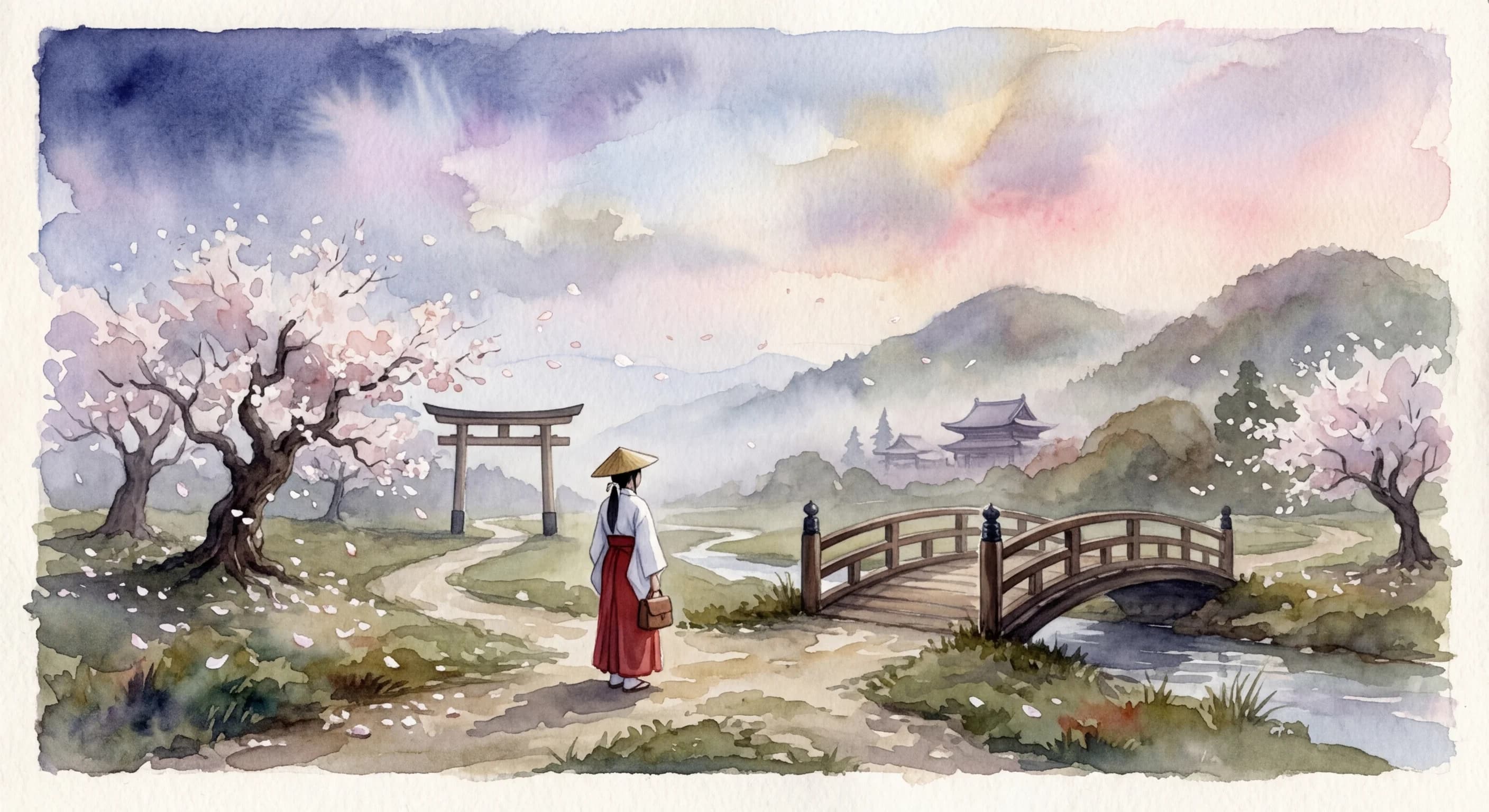
Giri
/GEE-ree/
Meaning
Giri embodies a profound, often inescapable, social obligation and debt of gratitude deeply ingrained in Japanese culture. It's a powerful moral imperative dictating actions and choices, frequently demanding personal sacrifice for the sake of family, superiors, or the community. Far beyond simple duty, Giri carries immense emotional weight, shaping one's identity and relationships, and influencing decisions from career paths to personal relationships, often leading to complex interpersonal dynamics.
Literal Translation
Duty, obligation, or debt
The Story Behind the Word
The concept of Giri is deeply rooted in Japan's historical feudal system and Confucian ethics, which emphasized hierarchy, loyalty, and collective harmony over individual desire. It emerged as a crucial mechanism for maintaining social order and cohesion in a society where interdependency was paramount. Giri reveals a worldview where one's existence is not autonomous but intertwined with the network of relationships and obligations. It underscores the belief that individual well-being is inseparable from the health of the collective, and that honoring these debts is fundamental to one's honor and social standing. This foundational principle continues to shape Japanese societal norms, from business etiquette to family dynamics, reflecting a deep-seated value for reciprocal responsibility.
Experience It
Repaying a Mentor's Kindness
A young professional receives invaluable mentorship from a senior colleague, leading to their success. Years later, when the mentor's business faces hardship, the professional feels a strong sense of Giri to assist, even if it means foregoing a more lucrative opportunity elsewhere, because of the profound debt of gratitude they feel.
Family Business Obligation
A talented artist dreams of pursuing their passion abroad but feels a heavy Giri to take over the struggling family business. Despite their personal aspirations, they choose to dedicate themselves to the business, understanding that their parents' lifelong sacrifices created the foundation for their own upbringing and opportunities.
The Deeper Meaning
Giri illuminates a collectivist philosophy where the self is defined by its relationships and obligations, rather than as an independent entity. It suggests that true moral worth is found in fulfilling one's societal role and honoring debts, even when inconvenient. This concept emphasizes the interconnectedness of individuals and the profound impact of reciprocal responsibility on personal identity and societal stability.
Did You Know?
The phrase 'giri-ninjo' (義理人情) highlights the internal conflict between social obligation (giri) and personal feelings (ninjo), a common theme in Japanese literature and drama.
How It's Used
Used to describe the feeling of obligation one has towards others in Japanese society, often influencing personal choices and actions.