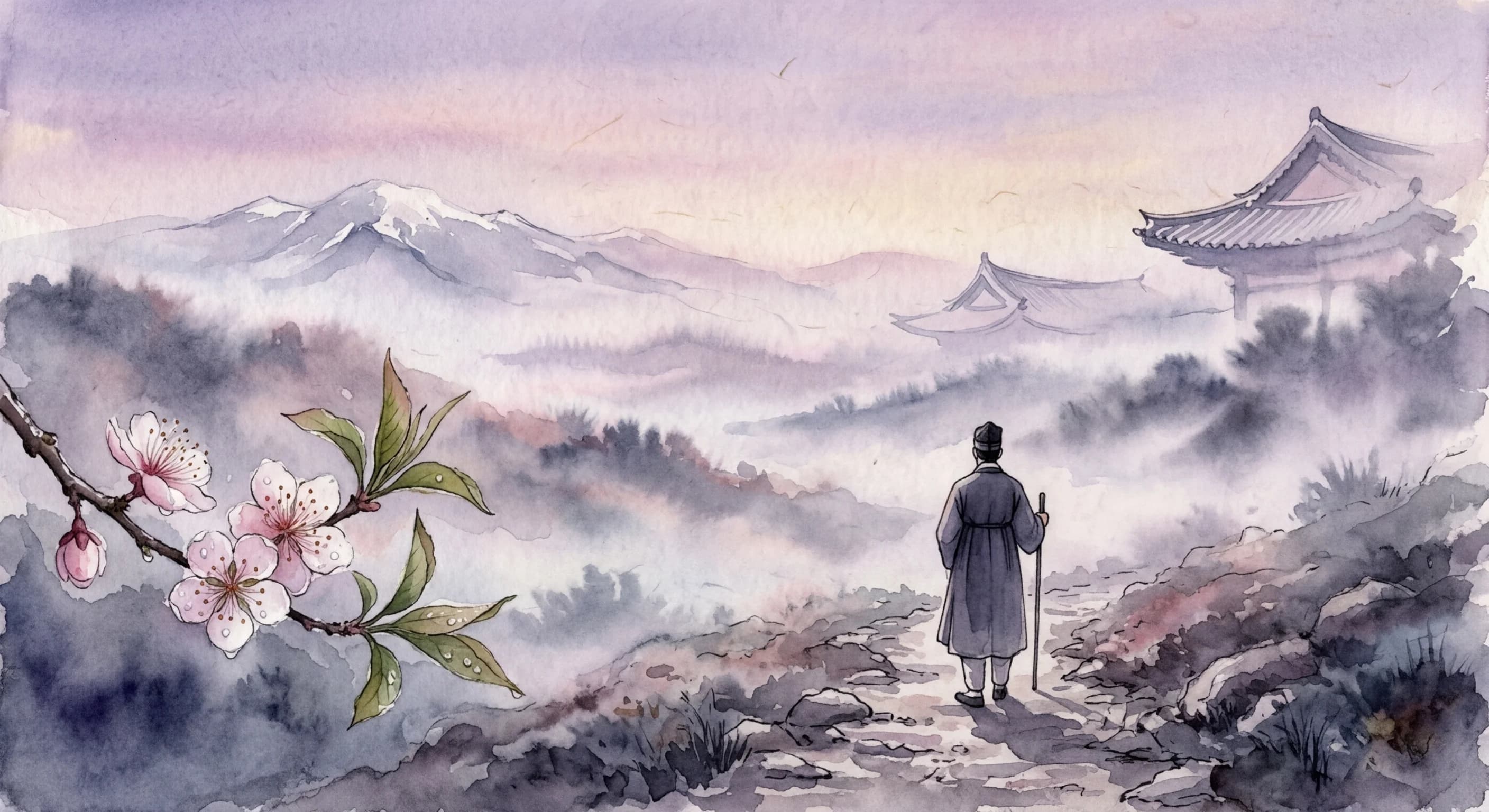
Danwoojeong
/DAHN-woo-jung/
Meaning
Danwoojeong encapsulates a profound, often bittersweet, longing for a cherished past that is forever out of reach. It transcends simple nostalgia, carrying a deep, wistful ache for a time, place, or emotional state that, while fondly remembered, can never be fully recaptured. This complex sentiment is a blend of tender affection and a subtle sorrow for what once was, reflecting a uniquely Korean emotional landscape of sentimental introspection on personal history and the fleeting nature of moments.
Literal Translation
Not directly translatable as a single compound word, but 'dan' (단) can relate to 'short' or 'single', 'woo' (우) can relate to 'friend' or 'rain', and 'jeong' (정) is a core concept of deep emotional connection and attachment. The combination evokes a complex sentiment rather than a literal meaning.
The Story Behind the Word
The existence of 'Danwoojeong' in the Korean lexicon is deeply intertwined with the nation's tumultuous history, marked by periods of rapid change, colonization, war, and modernization. This constant flux has fostered a collective consciousness that values the preservation of memory and a poignant awareness of loss. The concept of 'jeong' (정), a foundational Korean emotion signifying deep affection, connection, and attachment, is crucial here; 'Danwoojeong' extends 'jeong' to encompass a longing for past connections and experiences. It reflects a cultural tendency to embrace melancholic beauty and to find meaning in transience, often expressed through art, literature, and music that ponder the passage of time and the beauty of what has faded. This word reveals a people who are acutely attuned to the emotional resonance of history, both personal and collective, and who find solace and meaning in reflecting on what has been lost.
Experience It
Old Neighborhood's Echo
Walking through the alleyways of his childhood neighborhood, now drastically changed by redevelopment, Mr. Kim felt a profound Danwoojeong. He saw ghosts of himself and his friends playing beneath the now-demolished trees, a vivid memory that brought both warmth and a sharp pang for the simple, unburdened days that could never return.
Grandmother's Handiwork
Holding a faded, hand-stitched quilt made by her late grandmother, Min-ji was overcome with Danwoojeong. The scent of lavender and old fabric brought back a flood of memories of her grandmother's gentle touch and comforting presence, a time of innocent security she desperately missed, knowing those moments were irrevocably gone.
The Deeper Meaning
Danwoojeong offers a profound insight into a worldview that acknowledges and even embraces the inherent impermanence of life. It suggests that true appreciation for the present is deepened by an understanding of its fleeting nature, and that the beauty of cherished memories is often enhanced by the melancholic realization that they are irrevocably past. This perspective fosters a reflective, emotionally rich engagement with one's personal history, seeing loss not just as an absence, but as a poignant reminder of what was deeply valued.
Did You Know?
The 'woo' in Danwoojeong, while not literally 'rain' here, subtly echoes the melancholic beauty often associated with rainy days in Korean culture, adding another layer of wistful sentiment to the word's emotional depth.
How It's Used
Used to describe a feeling of sentimental longing for the past, often triggered by memories, old photographs, or familiar places.