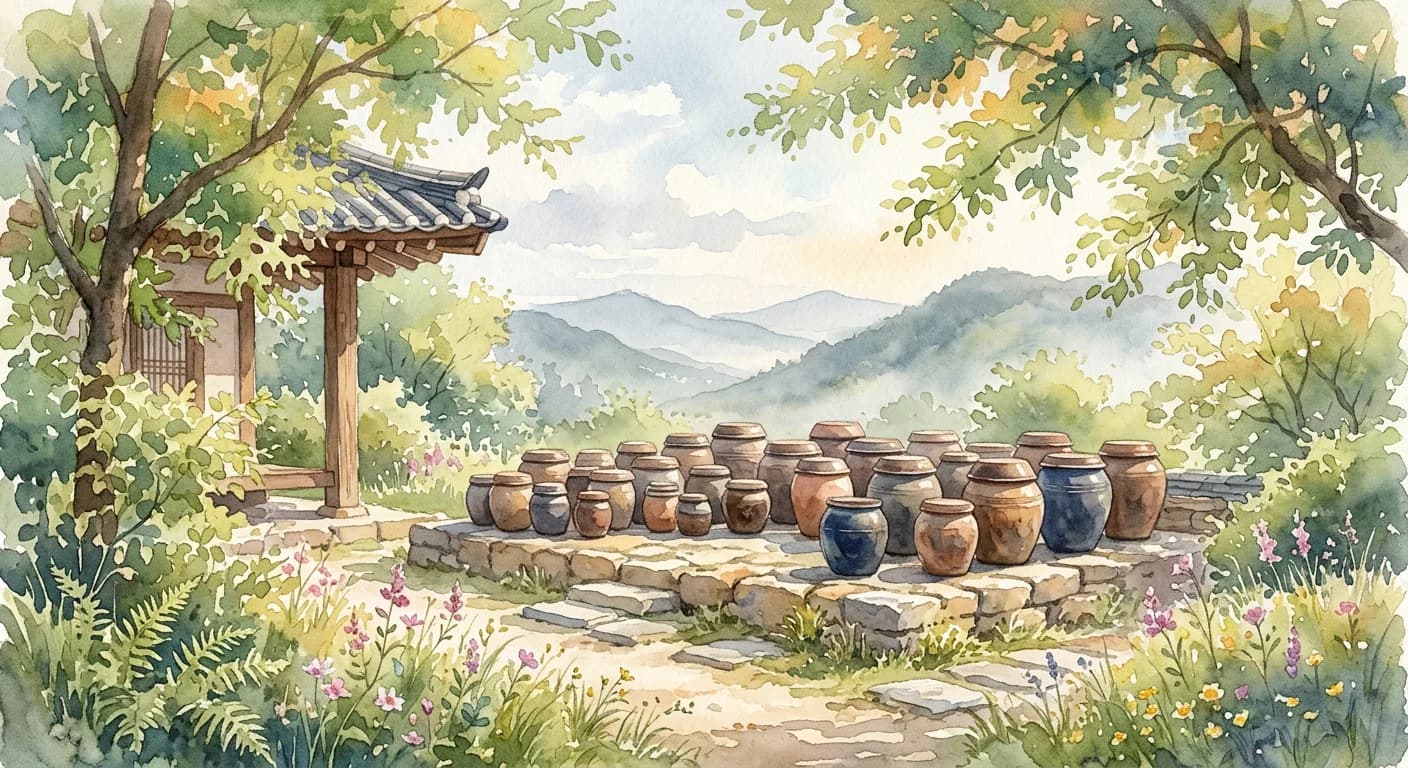
Jangdokdae
/JAHNG-dok-day/
Meaning
Jangdokdae is the sacred outdoor terrace where earthenware pots, called 'jangdok,' patiently nurture Korea's essential fermented foods. More than just a storage space, it's a vibrant micro-ecosystem, harmonizing with the elements to transform simple ingredients into complex, deeply flavored staples like kimchi, gochujang, and doenjang. This platform embodies the rhythm of the seasons, the wisdom of ancestral culinary practices, and the profound connection between nature, sustenance, and the Korean home.
Literal Translation
pot platform
The Story Behind the Word
The Jangdokdae's existence is deeply rooted in Korea's agricultural history and its reliance on fermentation for food preservation, especially during harsh winters. It reflects a philosophy of working *with* nature, understanding the subtle interplay of sunlight, wind, and temperature to achieve optimal fermentation. Historically, a well-maintained Jangdokdae was a source of pride for a household, signifying domestic diligence and culinary prowess. It also embodies the concept of 'son-mat' (hand-taste), the intangible quality imparted by a cook's touch, as the careful placement and tending of the jars are crucial. This space, often positioned to catch the morning sun and afternoon breeze, symbolizes the enduring resourcefulness and deep respect for natural processes that define Korean culinary tradition.
Experience It
Grandmother's Legacy
A young woman watches her grandmother carefully wipe down the lids of the jangdok, her movements practiced and gentle. 'Each jar on this jangdokdae holds not just food, but stories,' her grandmother says, 'the taste of our family's history, passed down through generations.'
Winter Preparation
As autumn leaves fall, a family gathers to make kimchi, filling dozens of large jangdok pots. They meticulously place them on the jangdokdae, knowing these fermented treasures will sustain them through the cold months, a vibrant promise of flavor and health.
The Deeper Meaning
The Jangdokdae encapsulates a philosophy of patience, harmony with nature, and the transformative power of time. It reveals a worldview where sustenance is not merely consumed but actively cultivated and respected, acknowledging the microbial life that contributes to flavor and health. It underscores the belief that the best things in life, like deep flavors and strong family bonds, are often the result of slow, natural processes and careful nurturing.
Did You Know?
Traditionally, the orientation of the Jangdokdae was carefully chosen based on 'pungsu' (feng shui) principles, ensuring optimal sunlight and wind flow to encourage the best fermentation and bring good fortune to the household.
How It's Used
The term 'Jangdokdae' is used to describe the architectural feature itself, the area in a traditional Korean house (hanok) where these pots are kept, and by extension, the cultural significance of this space in preparing and storing essential fermented foods.