Hyodo
/hee-doh/
Meaning
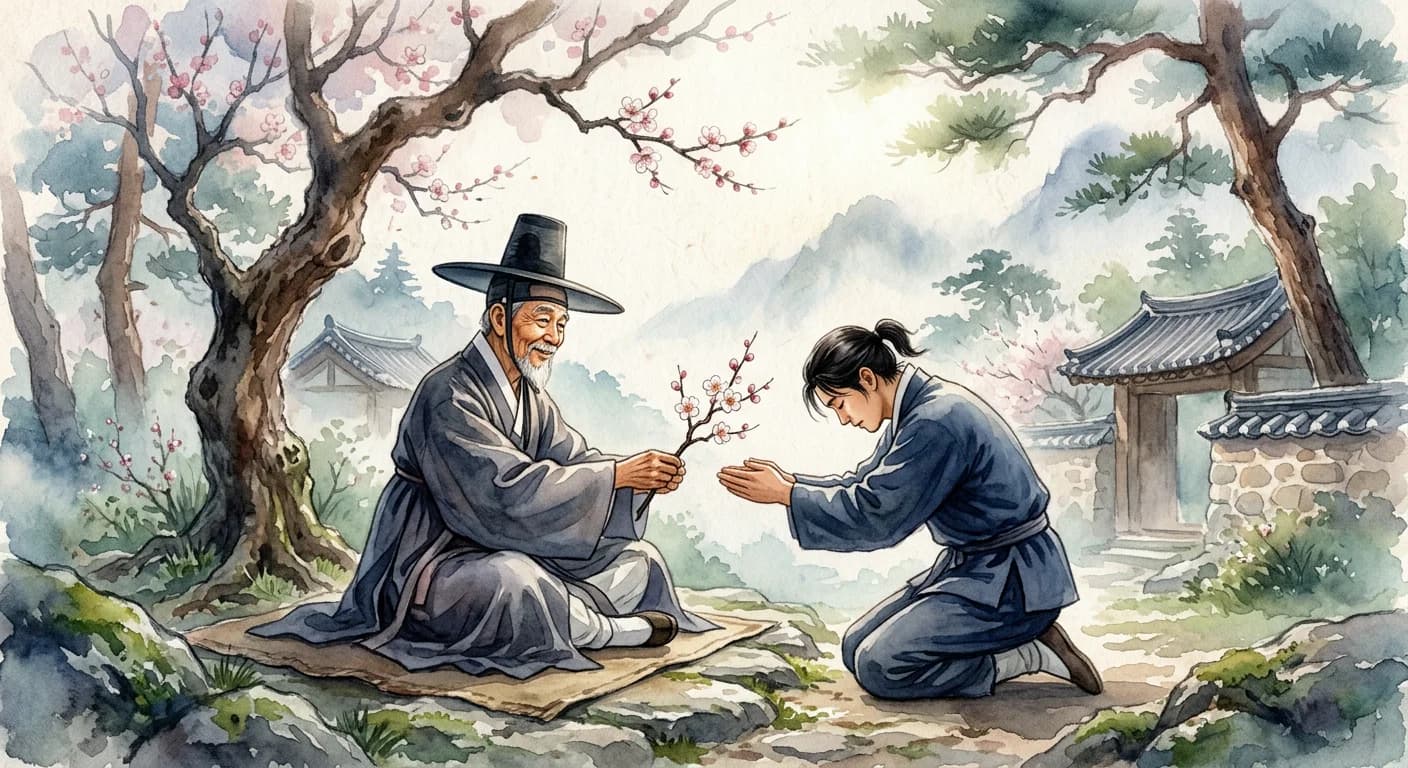
Hyodo refers to the profound, unwavering reverence and admiration one holds for their teacher or mentor, extending far beyond mere instruction. It encompasses a deep gratitude not just for academic or professional guidance, but crucially for the moral and ethical lessons that have indelibly shaped an individual's character and worldview. This sentiment is rooted in Confucian principles, emphasizing a lifelong sense of indebtedness and honor towards those who illuminate the path of knowledge and virtue, transcending simple appreciation to become a profound, almost filial, obligation.
Literal Translation
The literal meaning of 'Hyodo' (효도) in Korean is 'filial piety', which is a virtue of respect for one's parents, elders, and ancestors. However, in the context of mentorship and respect for teachers, it carries a similar sentiment of deep respect and gratitude, extending beyond the family to respected figures.
The Story Behind the Word
The concept of "hyodo" for teachers is a powerful extension of the fundamental Confucian value of filial piety (효도, hyodo) towards parents. In traditional Korean society, the teacher (선생님, seonsaengnim) was revered as a second parent, holding a sacred position as a guardian of knowledge, morality, and social order. This reverence stems from a worldview where education is not merely about acquiring skills but about cultivating character and becoming a virtuous human being. The existence of this extended "hyodo" highlights the profound respect for hierarchy, wisdom, and the transformative power of mentorship, underscoring the belief that a good teacher contributes immensely to both individual well-being and societal harmony. It reflects a culture that values collective responsibility and the intergenerational transfer of wisdom.
Experience It
Lifelong Teacher's Day
Even decades after graduating, Mr. Kim makes sure to visit his high school physics teacher every Teacher's Day, bringing a small gift and sharing updates on his life. He attributes his successful engineering career and ethical compass to his former teacher's rigorous lessons and personal encouragement, embodying a deep sense of hyodo.
Passing on the Craft
A young artisan meticulously learns the intricate techniques from her master. She dedicates herself to perfecting the craft, not just for her own skill, but out of a profound hyodo, aiming to uphold her master's legacy and pass on the traditions with the same integrity and passion she received.
The Deeper Meaning
This extended meaning of hyodo reveals a core philosophical tenet in Korean culture: the interconnectedness of personal growth with the guidance of virtuous elders. It underscores the belief that true education involves not just intellectual transfer but a moral apprenticeship, where the teacher's character is as vital as their curriculum. This perspective emphasizes a lifelong commitment to honoring those who have shaped one's ethical and intellectual foundations, viewing such respect as essential for individual and societal flourishing.
Did You Know?
While "hyodo" primarily refers to parental respect, its application to teachers is so strong that Korea celebrates 'Teacher's Day' (스승의 날) on May 15th, a day where students express deep gratitude and respect, sometimes even years after graduating.
How It's Used
Used to describe the profound respect and gratitude felt towards a teacher, mentor, or elder who has significantly influenced one's life, often in a formal or respectful context.