Zhái
/dzai/
Meaning
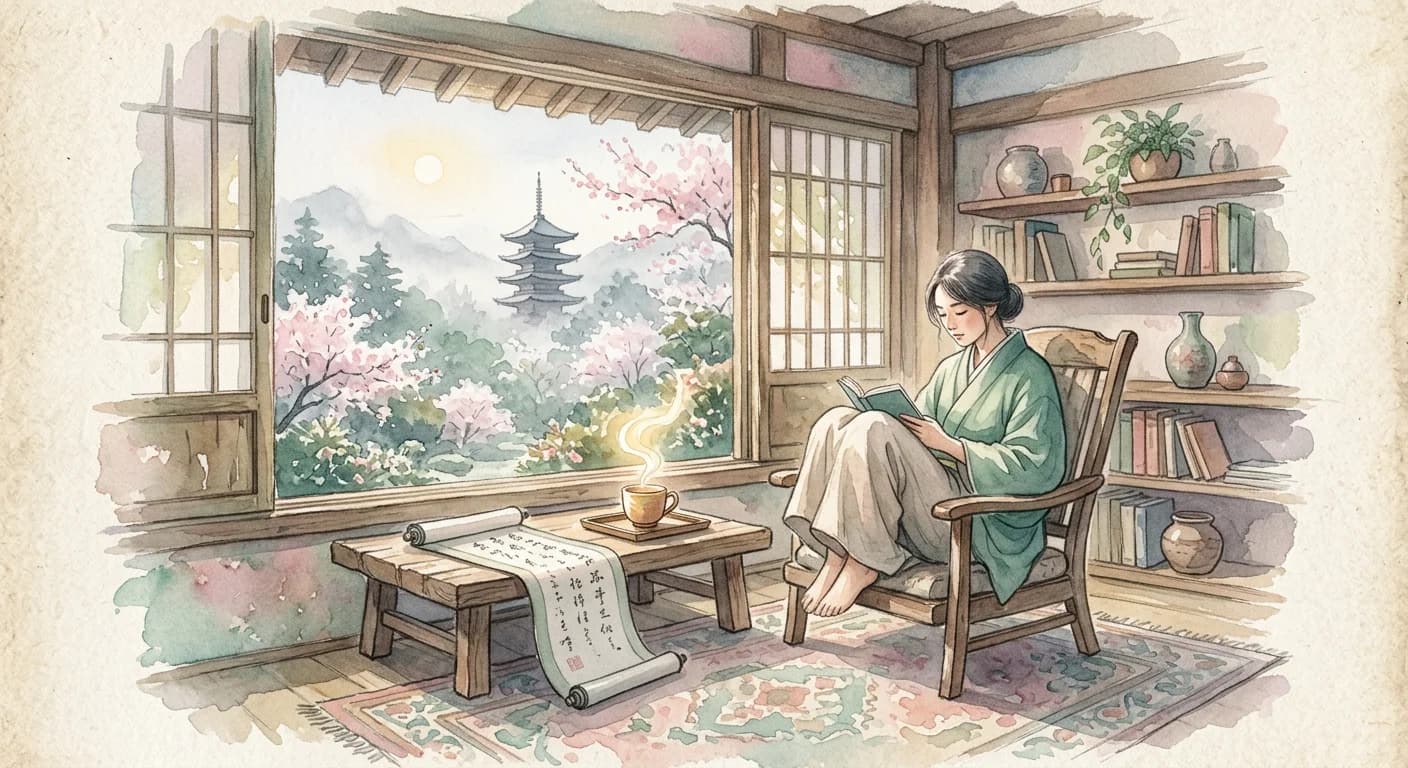
Originally evoking a secluded, elegant dwelling or a private retreat, 'zhái' has transformed in contemporary Mandarin to characterize an individual who deliberately embraces a home-centric existence. This person finds their deepest comfort and most profound engagement not in external social spheres, but within the sanctuary of their personal space, often immersed in solitary pursuits like gaming, anime, reading, or online creative endeavors. It signifies a chosen lifestyle of voluntary introversion, a deliberate withdrawal from the clamor of the outside world to cultivate a rich inner life, rather than a negative judgment of reclusiveness.
Literal Translation
small villa; secluded place; (slang) homebody
The Story Behind the Word
The evolution of 'zhái' reflects a fascinating intersection of traditional Chinese respect for personal cultivation and modern societal pressures. Historically, the pursuit of quiet scholarship and introspection in one's private 'zhái' (villa/study) was a revered ideal, particularly for literati. The modern 'zhái' person, while perhaps not a scholar, embodies a similar retreat from the bustling, competitive urban environment that can feel overwhelming for many younger Chinese. This word captures a contemporary phenomenon where the digital realm offers an accessible, fulfilling alternative to traditional social interaction, allowing individuals to carve out personal havens in a rapidly changing, densely populated society. It speaks to a growing acceptance, and even celebration, of diverse lifestyles that prioritize individual well-being and personal passion over conformity to traditional social expectations.
Experience It
Weekend Zhái Life
Li Wei’s friends kept inviting him out, but he politely declined. His perfect Saturday involved a new game release, a stack of manga, and ordering takeout, all from the comfort of his apartment. He was a true 'zhái', perfectly content in his own world.
The Creative Zhái
Mei Lin spends most evenings and weekends at home, not because she's anti-social, but because it's where her creativity flourishes. Surrounded by her art supplies and favorite music, she’s a 'zhái' who finds deep fulfillment in painting intricate digital illustrations, sharing them online with a global community.
The Deeper Meaning
The concept of 'zhái' subtly challenges the traditionally communal and outwardly-focused aspects of Chinese society. It highlights a burgeoning individualism, where self-care and personal fulfillment, often found through digital engagement and solitary hobbies, are increasingly valued. This shift suggests a redefinition of 'success' and 'happiness' away from purely external societal markers towards an appreciation for internal peace and self-cultivation, even if it means opting out of conventional social structures.
Did You Know?
The modern usage of 'zhái' was heavily influenced by the Japanese term 'otaku' (often translated as 'geek' or 'fan'), which gained popularity in China through anime and manga culture.
How It's Used
Used to describe someone, typically younger, who spends a lot of time indoors, often engaging in online activities or hobbies, and generally avoids social gatherings.