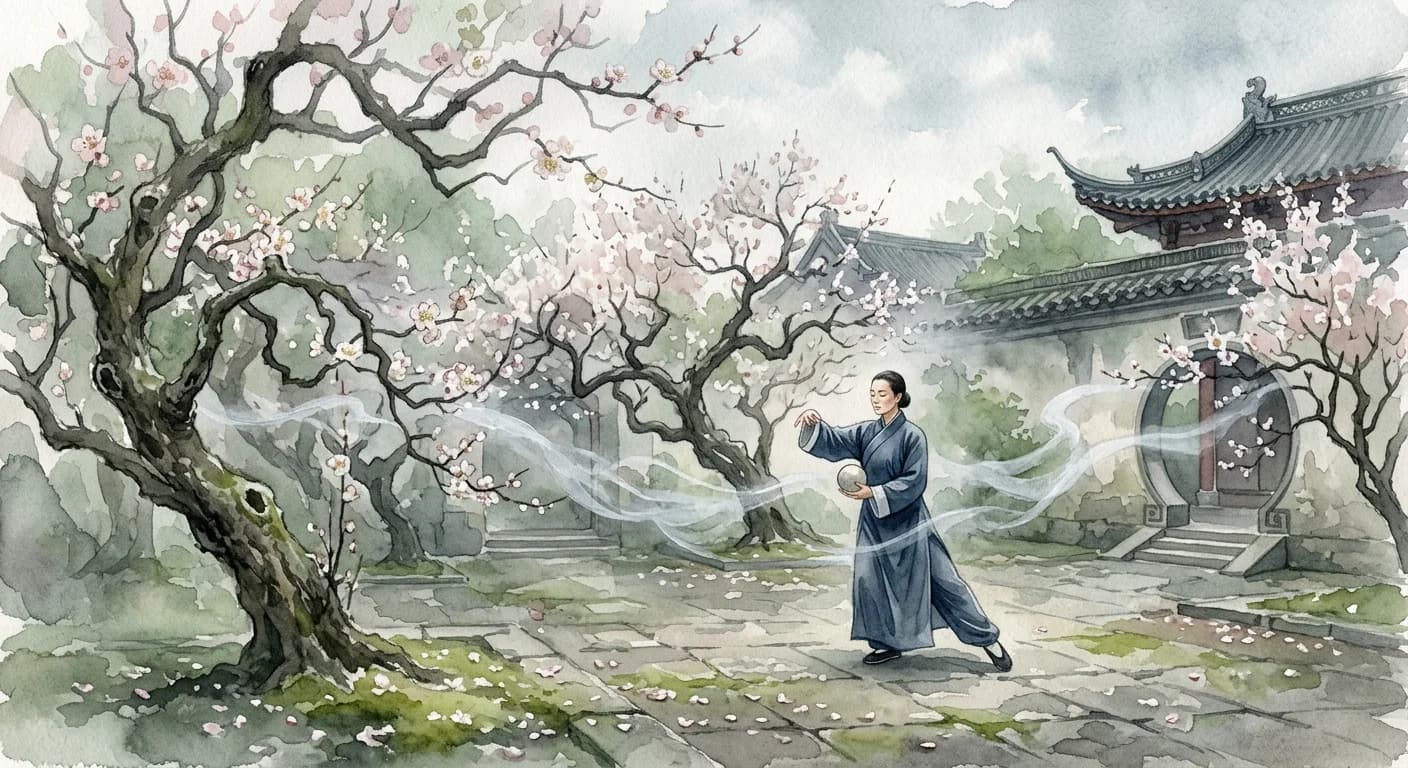
套路 (tàolù)
/TAO-loo/
Meaning
Tàolù describes a deeply ingrained, often pre-determined sequence of actions, thoughts, or expressions, perfected through repetition and experience. It's the 'playbook' for achieving a desired outcome, whether in the graceful arcs of a tai chi form or the subtle maneuvers of a social interaction. While it can signify mastery and efficiency, tàolù also carries the connotation of predictability, a lack of genuine spontaneity, or even manipulative artifice, suggesting a performance rather than authentic engagement.
Literal Translation
套 (tào) - cover, sheath, set, loop; 路 (lù) - road, path, way
The Story Behind the Word
The concept of tàolù is deeply woven into Chinese culture, reflecting a long-standing emphasis on structured learning, tradition, and the mastery of established forms. From ancient philosophical texts advocating for adherence to rituals (礼, lǐ) to the rigorous training in martial arts (武术, wǔshù) and traditional opera, the idea of perfecting a 'path' or 'routine' is central. It speaks to a cultural preference for order and a belief that wisdom and skill are often transmitted through codified practices. The word's dual nature – signifying both expertise and potential insincerity – mirrors the societal value placed on both conforming to norms and discerning genuine intent, highlighting a nuanced understanding of human behavior within established frameworks.
Experience It
Martial Arts Mastery
Grandmaster Li demonstrated the 'Eight Trigrams Palm' tàolù with effortless grace. Each movement flowed into the next, a testament to decades of disciplined practice, showcasing the form's inherent power and beauty.
Unmasking the Sales Pitch
As the car salesman launched into his well-rehearsed pitch, Sarah recognized the familiar tàolù: the feigned empathy, the 'limited-time offer,' the push for a quick decision. She knew exactly how to navigate the conversation.
The Deeper Meaning
Tàolù reflects a worldview that values both tradition and pragmatism. It suggests that while innovation is possible, mastery often begins with understanding and perfecting established patterns. It also subtly critiques the unthinking application of such patterns, hinting at a philosophical tension between adherence to form and the need for genuine, adaptive responses to life's complexities.
Did You Know?
The term 'tàolù' is so pervasive that it's often used humorously in online slang to describe any cliché or predictable pattern, like a romantic comedy plot or a politician's speech.
How It's Used
Used to describe anything from martial arts forms, dance routines, and standard operating procedures to predictable social interactions, manipulative tactics, or even a formulaic approach to problem-solving.