U.
HomeRegionsLanguagesEmotionsCollections
Find Your Word

“The limits of my language mean the limits of my world.”

— Ludwig Wittgenstein, Philosopher

Untranslatable

A curated collection of the world's most beautiful expressions—words that remind us language is humanity's greatest invention.

  • Home
  • Collections
  • Regions
  • Countries
  • Emotions
  • Tags
  • Contexts
  • Finder
  • Europe
  • Asia
  • Americas
  • Africa
  • Middle East
  • About
  • Contact
  • Privacy Policy
  • Terms of Service

2026 © Untranslatable. All rights reserved.

    /
    /
    1. Home
    2. /
    3. Asia
    4. /
    5. Rén
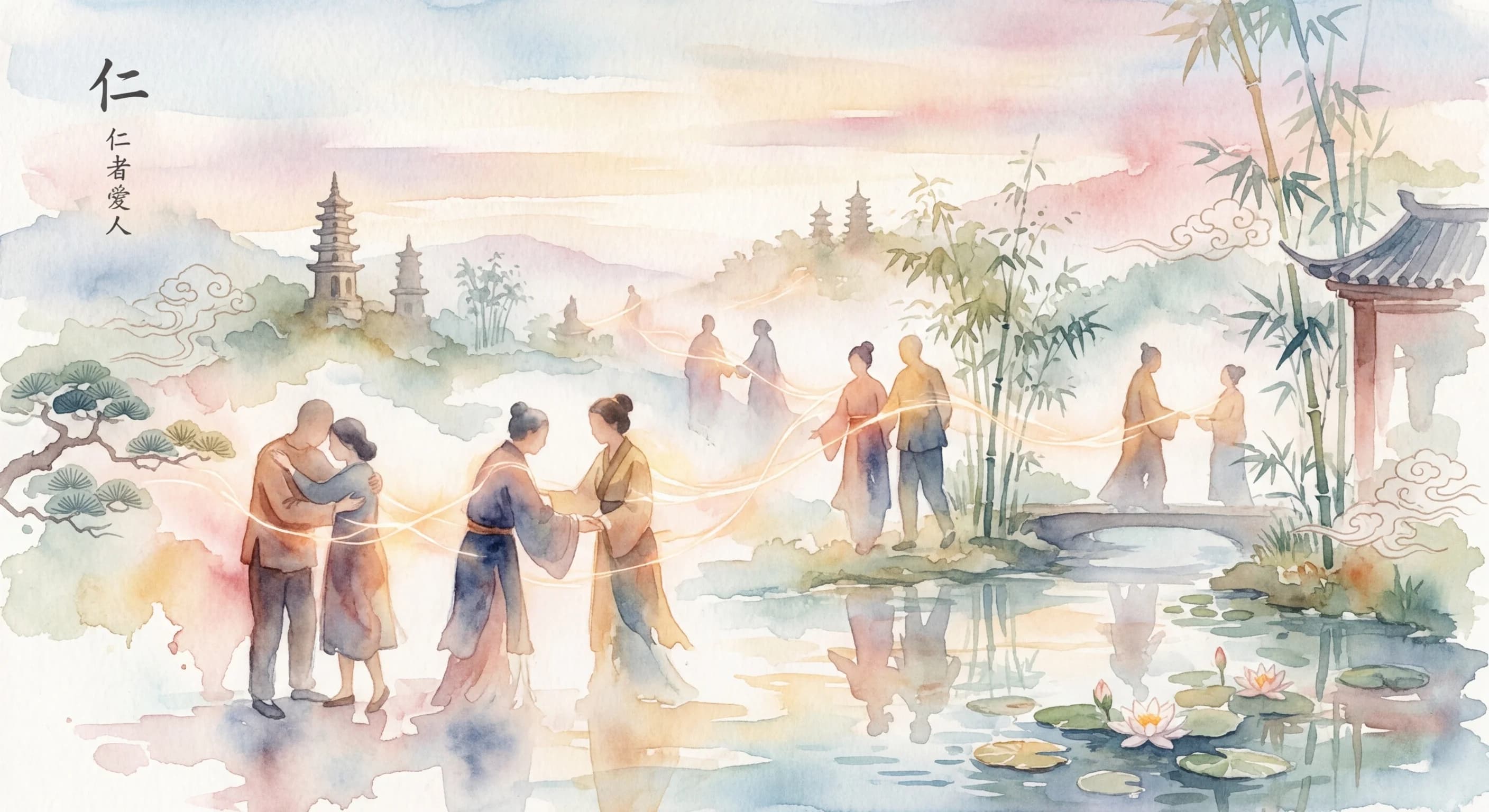
    Artistic representation of rén
    Mandarin Chinese•
    🇨🇳China

    Rén

    /run/

    Meaning

    Rén (仁) represents the pinnacle of Confucian virtue, a profound humaneness that extends beyond mere kindness to encompass deep empathy, reciprocal care, and an active commitment to the well-being of all humanity. It is the ethical core of an individual, guiding conduct with compassion and fostering harmonious social relationships. This virtue is not a passive sentiment but a dynamic, lived practice, embodying the essence of what it means to be truly human and to cultivate a flourishing society rooted in mutual respect and understanding.

    Literal Translation

    humaneness, benevolence, kindness

    The Story Behind the Word

    Rén is the cornerstone of Confucian philosophy, articulated by Confucius himself as the highest moral aspiration. Its existence reveals a world view where human beings are inherently social and relational, finding their fullest expression not in isolation but through ethical interactions. For Confucius, cultivating rén was the path to personal enlightenment and societal order, believing that a ruler embodying rén would naturally inspire it in their subjects, leading to a just and stable state. The character 仁 itself visually combines 'person' (人) and 'two' or 'together' (二), subtly suggesting the interconnectedness central to its meaning. It is not an abstract ideal but a practical guide for daily life, from family relationships to governance.

    Experience It

    The Benevolent Magistrate

    A magistrate, faced with a complex dispute between two impoverished families, doesn't just apply the letter of the law. Instead, he listens deeply to both sides, understands their struggles, and devises a solution that preserves their dignity and helps them rebuild, demonstrating true rén beyond mere justice.

    A Teacher's Compassion

    A teacher notices a quiet student struggling not just with academics but also with personal challenges. Rather than simply assigning more homework, she approaches the student with warmth, offers support, and creates a nurturing environment, embodying rén through her empathetic guidance and care.

    The Deeper Meaning

    Rén reveals a profoundly relational and ethical worldview where individual flourishing is inseparable from collective well-being. It posits that true humanity is found in empathetic engagement with others, emphasizing self-cultivation as a means to contribute to social harmony. This philosophy underscores the idea that ethical action is not just about avoiding harm but actively fostering goodness and connection within the human community.

    Did You Know?

    The character for rén, 仁, is often depicted as two strokes representing 'person' (人) and 'two' (二), symbolizing the ideal of how two people should interact – with mutual respect, empathy, and interconnectedness.

    How It's Used

    Ren is a foundational concept in Confucian philosophy and ethics, used to describe the ideal moral quality of a person, particularly in their relationships with others. It's invoked in discussions of governance, personal cultivation, and social harmony.

    Emotions
    belonging,gratitude,love
    Contexts
    family,friendship,work
    🇨🇳China

    by Dr. Kenji Tanaka·Written Mar 10, 2026·Updated Apr 3, 2026

    Related Words

    Explore more
    SobremesaSpanish

    Sobremesa is the cherished, often extended period immediately following a meal, particularly lunch or dinner, where diners remain seated at the table to enjoy conversation, coffee, and digest not just the food, but the company itself. It’s a dedicated time for unhurried social bonding, storytelling, and shared laughter, transforming a simple meal into a profound communal experience. Far from just clearing the dishes, sobremesa is an integral part of Spanish social life, often lasting for hours.

    Wabi-sabiJapanese

    Wabi-sabi is the profound appreciation for the ephemeral, the imperfect, and the incomplete aspects of existence. It is about discovering beauty in the subtle textures of age, the unique character of flaws, and the gentle decay that marks the passage of time. This philosophy encourages a quiet acceptance of impermanence and a mindful connection to the natural world, finding elegance in simplicity and authenticity.

    IkigaiJapanese

    Ikigai is more than just a reason to get out of bed; it's a deeply personal and evolving sense of purpose that brings genuine fulfillment and joy to one's life. It represents the sweet spot where your passions, talents, needs of the world, and what you can be paid for beautifully converge. Discovering your ikigai often leads to a life lived with intentionality, resilience, and a profound connection to one's contributions. It's the intrinsic motivation that fuels a meaningful existence, regardless of external circumstances.

    NunchiKorean

    Nunchi is the sophisticated, almost telepathic, ability to instantly grasp the unspoken dynamics of any social situation, anticipating others' thoughts and feelings, and then responding with impeccable grace and timing. It's an acute form of social intuition, allowing one to navigate complex interpersonal landscapes by reading subtle cues like body language, tone, and context. Possessing good nunchi means effortlessly understanding the underlying emotional currents and adjusting one's behavior to maintain harmony and effectiveness, often without a single word exchanged.