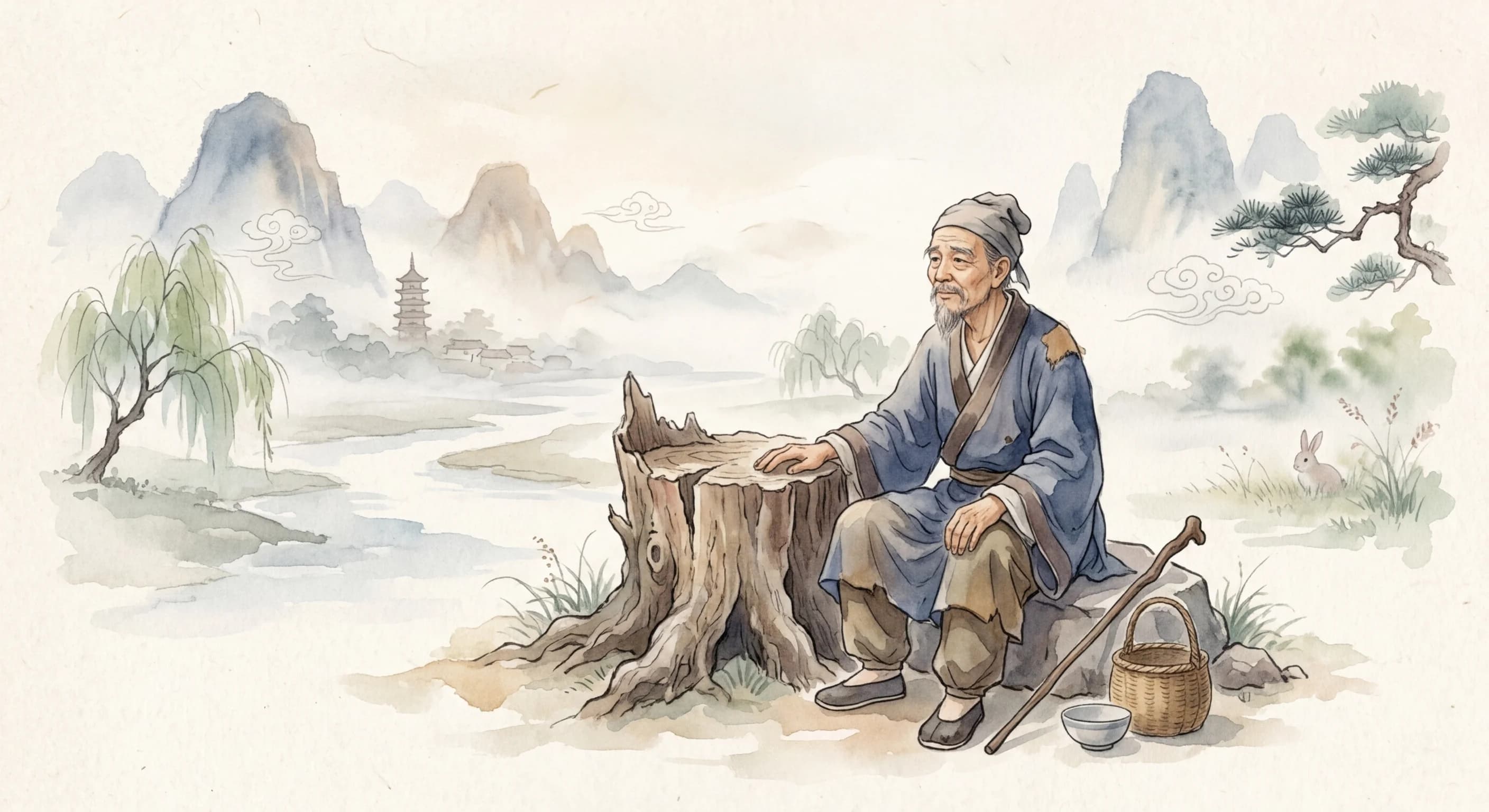
守株待兔 (shǒuzhūdàitù)
/SHOH-joo-dah-TOO/
Meaning
This idiom paints a vivid picture of someone foolishly fixated on a single, improbable stroke of luck. It describes the act of passively clinging to a past, accidental success, neglecting proactive effort and realistic strategies. Like the farmer who stops tilling his fields to stare at a tree stump, it critiques individuals who abandon diligent work in favor of waiting for an identical, unlikely fortunate event to repeat itself, highlighting a profound lack of initiative and a naive reliance on serendipity.
Literal Translation
guard stump wait rabbit
The Story Behind the Word
The fable of 'guarding a tree stump waiting for a rabbit' is a foundational tale in Chinese culture, appearing in the ancient text *Han Feizi* during the Warring States period (c. 475-221 BCE). This era was characterized by intense intellectual discourse and the rise of various philosophical schools, including Legalism, which Han Fei represented. The story served as a powerful critique against conservative rulers or officials who clung to outdated methods and policies, expecting past successes to recur without adaptation or innovation. It underscores a deep-seated cultural value in China: the importance of adaptability, hard work, and continuous effort (自强不息, *zìqiángbùxī*). The idiom reveals a worldview that champions pragmatism and forward-thinking, viewing static reliance on chance as a path to failure, rather than fortune. It's a cautionary tale against complacency and a call for active engagement with changing circumstances.
Experience It
Waiting for a Miracle
After his first novel became an overnight sensation, David quit his day job and spent years simply waiting for inspiration to strike again, refusing to outline new plots or attend writing workshops. His friends often remarked, 'He's just 守株待兔, hoping another rabbit will conveniently run into his stump.'
Outdated Business Strategy
The CEO insisted on selling only one specific product that had brought immense success decades ago, ignoring market changes and consumer demand for innovation. His board members secretly worried he was 守株待兔, expecting past glory to magically reappear without any strategic adjustments.
The Deeper Meaning
This idiom embodies a core philosophical tenet in Chinese thought: that effort (努力, *nǔlì*) and adaptation (变通, *biàntōng*) are paramount for success, while passive reliance on chance or past glory is foolish. It subtly critiques fatalism and promotes a pragmatic, proactive approach to life's challenges, emphasizing human agency over mere destiny. It reflects a worldview that values diligence and strategic thinking above blind luck.
Did You Know?
The original fable was used by the philosopher Han Fei to criticize rulers who tried to govern a changing society by adhering rigidly to the policies of ancient kings, demonstrating the timelessness of the critique against stagnation.
How It's Used
Used to describe someone who is foolishly waiting for a stroke of luck or a repeat of a past fortunate event, instead of actively pursuing their goals through hard work.