Hújiǎhǔwēi
/hoo-jee-ah-hoo-way/
Meaning
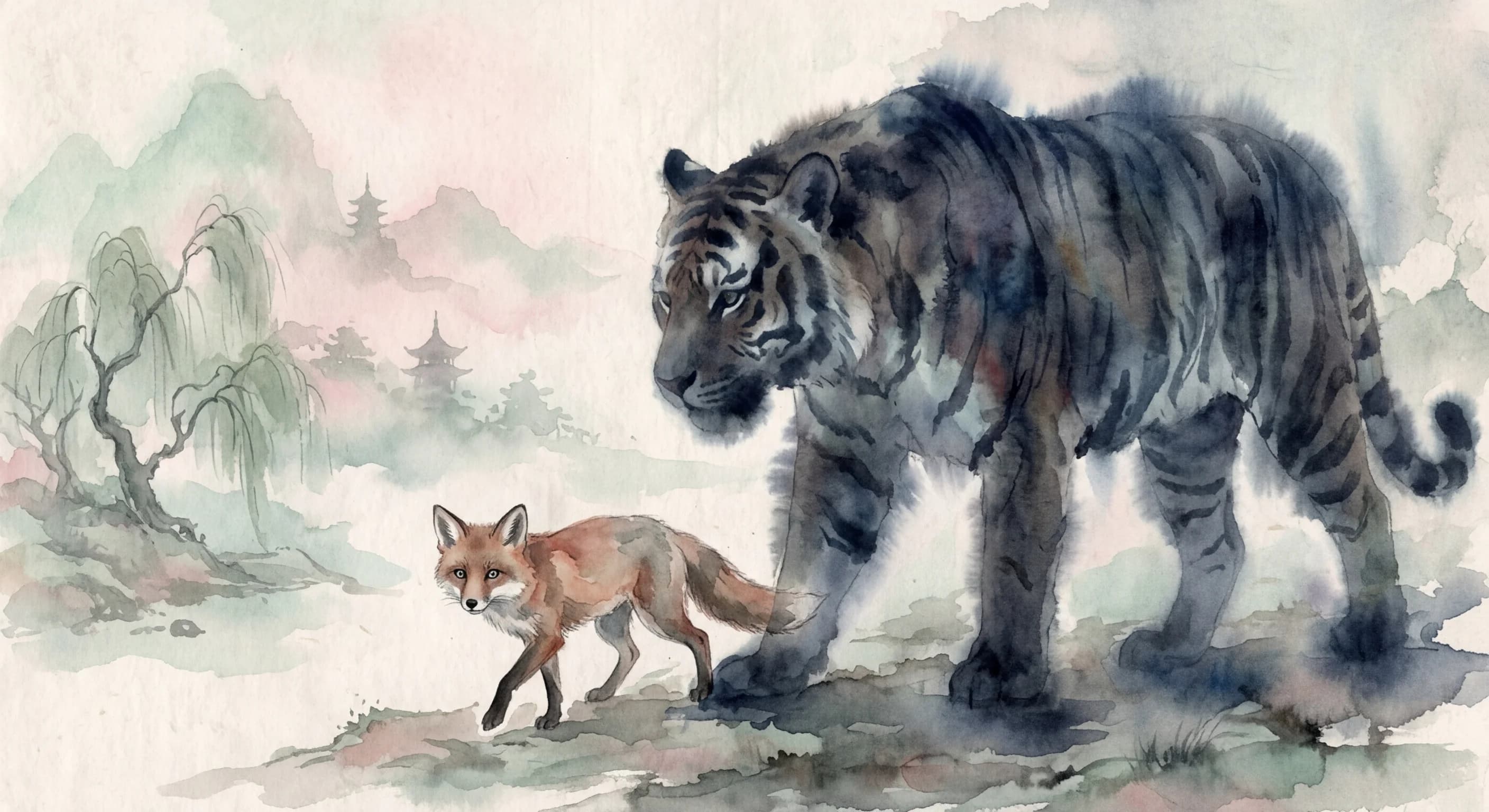
This vivid idiom, "hújiǎhǔwēi," describes an individual who, lacking any true authority or intrinsic power, intimidates or manipulates others by conspicuously displaying their association with a more formidable entity. It perfectly encapsulates the act of leveraging borrowed influence to assert dominance, much like a cunning fox parading in front of a tiger to scare away lesser creatures. The phrase underscores the superficiality of such power, implying that the individual's perceived strength is merely a reflection, brittle and temporary, of someone else's might.
Literal Translation
Fox borrows tiger's might
The Story Behind the Word
The idiom "hújiǎhǔwēi" originates from a well-known fable in the ancient Chinese text, "Zhan Guo Ce" (Strategies of the Warring States), a collection of historical anecdotes from the Warring States period (475-221 BC). In the story, a tiger catches a fox, who then cunningly convinces the tiger that he is an envoy of the Jade Emperor and all animals fear him. The fox suggests they walk together, and as other animals flee in terror, the tiger is fooled into believing they fear the fox, not himself. This tale reflects a deep-seated cultural understanding in China of hierarchy, deception, and the perception of power. It speaks to a society where connections and guanxi (relationships) have historically held immense importance, and where the appearance of power can be wielded almost as effectively as genuine authority. The idiom serves as a cautionary tale against being misled by outward displays and encourages discernment about true character and influence.
Experience It
Nephew in the Office
Young Li, fresh out of college, constantly barked orders at senior staff and made unreasonable demands. Everyone knew he was only acting that way because his uncle was the company CEO, a clear case of hújiǎhǔwēi, making him unbearable to work with.
Village Head's Son
The village head's son, known for his laziness, would often threaten vendors with his father's authority if they didn't give him special treatment or discounts. His actions were a classic example of hújiǎhǔwēi, exploiting his family's position for personal gain.
The Deeper Meaning
This idiom offers a profound insight into the nature of power and perception in human society. It highlights the distinction between legitimate authority and borrowed influence, suggesting that true power emanates from one's own capabilities and character, not from associations. It implicitly critiques those who rely on superficial displays, revealing a worldview that values substance over showmanship and encourages a discerning eye for authenticity, especially in leadership and social interactions.
Did You Know?
The idiom is so famous that it's often taught to Chinese children through illustrated storybooks, making the fable of the fox and the tiger one of the most widely known moral tales in the culture.
How It's Used
Used to describe someone who is arrogant and overbearing because they are associated with someone powerful, even though they have no real power themselves.