Darshan
/DAR-shun/
Meaning
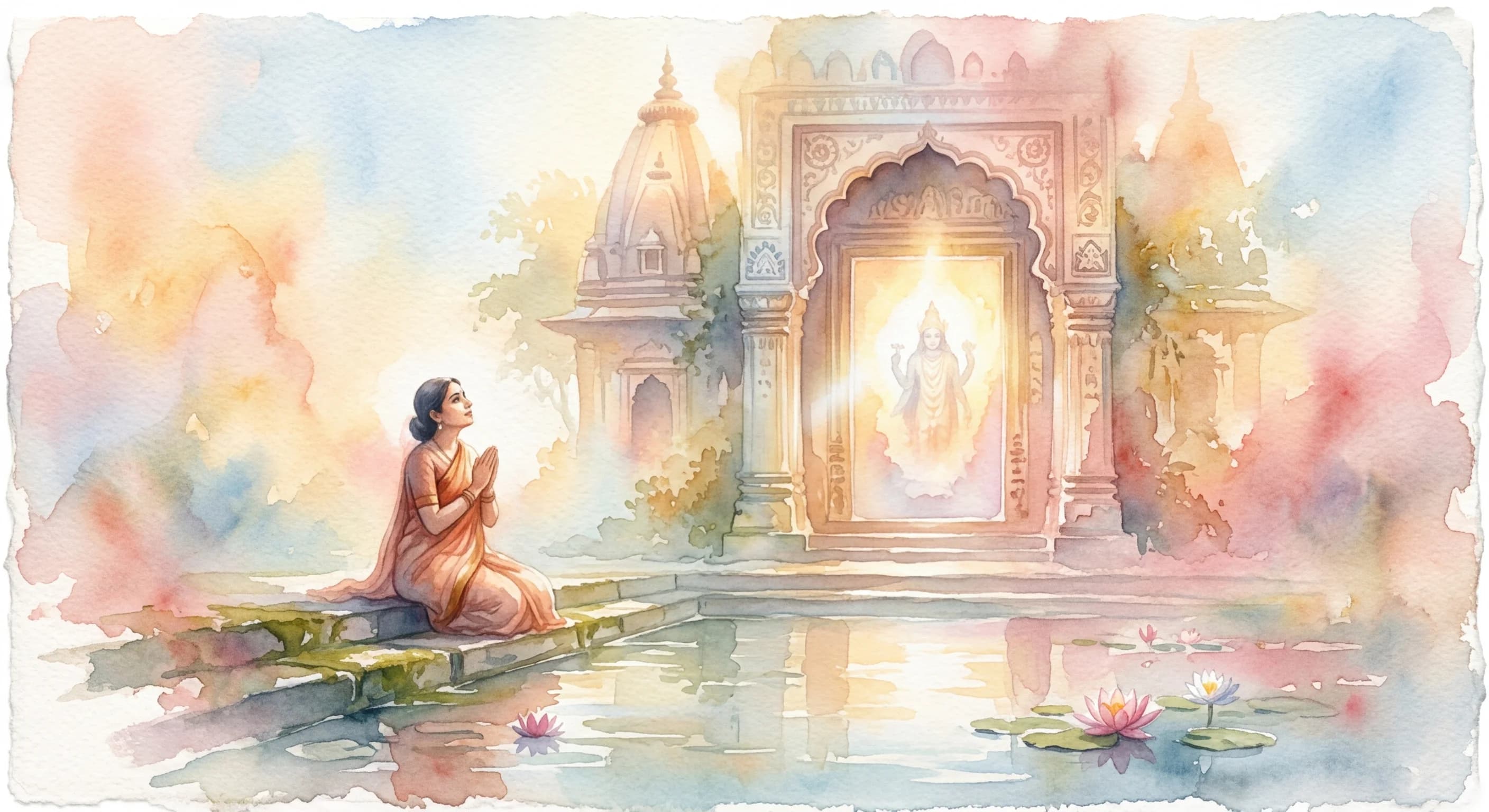
Darshan transcends mere physical sight; it is a profound spiritual encounter where a devotee beholds the sacred form of a deity, a revered guru, or a holy object, believing it to be a moment of divine revelation. This auspicious viewing is an active, reciprocal process: the devotee 'sees' the divine, and the divine, in turn, 'sees' and acknowledges the devotee, bestowing blessings and spiritual merit. It signifies a direct, intimate communion, a fleeting yet deeply transformative connection that elevates the soul and instills a sense of peace and reverence.
Literal Translation
seeing, sight, view
The Story Behind the Word
The concept of Darshan is deeply interwoven with the fabric of Indian spiritual traditions, particularly Hinduism, Jainism, and Buddhism. Its origins can be traced back to ancient Vedic practices where the act of 'seeing' the divine was central to ritual and worship. Philosophically, it reflects the belief in the immanence of the divine – that God can be perceived and experienced directly in various forms, not just through abstract thought. This belief fosters a culture of devotion (bhakti) where direct sensory connection with the divine is highly valued. Darshan reveals a worldview where the sacred is not distant or abstract, but tangible and accessible, capable of interacting directly with human consciousness and offering solace, guidance, and liberation. It underpins the very architecture of temples, the design of idols, and the reverence for spiritual teachers, all serving as conduits for this sacred 'seeing'.
Experience It
Temple Morning Darshan
A family rises before dawn, traveling to the local temple. As the doors open, revealing the brightly adorned idol of Krishna, a hush falls. The mother closes her eyes for a moment, then opens them, feeling the immediate presence, a deep sense of peace washing over her as she takes Darshan of the deity.
Guru's Blessing Darshan
Hundreds gather in a hall, patiently waiting. When the revered spiritual master finally enters and takes his seat, a collective sigh of reverence sweeps through the crowd. Each person seeks his gaze, feeling the profound connection and receiving his silent blessings, taking Darshan of the living guru.
The Deeper Meaning
Darshan embodies the non-dualistic philosophy prevalent in many Indian traditions, suggesting that the divine is not separate from the creation but rather permeates it. It posits that the human eye, when attuned through devotion and faith, can perceive the divine essence manifested in physical forms. This concept reinforces the idea that spiritual truth is not solely intellectual but can be experienced directly and viscerally, leading to a profound transformation of consciousness and a recognition of the sacred in all existence.
Did You Know?
While primarily spiritual, the term 'Darshan' can also be used colloquially in India to mean simply 'to meet' or 'to see someone important,' reflecting its deep cultural imprint on social interactions.
How It's Used
Typically used in religious contexts to describe the act of seeing a deity in a temple, a guru, or a sacred image, often accompanied by prayers or rituals. It can also be used more broadly to mean seeing or witnessing something significant.