U.
HomeRegionsLanguagesEmotionsCollections
Find Your Word

“The limits of my language mean the limits of my world.”

— Ludwig Wittgenstein, Philosopher

Untranslatable

A curated collection of the world's most beautiful expressions—words that remind us language is humanity's greatest invention.

  • Home
  • Collections
  • Regions
  • Countries
  • Emotions
  • Tags
  • Contexts
  • Finder
  • Europe
  • Asia
  • Americas
  • Africa
  • Middle East
  • About
  • Contact
  • Privacy Policy
  • Terms of Service

2026 © Untranslatable. All rights reserved.

    /
    /
    1. Home
    2. /
    3. Asia
    4. /
    5. Yajna
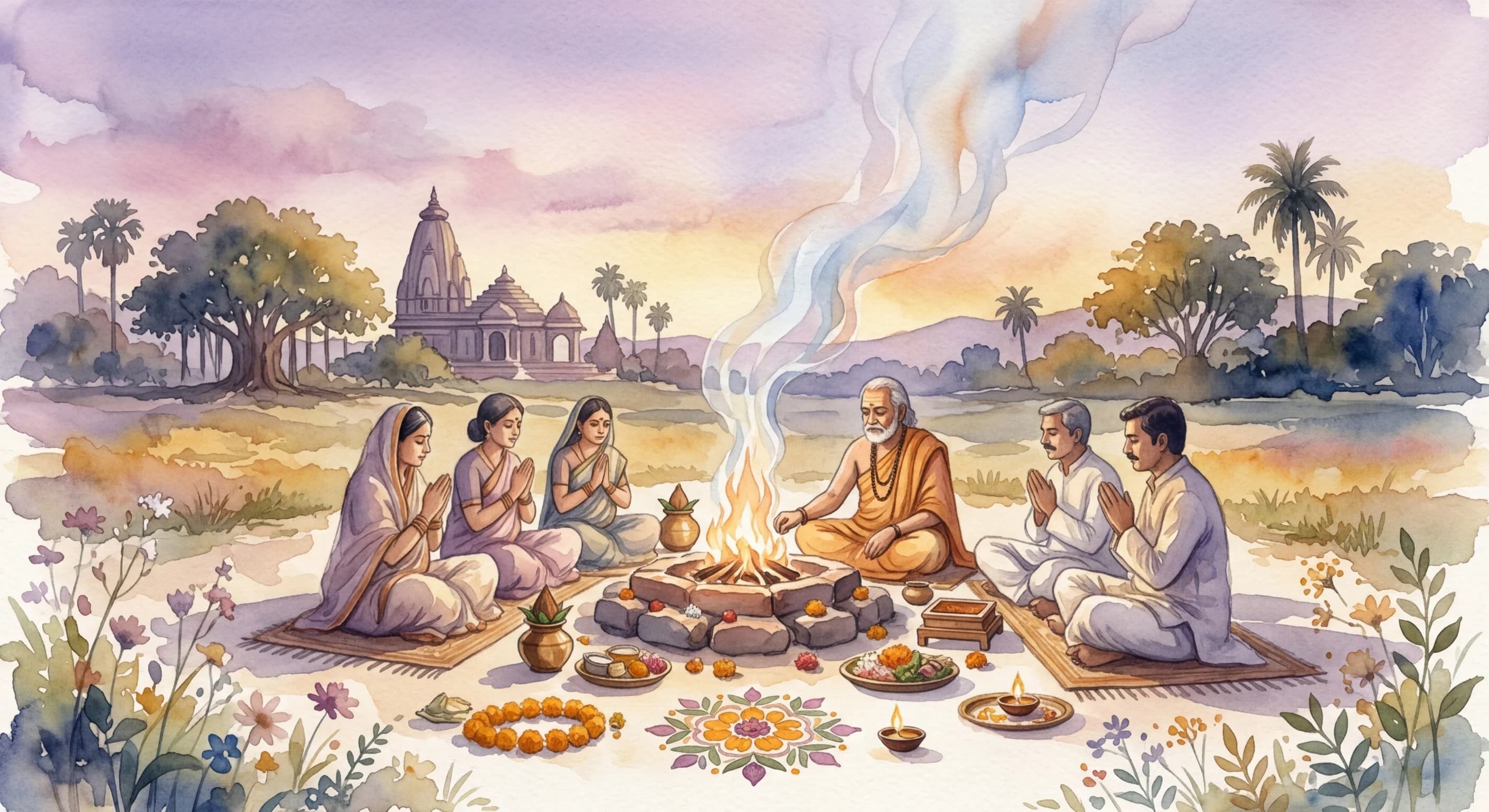
    Artistic representation of Yajna
    Sanskrit•
    🇮🇳India

    Yajna

    /YUG-yuh/

    Meaning

    Yajna is a profound Vedic ritual, far exceeding a mere ceremony. It is a sacred act of cosmic exchange, where offerings — from grains and ghee to one's own ego — are meticulously consecrated into a fire, accompanied by precise chants and mantras. This transformative process is believed to purify the participants, appease deities, and actively maintain the delicate balance of the universe, embodying a deep philosophy of selfless giving and spiritual elevation.

    Literal Translation

    sacrifice, offering, worship

    The Story Behind the Word

    The concept of Yajna is foundational to Hinduism, particularly stemming from the Vedic period, where it was the primary mode of worship and interaction with the divine. It reflects an ancient worldview where humans are intrinsically linked to the cosmos, and their actions have tangible effects on universal order (Rta). Early Vedic texts, like the Rigveda, are replete with hymns dedicated to various devas (deities) invoked through Yajna, underscoring its role in sustaining life, ensuring prosperity, and facilitating spiritual progress. It wasn't just about appeasing gods; it was a sophisticated system of maintaining dharma (righteous conduct) and achieving moksha (liberation), revealing a culture that saw life itself as a continuous act of offering and interconnectedness. This tradition has evolved, but its essence of sacrifice, community, and cosmic harmony remains central to Hindu identity.

    Experience It

    Housewarming Yajna

    Before moving into their new home, the Sharma family gathered a priest and relatives. The sacred fire was lit, and offerings of grains and ghee were made with chanting, purifying the space and inviting blessings for peace and prosperity in their new dwelling.

    Spiritual Growth Yajna

    A guru led a group of disciples in a Yajna, where each offering symbolized shedding an attachment or egoistic thought. The smoke rising from the fire represented their collective prayers and intentions ascending, fostering a sense of surrender and spiritual renewal.

    The Deeper Meaning

    Yajna encapsulates a profound philosophy that views existence as a cycle of giving and receiving. It posits that human actions, especially those performed with intention and selflessness, are not isolated but contribute directly to the cosmic fabric. By offering, one doesn't diminish but rather participates in the divine flow, transforming material into spiritual and ego into universal consciousness, thereby emphasizing interdependence and the sacredness of every act.

    Did You Know?

    The elaborate Yajna rituals described in ancient texts could sometimes last for days, months, or even years, involving hundreds of priests and massive quantities of offerings, signifying immense devotion and community effort.

    How It's Used

    Used in Hindu religious ceremonies, rituals, and spiritual practices, often involving an altar and a sacred fire.

    Emotions
    gratitude,love,serenity
    Contexts
    celebration,religion,tradition
    🇮🇳India

    by Annelise Dubois·Written Mar 10, 2026·Updated Apr 3, 2026

    Related Words

    Explore more
    Wabi-sabiJapanese

    Wabi-sabi is the profound appreciation for the ephemeral, the imperfect, and the incomplete aspects of existence. It is about discovering beauty in the subtle textures of age, the unique character of flaws, and the gentle decay that marks the passage of time. This philosophy encourages a quiet acceptance of impermanence and a mindful connection to the natural world, finding elegance in simplicity and authenticity.

    IkigaiJapanese

    Ikigai is more than just a reason to get out of bed; it's a deeply personal and evolving sense of purpose that brings genuine fulfillment and joy to one's life. It represents the sweet spot where your passions, talents, needs of the world, and what you can be paid for beautifully converge. Discovering your ikigai often leads to a life lived with intentionality, resilience, and a profound connection to one's contributions. It's the intrinsic motivation that fuels a meaningful existence, regardless of external circumstances.

    NunchiKorean

    Nunchi is the sophisticated, almost telepathic, ability to instantly grasp the unspoken dynamics of any social situation, anticipating others' thoughts and feelings, and then responding with impeccable grace and timing. It's an acute form of social intuition, allowing one to navigate complex interpersonal landscapes by reading subtle cues like body language, tone, and context. Possessing good nunchi means effortlessly understanding the underlying emotional currents and adjusting one's behavior to maintain harmony and effectiveness, often without a single word exchanged.

    JugaadHindi

    Jugaad is more than just a quick fix; it embodies the spirit of resourceful, ingenious improvisation in the face of scarcity or systemic challenges. It's the art of bending rules, repurposing materials, and thinking outside the box to achieve a desired outcome, often with limited financial or technological resources. This approach celebrates clever workarounds and innovative adaptations, turning constraints into catalysts for creative problem-solving. It's about making do and making something work, brilliantly.