U.
HomeRegionsLanguagesEmotionsCollections
Find Your Word

“The limits of my language mean the limits of my world.”

— Ludwig Wittgenstein, Philosopher

Untranslatable

A curated collection of the world's most beautiful expressions—words that remind us language is humanity's greatest invention.

  • Home
  • Collections
  • Regions
  • Countries
  • Emotions
  • Tags
  • Contexts
  • Finder
  • Europe
  • Asia
  • Americas
  • Africa
  • Middle East
  • About
  • Contact
  • Privacy Policy
  • Terms of Service

2026 © Untranslatable. All rights reserved.

    /
    /
    1. Home
    2. /
    3. Asia
    4. /
    5. Pardah
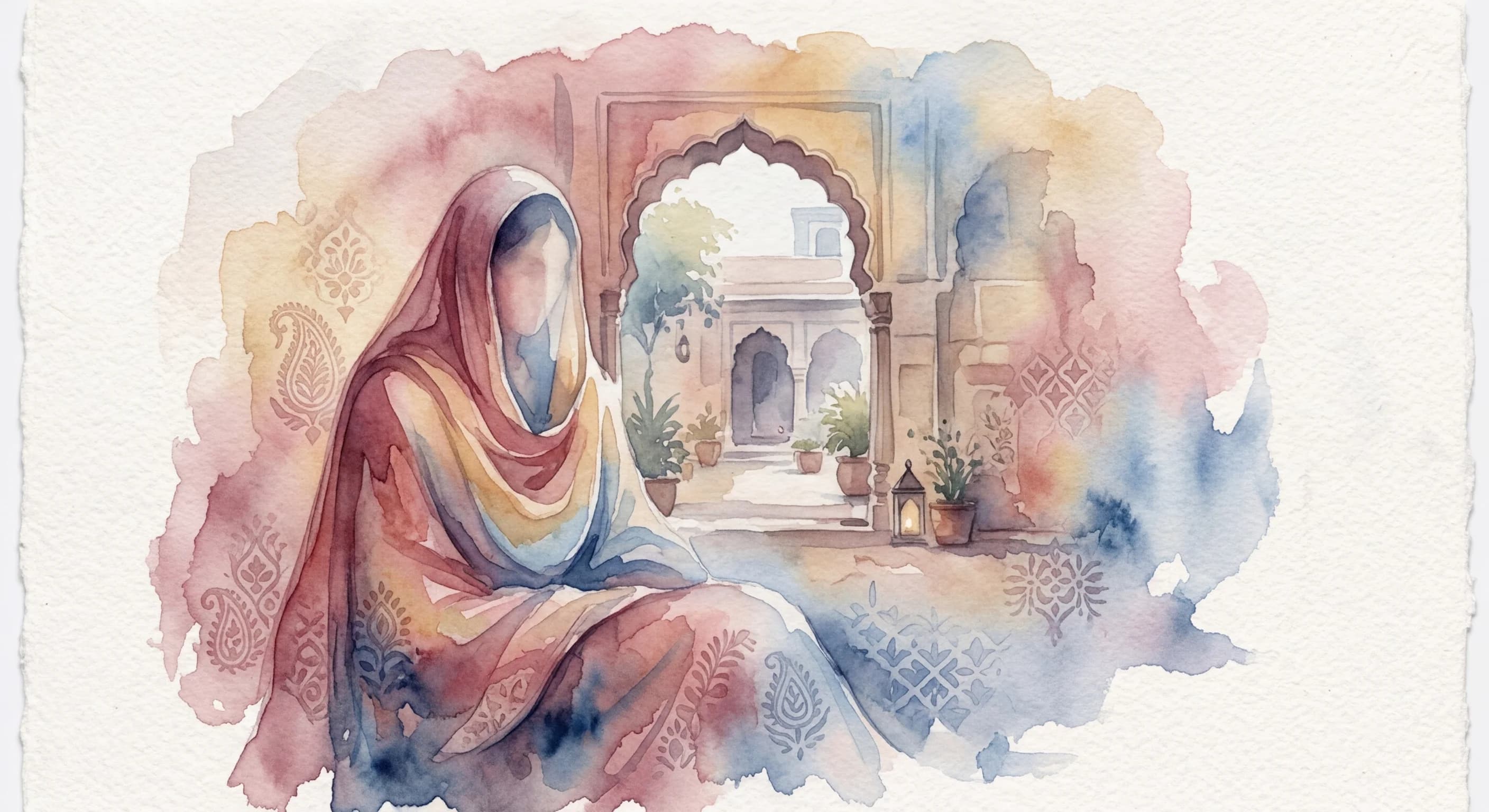
    Artistic representation of Pardah
    Urdu•
    🇦🇫Afghanistan🇮🇳India🇵🇰Pakistan

    Pardah

    /PUHR-duh/

    Meaning

    Pardah transcends the mere physical act of veiling or seclusion; it embodies a profound socio-cultural system of modesty, privacy, and gender segregation deeply woven into the fabric of certain South Asian societies. It dictates not only how women dress in public but also their spatial arrangements within the home, creating a distinct female sphere. This practice is intrinsically linked to notions of family honor, respect, and social status, shaping women's roles and interactions within traditional patriarchal frameworks.

    Literal Translation

    Curtain, veil, screen

    The Story Behind the Word

    The concept of Pardah has roots stretching back centuries in South Asia, influenced by various religious, social, and historical currents, including pre-Islamic traditions and later Islamic practices. It gained significant traction and formalization during the Mughal era, becoming a marker of elite status and respectability. Philosophically, it reflects a worldview where the honor of the family is often tied to the perceived purity and seclusion of its women, and where public and private spheres are sharply delineated. It's a system designed to protect women from perceived dangers and maintain social order, revealing a societal emphasis on control, reputation, and strict gender roles within a community context.

    Experience It

    A Village Wedding

    At the village wedding, young Fatima, though modern in many ways, wore a heavy dupatta drawn over her head and face as she entered the men's section briefly to greet her elders. This act of 'pardah' was a gesture of respect and adherence to family expectations, even if she rarely practiced it in her daily city life.

    The Inner Courtyard

    The women of the household gathered in the inner courtyard, a space behind high walls and screened windows, effectively their 'pardah' from the outside world. Here, they could laugh, share stories, and conduct daily chores without the constraints of public gaze, enjoying a sense of community and freedom within their designated sphere.

    The Deeper Meaning

    Pardah reveals a philosophical underpinning that prioritizes collective honor and social order over individual autonomy, particularly for women. It suggests a belief in the inherent vulnerability of female honor and the necessity of societal structures to safeguard it. This worldview often intertwines with religious teachings, reinforcing a cosmic order where distinct gender roles contribute to community well-being and moral integrity.

    Did You Know?

    Historically, 'pardah' wasn't just for women; royal courts often used elaborate curtains and screens to separate the ruler from the public, a practice known as 'pardah nashini' for men.

    How It's Used

    Used to describe the traditional practice of female seclusion and veiling in South Asia. It is often discussed in contexts related to women's rights, cultural traditions, and religious observances.

    Contexts
    family,social interaction
    🇦🇫Afghanistan🇮🇳India🇵🇰Pakistan

    by Dr. Kenji Tanaka·Written Mar 10, 2026·Updated Apr 3, 2026

    Related Words

    Explore more
    Wabi-sabiJapanese

    Wabi-sabi is the profound appreciation for the ephemeral, the imperfect, and the incomplete aspects of existence. It is about discovering beauty in the subtle textures of age, the unique character of flaws, and the gentle decay that marks the passage of time. This philosophy encourages a quiet acceptance of impermanence and a mindful connection to the natural world, finding elegance in simplicity and authenticity.

    IkigaiJapanese

    Ikigai is more than just a reason to get out of bed; it's a deeply personal and evolving sense of purpose that brings genuine fulfillment and joy to one's life. It represents the sweet spot where your passions, talents, needs of the world, and what you can be paid for beautifully converge. Discovering your ikigai often leads to a life lived with intentionality, resilience, and a profound connection to one's contributions. It's the intrinsic motivation that fuels a meaningful existence, regardless of external circumstances.

    NunchiKorean

    Nunchi is the sophisticated, almost telepathic, ability to instantly grasp the unspoken dynamics of any social situation, anticipating others' thoughts and feelings, and then responding with impeccable grace and timing. It's an acute form of social intuition, allowing one to navigate complex interpersonal landscapes by reading subtle cues like body language, tone, and context. Possessing good nunchi means effortlessly understanding the underlying emotional currents and adjusting one's behavior to maintain harmony and effectiveness, often without a single word exchanged.

    JugaadHindi

    Jugaad is more than just a quick fix; it embodies the spirit of resourceful, ingenious improvisation in the face of scarcity or systemic challenges. It's the art of bending rules, repurposing materials, and thinking outside the box to achieve a desired outcome, often with limited financial or technological resources. This approach celebrates clever workarounds and innovative adaptations, turning constraints into catalysts for creative problem-solving. It's about making do and making something work, brilliantly.