U.
HomeRegionsLanguagesEmotionsCollections
Find Your Word

“The limits of my language mean the limits of my world.”

— Ludwig Wittgenstein, Philosopher

Untranslatable

A curated collection of the world's most beautiful expressions—words that remind us language is humanity's greatest invention.

  • Home
  • Collections
  • Regions
  • Countries
  • Emotions
  • Tags
  • Contexts
  • Finder
  • Europe
  • Asia
  • Americas
  • Africa
  • Middle East
  • About
  • Contact
  • Privacy Policy
  • Terms of Service

2026 © Untranslatable. All rights reserved.

    /
    /
    1. Home
    2. /
    3. Asia
    4. /
    5. Kreng jai
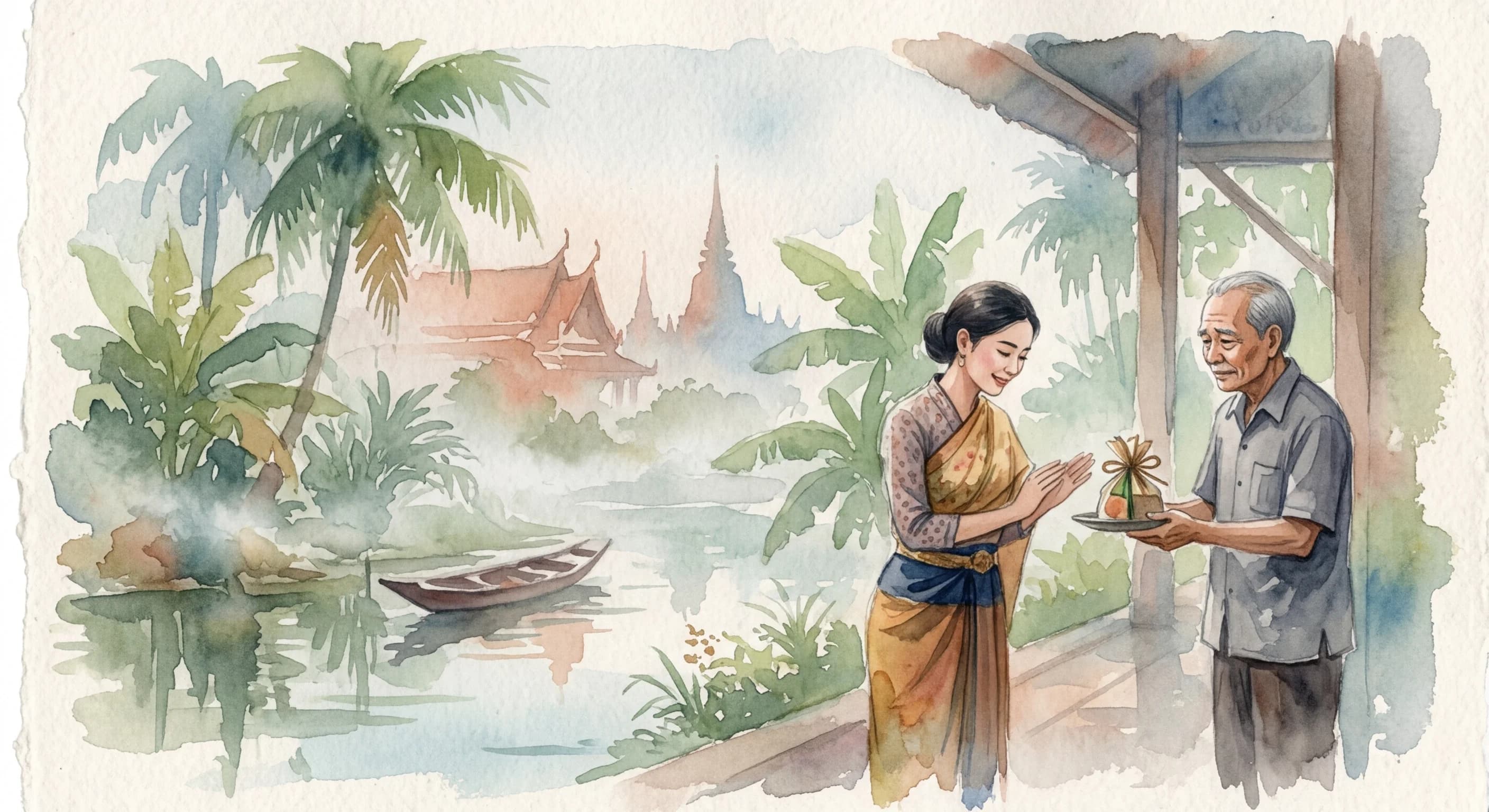
    Artistic representation of kreng jai
    Thai•
    🇹🇭Thailand

    Kreng jai

    /kreng jai/

    Meaning

    Kreng jai is a profound social calculus, a delicate dance of deference and consideration that permeates Thai interactions. It's a preemptive empathy, a deep reluctance to impose, burden, or cause discomfort to others, even at personal cost. This intricate sensitivity extends beyond mere politeness, reflecting a profound awareness of another's feelings, time, and social standing, often leading one to anticipate needs or avoid asking for favors to preserve harmony and prevent any hint of inconvenience. It is the art of self-effacement for the greater social good.

    Literal Translation

    fear/respect (kreng) heart/mind (jai)

    The Story Behind the Word

    The concept of kreng jai is deeply woven into Thailand's hierarchical society and Buddhist principles. Historically, maintaining social harmony (ความสามัคคี, kwam samakki) and avoiding direct confrontation were crucial for community cohesion, especially in agricultural societies where interdependence was key. Buddhism's emphasis on non-attachment, compassion (เมตตา, metta), and the avoidance of causing suffering (ทุกข์, dukkha) provides a philosophical bedrock. Kreng jai reflects a worldview where the individual often subordinates their immediate desires to the collective well-being and the smooth functioning of social relationships. It reveals a culture that values indirect communication, subtlety, and an almost psychic anticipation of others' unspoken needs to prevent any loss of face or discomfort.

    Experience It

    Declining a Ride

    Your friend offers you a ride home, but their house is slightly out of the way. Despite being tired, you might politely decline, saying you prefer to walk or take a taxi, even if it's less convenient for you. This is kreng jai – you don't want to cause them extra effort or inconvenience.

    Sharing Food

    At a shared meal, the last piece of a coveted dish remains. Everyone might hesitate to take it, subtly encouraging others to do so. This isn't just politeness; it's kreng jai, a mutual reluctance to be perceived as greedy or to deprive someone else of the last bite.

    The Deeper Meaning

    Kreng jai embodies a collectivist philosophy where individual desires are often tempered by a profound consideration for the group's harmony and the feelings of others. It suggests a worldview that prioritizes indirectness, empathy, and the avoidance of confrontation to maintain social equilibrium, highlighting a deeply interconnected sense of self within the community rather than an atomized individualism.

    Did You Know?

    The 'jai' in kreng jai, meaning 'heart/mind', appears in over 100 common Thai words, signifying its central role in expressing emotions, intentions, and psychological states.

    How It's Used

    Kreng jai is used in everyday social interactions in Thailand, particularly when interacting with elders, superiors, or even peers in certain contexts. It guides behavior in situations ranging from declining an invitation to offering help, always with the underlying consideration of not burdening the other person.

    Emotions
    anxiety,compassion,peace
    Contexts
    family,friendship,social interaction,work
    🇹🇭Thailand

    by Annelise Dubois·Written Mar 10, 2026·Updated Apr 3, 2026

    Related Words

    Explore more
    Dolce far nienteItalian

    Dolce far niente captures the profound joy and effortless pleasure derived from simply existing without obligation or purpose. It's the art of savoring moments of pure, unadulterated idleness – lying in the sun, watching the clouds drift, or enjoying a leisurely coffee – not as a break from work, but as a valuable state in itself. This 'sweetness of doing nothing' is a conscious embrace of stillness and contentment, allowing the soul to breathe and the senses to fully engage with the present.

    Wabi-sabiJapanese

    Wabi-sabi is the profound appreciation for the ephemeral, the imperfect, and the incomplete aspects of existence. It is about discovering beauty in the subtle textures of age, the unique character of flaws, and the gentle decay that marks the passage of time. This philosophy encourages a quiet acceptance of impermanence and a mindful connection to the natural world, finding elegance in simplicity and authenticity.

    IkigaiJapanese

    Ikigai is more than just a reason to get out of bed; it's a deeply personal and evolving sense of purpose that brings genuine fulfillment and joy to one's life. It represents the sweet spot where your passions, talents, needs of the world, and what you can be paid for beautifully converge. Discovering your ikigai often leads to a life lived with intentionality, resilience, and a profound connection to one's contributions. It's the intrinsic motivation that fuels a meaningful existence, regardless of external circumstances.

    NunchiKorean

    Nunchi is the sophisticated, almost telepathic, ability to instantly grasp the unspoken dynamics of any social situation, anticipating others' thoughts and feelings, and then responding with impeccable grace and timing. It's an acute form of social intuition, allowing one to navigate complex interpersonal landscapes by reading subtle cues like body language, tone, and context. Possessing good nunchi means effortlessly understanding the underlying emotional currents and adjusting one's behavior to maintain harmony and effectiveness, often without a single word exchanged.

    Featured in 1 collection

    🧠Social Intelligence