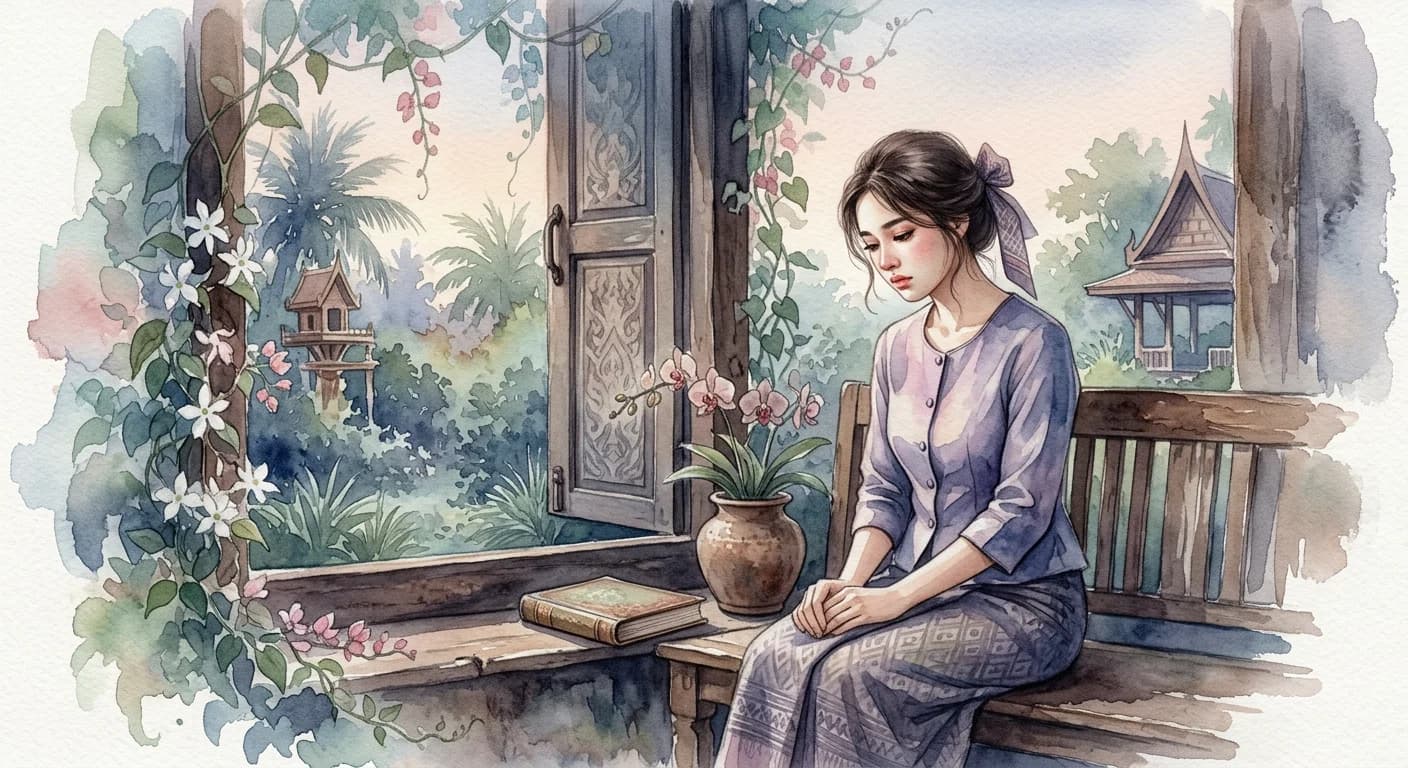
งอน (ngorn)
/ngorn/
Meaning
Ngorn encapsulates a nuanced form of sulking, a tender petulance born from feeling overlooked or unappreciated, particularly in intimate relationships. It's a silent protest, a deliberate emotional withdrawal designed not to inflict pain, but to solicit reassurance, affection, and a renewed sense of connection. This behavior is frequently perceived as endearing, especially when displayed by children or romantic partners, as it signals a deep-seated desire for attention and affirmation rather than outright anger.
Literal Translation
to sulk, to pout
The Story Behind the Word
The concept of 'ngorn' is deeply rooted in Thai culture's emphasis on interpersonal harmony (greng jai) and the importance of emotional subtlety. Direct confrontation is often avoided, making 'ngorn' a culturally acceptable way to express hurt or dissatisfaction without escalating into open conflict. It reflects a societal understanding that emotional needs, especially within close relationships, are often communicated non-verbally and that a partner or family member is expected to 'read' these cues. This word exists because Thai society values indirect communication and emotional intelligence in maintaining social bonds, turning a potential conflict into an opportunity for heightened intimacy and care.
Experience It
Date Night Disappointment
After her boyfriend was engrossed in his phone throughout dinner, Ploy started to 'ngorn.' She grew quiet, pushing her food around her plate, hoping he would notice her silent withdrawal and ask what was wrong, prompting him to reconnect.
Child's Unmet Wish
Little Somchai 'ngorn' after his mother said he couldn't have another cookie. He sat on the floor, back turned, refusing to look at her, waiting for a comforting hug and perhaps a compromise.
The Deeper Meaning
Ngorn reveals a cultural philosophy where emotional expression is often indirect and relational. It underscores the belief that love and care are demonstrated not just through grand gestures, but through the sensitive recognition and gentle appeasement of a loved one's subtle emotional states. It highlights a worldview where interdependence and emotional attunement are paramount, fostering deeper bonds through empathetic understanding rather than overt demands.
Did You Know?
Did you know 'ngorn' is often associated with the phrase 'oh, she's ngorn again,' implying a familiar and almost expected pattern of seeking reassurance in close relationships.
How It's Used
Ngorn is used to describe the act of sulking or pouting, usually in a cute or endearing way, when someone feels overlooked or wants attention from a loved one. It's often employed in romantic relationships or between family members.