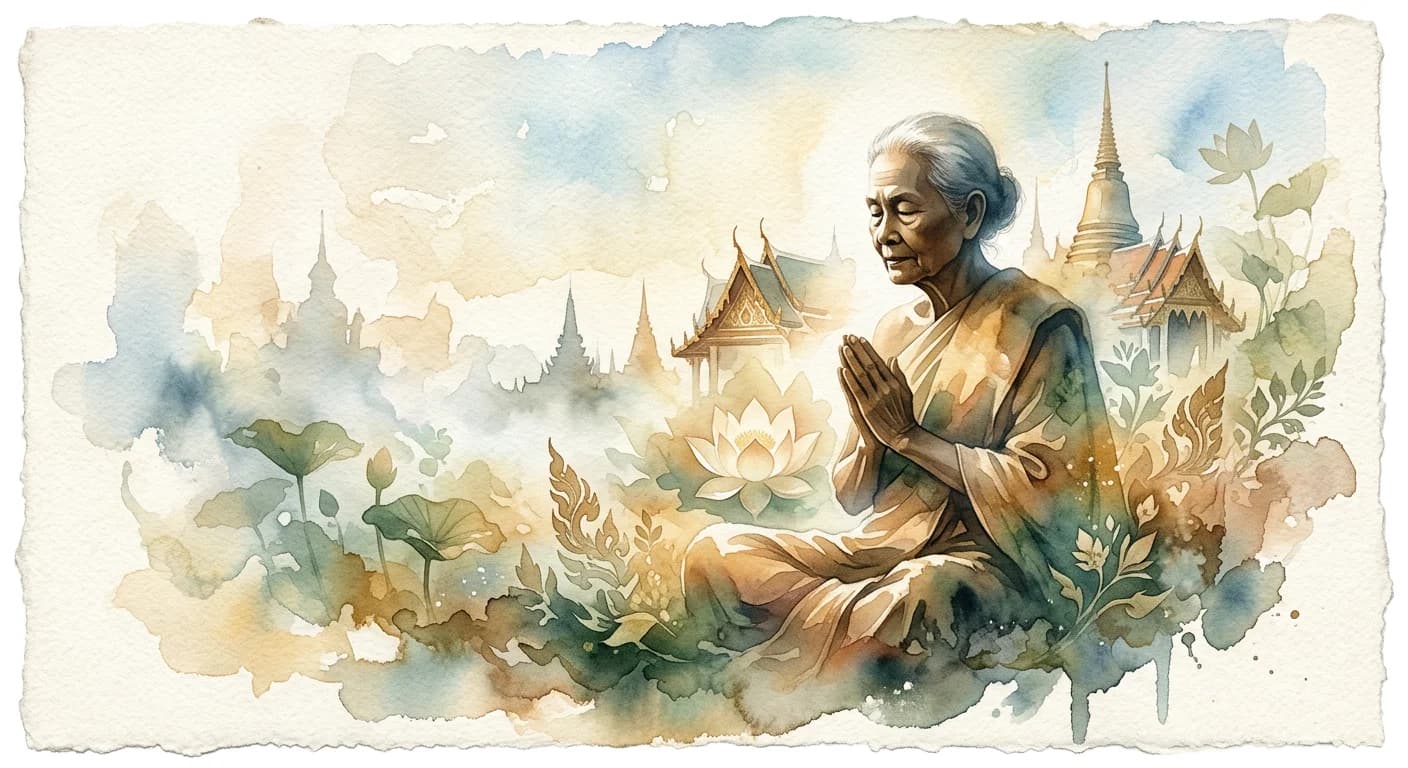
ภูมิปัญญา (poom pan ya)
/POOM-pan-yah/
Meaning
Poom pan ya encapsulates a profound, holistic wisdom, not merely intellectual knowledge but a practical, intuitive, and often spiritual intelligence inherited through generations. It's the accumulated genius of a community, deeply rooted in lived experience and cultural traditions, enabling creative problem-solving, adaptation to nature's rhythms, and harmonious communal living. This wisdom, passed down through tangible practices and keen observation, prioritizes applied understanding over abstract theory, reflecting a deep, symbiotic connection to one's heritage and environment.
Literal Translation
ภูมิ (poom) means 'land' or 'place', ปัญญา (pan ya) means 'wisdom' or 'intellect'. Together, it can be loosely interpreted as 'wisdom of the land' or 'local wisdom'.
The Story Behind the Word
The concept of poom pan ya is central to Thai identity, reflecting a society that historically valued practical wisdom and communal harmony over individualistic achievement. Its origins lie in agrarian societies where survival depended on understanding local ecosystems, traditional healing, and sustainable practices. This word reveals a worldview where knowledge isn't just acquired but is intrinsically linked to place (poom - land) and accumulated experience, making it dynamic and evolving. It underscores the belief that true wisdom emerges from living in concert with one's environment and community, emphasizing intergenerational learning and respect for ancestral knowledge. It's a cornerstone of cultural heritage preservation, often invoked when discussing traditional crafts, agriculture, or medicine.
Experience It
Weaving Community History
In a northern Thai village, an elderly woman teaches young girls the intricate patterns of traditional silk weaving. She doesn't just show them the technique; she shares stories behind each motif, the proper way to prepare the dyes from local plants, and the importance of patience and respect for the craft. This transmission of skills and cultural narrative is poom pan ya in action.
Sustainable Farming Practices
A farmer, facing unpredictable weather, consults with his village elders. They share knowledge passed down from their ancestors about reading natural signs, selecting resilient local crop varieties, and traditional water management techniques that have sustained their community for centuries. This collective, time-tested knowledge applied to modern challenges exemplifies poom pan ya.
The Deeper Meaning
Poom pan ya unveils a philosophy where wisdom is not abstract but embodied and contextual, emphasizing the interconnectedness of human beings with their environment and ancestry. It suggests that true intelligence arises from accumulated experience, practical application, and a deep respect for the lessons of the past, fostering resilience, communal well-being, and sustainable living within specific ecological and cultural landscapes.
Did You Know?
The Thai government actively promotes 'poom pan ya' through national programs, recognizing it as a vital resource for sustainable development and cultural preservation, often translating it as 'local wisdom' or 'indigenous knowledge'.
How It's Used
Used to refer to the collective wisdom, traditional knowledge, and practical skills of a community or nation, often in contexts discussing cultural heritage, sustainable living, or traditional practices.