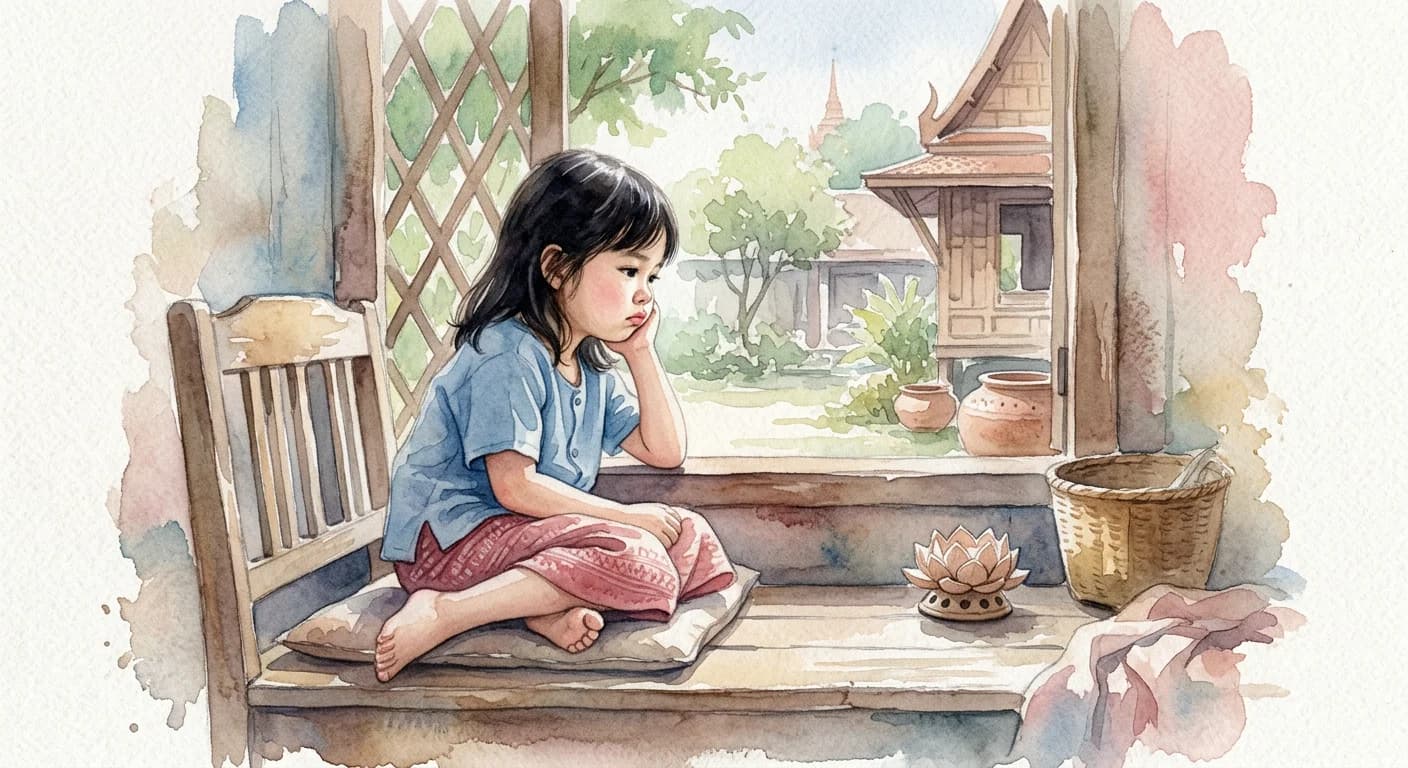
Ngaeng ngorn
/NGAENG NGORN/
Meaning
This Thai term describes a distinct, often endearing, form of sulking or pouting, particularly when one feels neglected or desires attention. It's not a display of genuine anger or hostility, but rather a playful, sometimes subtly manipulative, way to express mild displeasure or a need for reassurance. The 'ngorn' aspect suggests a slight, almost cute, withdrawal, often accompanied by specific body language like turning away, a downturned mouth, or a quiet, huffy demeanor. It's a subtle dance of affection and gentle complaint, deeply ingrained in Thai social interactions, especially within close relationships.
Literal Translation
Split/crack (ngeng) + sulk/pout (ngorn)
The Story Behind the Word
The existence of 'ngaeng ngorn' speaks volumes about the value placed on indirect communication and maintaining 'jai yen' (cool heart/calmness) in Thai culture. Direct confrontation or overt anger is often avoided, making 'ngaeng ngorn' a socially acceptable, even charming, way to signal discontent without disrupting harmony. It's a passive-aggressive yet often affectionate act, frequently employed within familial or romantic relationships where the expectation of understanding and reassurance is high. This word highlights a cultural nuance where expressing vulnerability or a need for attention is performed through a 'performance' of mild displeasure, inviting the other party to notice and reconcile rather than demanding it outright. It reflects a society that values emotional intelligence and the ability to read subtle cues, reinforcing bonds through empathetic response.
Experience It
Child's Playful Grump
Little Somchai sits with his back to his mother, lips slightly pursed, refusing to look up from his toy car. He's 'ngaeng ngorn' because his older sister got the first piece of cake, silently hoping his mother will notice his exaggerated displeasure and offer him extra comfort.
Lover's Quiet Protest
Praew turns slightly away from her boyfriend, a soft sigh escaping her lips, after he spent most of dinner talking about work. She's not angry, but subtly 'ngaeng ngorn,' signaling her desire for more personal attention without having to voice a direct complaint, awaiting his gentle coaxing.
The Deeper Meaning
This word reveals a cultural philosophy where emotional expression is often mediated and indirect, prioritizing social harmony and the intuitive understanding between individuals. It underscores the belief that true affection involves the ability to perceive and respond to unspoken needs, transforming potential conflict into an opportunity for reassurance and strengthening relational bonds rather than direct confrontation.
Did You Know?
While often associated with women and children, men can also 'ngaeng ngorn,' though it's typically seen as more endearing or acceptable from female partners or younger individuals.
How It's Used
Used to describe someone, often a child or a romantic partner, who is playfully sulking or acting a bit grumpy because they feel overlooked or want attention.