U.
HomeRegionsLanguagesEmotionsCollections
Find Your Word

“The limits of my language mean the limits of my world.”

— Ludwig Wittgenstein, Philosopher

Untranslatable

A curated collection of the world's most beautiful expressions—words that remind us language is humanity's greatest invention.

  • Home
  • Collections
  • Regions
  • Countries
  • Emotions
  • Tags
  • Contexts
  • Finder
  • Europe
  • Asia
  • Americas
  • Africa
  • Middle East
  • About
  • Contact
  • Privacy Policy
  • Terms of Service

2026 © Untranslatable. All rights reserved.

    /
    /
    1. Home
    2. /
    3. Asia
    4. /
    5. Áo dài
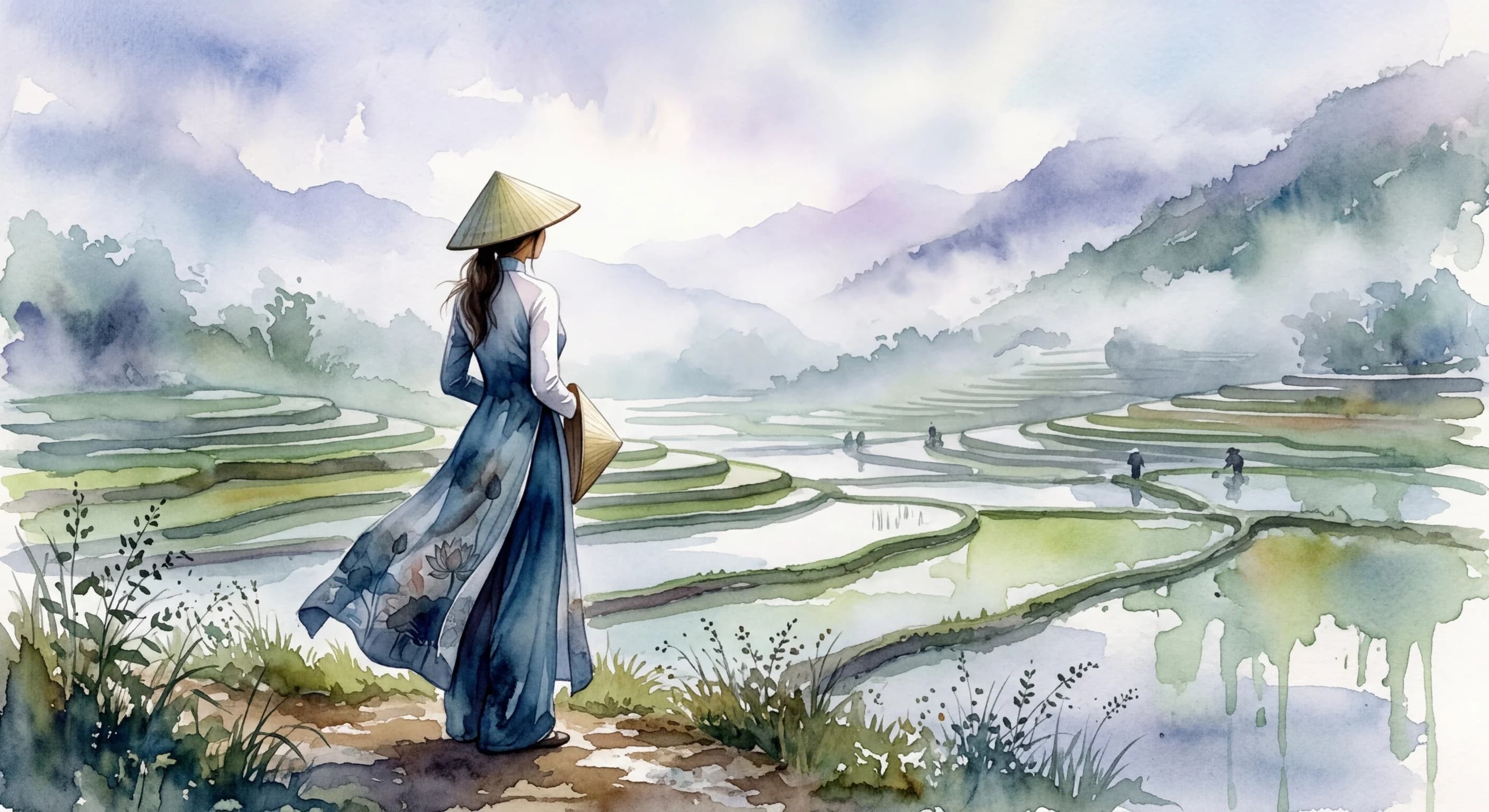
    Artistic representation of Áo dài
    Vietnamese•
    🇻🇳Vietnam

    Áo dài

    /OW-ZAI/

    Meaning

    The Áo dài is Vietnam's quintessential national attire, a gracefully flowing tunic worn over trousers that epitomizes elegance, modesty, and feminine allure. It is a powerful symbol of Vietnamese national pride and beauty, seamlessly blending tradition with a timeless aesthetic. More than mere clothing, it embodies the spirit and identity of the Vietnamese people, evoking deep cultural belonging and a profound sense of heritage. Its silhouette subtly enhances the wearer's form while maintaining an air of sophisticated grace.

    Literal Translation

    long shirt

    The Story Behind the Word

    The Áo dài, while having ancient roots in Vietnamese dress, truly blossomed into its modern form in the early 20th century, influenced by Parisian fashion yet distinctly Vietnamese. It represents a delicate balance between external influences and an unwavering commitment to national identity, especially during periods of foreign occupation and cultural suppression. Its widespread adoption, from everyday wear to formal ceremonies and even as school uniforms, underscores its role as a unifying cultural emblem. The garment's design, with its high neck and long sleeves, reflects traditional Vietnamese values of modesty and grace, while its fluid lines and side slits subtly reveal the body's contours, embodying a nuanced understanding of beauty that is both understated and captivating. It reveals a culture that values elegance, resilience, and a deep connection to its historical narrative.

    Experience It

    Tết Celebration Elegance

    Linh carefully selected her vibrant red Áo dài, embroidered with golden phoenixes, for the Tết Nguyên Đán family gathering. As she moved among her relatives, the silk fabric shimmered, a tangible link to generations of tradition and the hopeful spirit of the New Year.

    Student's Daily Grace

    Every morning, Mai donned her crisp white Áo dài for school, the familiar garment a uniform that instilled a sense of discipline and national pride. Walking through the schoolyard, the sight of countless white Áo dài created a serene, iconic tableau of youth and tradition.

    The Deeper Meaning

    The Áo dài encapsulates a unique Vietnamese philosophy of beauty and identity, where modesty and allure are not contradictory but harmonious. It reflects a worldview that values subtlety, resilience, and a profound connection to cultural heritage, suggesting that true elegance lies in grace, tradition, and a quiet strength that endures through time and change.

    Did You Know?

    The Áo dài has even inspired international fashion, with designers like Pierre Cardin creating their interpretations. It was notably reimagined for flight attendants, becoming an iconic part of Vietnam Airlines' brand identity.

    How It's Used

    Worn by women and sometimes men on special occasions like weddings, Tết (Lunar New Year), graduations, and performances. It is also worn by flight attendants and students in some schools.

    Emotions
    belonging,nostalgia,pride
    Contexts
    celebration,farewell,greeting,work
    🇻🇳Vietnam

    by Kwame Nkrumah·Written Mar 10, 2026·Updated Apr 3, 2026

    Related Words

    Explore more
    SobremesaSpanish

    Sobremesa is the cherished, often extended period immediately following a meal, particularly lunch or dinner, where diners remain seated at the table to enjoy conversation, coffee, and digest not just the food, but the company itself. It’s a dedicated time for unhurried social bonding, storytelling, and shared laughter, transforming a simple meal into a profound communal experience. Far from just clearing the dishes, sobremesa is an integral part of Spanish social life, often lasting for hours.

    Wabi-sabiJapanese

    Wabi-sabi is the profound appreciation for the ephemeral, the imperfect, and the incomplete aspects of existence. It is about discovering beauty in the subtle textures of age, the unique character of flaws, and the gentle decay that marks the passage of time. This philosophy encourages a quiet acceptance of impermanence and a mindful connection to the natural world, finding elegance in simplicity and authenticity.

    IkigaiJapanese

    Ikigai is more than just a reason to get out of bed; it's a deeply personal and evolving sense of purpose that brings genuine fulfillment and joy to one's life. It represents the sweet spot where your passions, talents, needs of the world, and what you can be paid for beautifully converge. Discovering your ikigai often leads to a life lived with intentionality, resilience, and a profound connection to one's contributions. It's the intrinsic motivation that fuels a meaningful existence, regardless of external circumstances.

    NunchiKorean

    Nunchi is the sophisticated, almost telepathic, ability to instantly grasp the unspoken dynamics of any social situation, anticipating others' thoughts and feelings, and then responding with impeccable grace and timing. It's an acute form of social intuition, allowing one to navigate complex interpersonal landscapes by reading subtle cues like body language, tone, and context. Possessing good nunchi means effortlessly understanding the underlying emotional currents and adjusting one's behavior to maintain harmony and effectiveness, often without a single word exchanged.