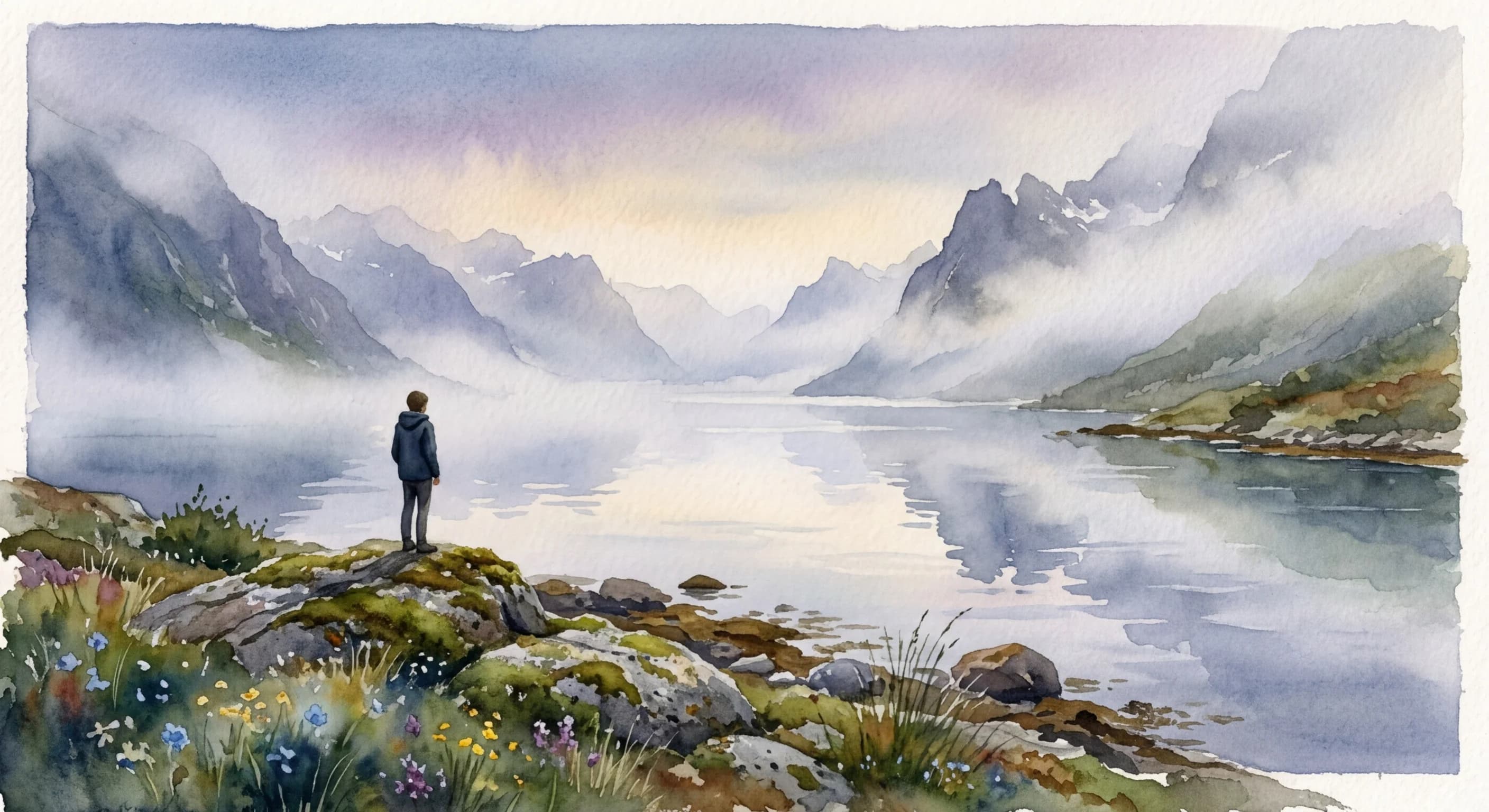
Pust i bakken
/POOST ee BAK-en/
Meaning
This Norwegian phrase, literally "dust in the ground," captures a profound and melancholic acceptance of mortality and the ephemeral nature of all existence. It's a moment of quiet, often solitary, contemplation, frequently triggered by witnessing the grandeur of nature, the ruins of history, or simply observing the inexorable march of time. The realization isn't one of fear, but a deep, almost serene acknowledgment of our own eventual return to dust and the impermanence of all things we hold dear, fostering a sense of perspective and humility.
Literal Translation
Dust in the ground
The Story Behind the Word
The existence of "Pust i bakken" in Norwegian culture speaks to a deep historical connection with nature and the often-harsh realities of life in a northern climate. Historically, life was challenging, and the cycles of growth, decay, and the ever-present elements would have instilled a profound sense of the transient. This phrase reflects a pragmatic yet poetic worldview, where the individual is seen as part of a larger, ongoing natural process, rather than separate from it. It's less about a specific historical event and more about an ingrained collective consciousness shaped by centuries of living close to the land and sea, where the grandeur of the fjords and mountains is juxtaposed with the brevity of human life. It reveals a culture that values introspection, realism, and finds beauty even in the melancholic acceptance of universal truths.
Experience It
Ancient Stave Church
Standing before a thousand-year-old stave church, its timbers weathered by centuries, a sense of profound stillness settled. One might whisper, 'Pust i bakken,' contemplating the countless generations who have worshipped there, now long gone, and the enduring silence of the structure.
Autumn Leaf Fall
Watching the vibrant autumn leaves cascade from the trees, blanketing the forest floor, a Norwegian might feel a pang of gentle sadness. 'Pust i bakken,' they might muse, as the beauty of decay reminds them of life's fleeting nature and the inevitable cycle of seasons.
The Deeper Meaning
This phrase encapsulates a core tenet of existentialism, acknowledging the finite nature of human existence without necessarily succumbing to nihilism. It suggests a philosophy where understanding impermanence leads not to dread, but to a deeper appreciation for the present and a humble acceptance of one's place within the grand, cyclical tapestry of the universe. It encourages a grounded perspective, reminding us that even the most monumental human achievements will eventually fade into the "dust in the ground."
Did You Know?
While seemingly somber, "Pust i bakken" is rarely used to express fear or despair; instead, it often carries a quiet reverence for the natural order and the interconnectedness of life and death.
How It's Used
Used as a philosophical or reflective statement, often when contemplating mortality, the passage of time, or the ephemeral nature of existence, particularly in response to nature or historical contexts.